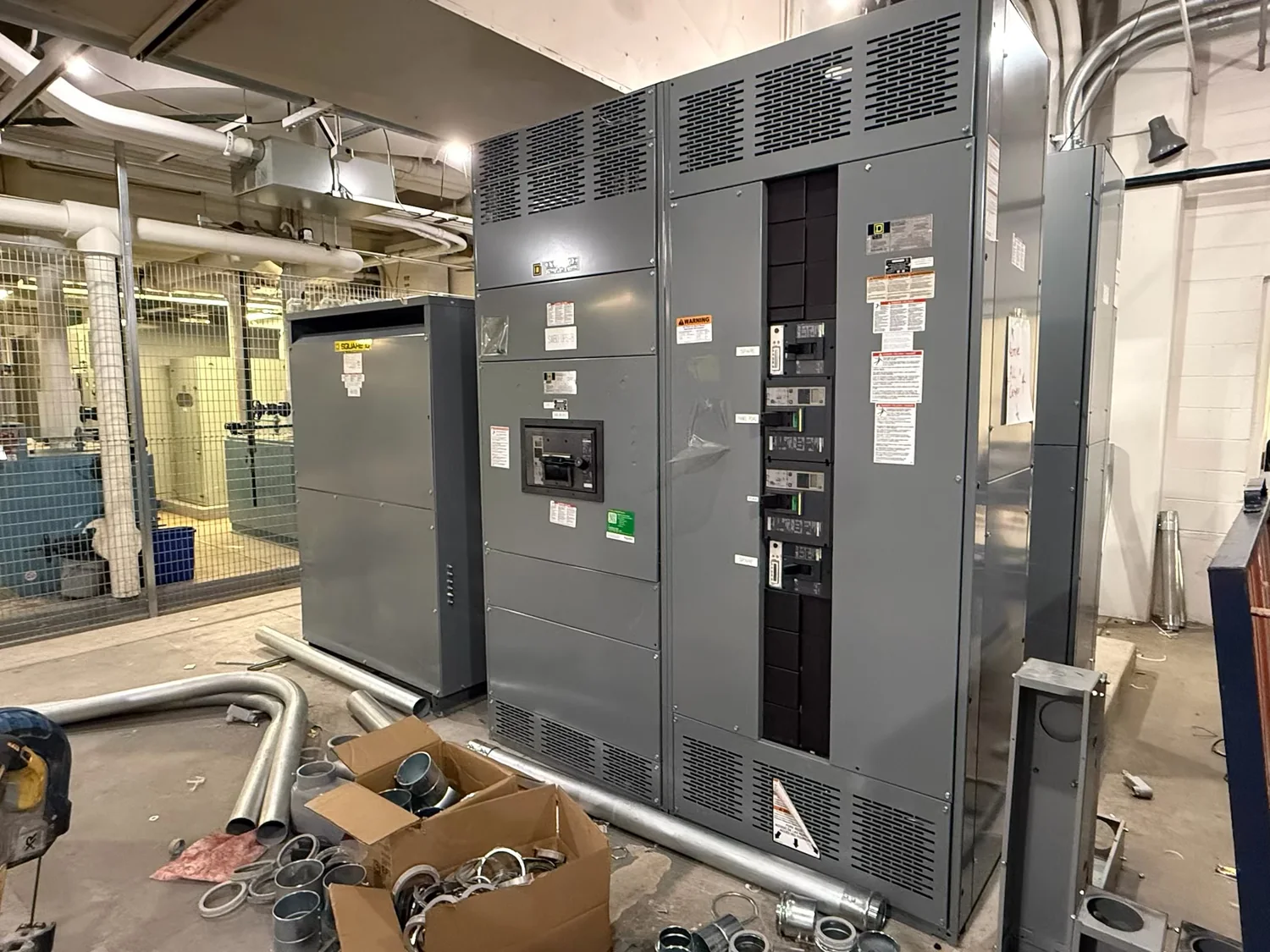
1,200 Amp Switchgear Removal: Start With What the Rating Tells You
Switchgear identified as 1,200 Amp can be a substantial asset to remove, but the ampere rating alone is not enough to determine what the equipment is, how it is configured, or what removal will involve. For sellers in Washington, DC, Northern Virginia, and Maryland, a sound plan begins with documenting the actual lineup and the conditions around it—not assuming its voltage, construction, manufacturer, or value from the rating.
A buyer can review switchgear for a possible purchase, make a cash offer after reviewing the information, and pay upfront if the offer is accepted. The business buys equipment; it does not sell it. No seller testing is required. The buyer considers all voltage classes, but that does not mean a 1,200 Amp label by itself establishes suitability or a price. The specific equipment, its condition and completeness, ownership, and the practical removal scope all need review before an offer or project plan is set.
This guide is for sellers preparing information and coordinating a potential sale. It is not a disconnect procedure. De-energization, isolation, and disconnect work must be performed by qualified personnel under the facility’s safety requirements and outage procedures. Keep that work separate from the buyer’s removal logistics, and coordinate both parties’ responsibilities, access, and timing before removal is scheduled.
Document the Equipment Before Asking for a Scope
Begin with clear, well-lit photographs of the entire lineup, front and rear where safely accessible, along with close-ups of available nameplates and labels. Capture the 1,200 Amp marking and any other legible identification without removing covers or approaching exposed conductors. If a label is obscured, note that rather than trying to uncover it yourself. Include photographs of visible sections, doors, breakers, bus or compartment labels, and any apparent damage or missing components, but do not represent a component’s function or condition unless it has been confirmed by an appropriate qualified person.
Nameplate information can help identify the equipment and distinguish between sections or components. Share what is legible, including manufacturer and model information if present, serial or catalog identifiers, ratings, and any other marked details. Do not infer an unstated voltage, interrupting rating, configuration, or operating condition from the 1,200 Amp figure. If records are available, relevant drawings, equipment schedules, or an inventory may help clarify what is included; they supplement, rather than replace, current photos and an on-site scope review when needed.
Measure the lineup’s overall length, height, and depth, and note the number of sections if known. Record the approximate dimensions and weight only when reliable information is available; avoid guessing. Describe how much clearance exists in front of, behind, above, and beside the equipment, and whether a route from the installed location to the loading point includes doors, corridors, stairs, ramps, elevators, low ceilings, tight turns, or outdoor transitions. These details can affect rigging choices, loading plans, and the time needed for removal.
State whether the switchgear appears complete and identify known exclusions, such as components or accessories that will remain on site. Disclose known damage, prior modifications, disconnected or missing parts, and any uncertainty about what belongs to the lineup. A buyer needs a clear understanding of the asset being offered; a photo that shows a lineup is not necessarily enough to establish that all sections or components are included.
Confirm Ownership, Site Access, and Removal Boundaries
Before an offer is finalized, be ready to explain who owns the equipment and who is authorized to approve its sale and removal. If the seller is acting for an owner, facility manager, contractor, or other party, clarify the authority to proceed and identify any internal approvals or documentation that must be completed. The buyer may need to understand whether the equipment is being sold as a complete lineup or whether particular sections and components are included. Resolve those boundaries in writing before work begins.
Describe the site and access arrangements without assuming that a buyer can enter or work at a particular time. In the DC-region service area, building procedures, loading access, traffic or delivery windows, security requirements, and coordination with facility operations can differ from site to site. Share the relevant restrictions and contact or coordination process so the removal plan can be reviewed against real site conditions. Do not assume a street, dock, parking area, or staging space is available unless the site has confirmed it.
Removal timing should be coordinated with the facility’s outage and work-planning process. The site must establish when the equipment can be safely de-energized and isolated, and qualified personnel must carry out disconnection under site procedures. Confirm who is responsible for disconnects and any preparatory work, who controls access to the equipment and removal path, and when the buyer’s crew may enter. No one should treat an accepted purchase offer as authorization to disconnect equipment or bypass site controls.
Access and removal constraints may also include limited working clearance, nearby operating equipment, restricted hours, required escorts, or limits on staging and vehicle size. Identify these early, along with any known changes to the equipment location or building access. These are project-specific facts to verify with the site; they should not be assumed from the equipment rating or its location in Washington, DC, Northern Virginia, or Maryland.
How the Buyer’s Removal Logistics Are Handled
Subject to the project arrangements and confirmed site access, the buyer handles the crane, rigging, loading, freight, and hauling. The buyer also handles the removal logistics, including the required coordination for lifting and moving the equipment. The specific method and responsibilities must be confirmed for the project after the equipment and route have been reviewed. Sellers should not arrange duplicate hauling or assume that a particular crane or rigging setup will be used before the scope is agreed.
The buyer pays the costs for crane, rigging, loading, freight, and hauling. Confirm the removal boundaries and responsibilities before work is scheduled so the seller and buyer share the same understanding of what is included. Site access, equipment dimensions, loading conditions, route limitations, and any required coordination can affect how the work is organized, even though the buyer handles those listed removal costs. Do not treat a preliminary discussion as a final scope or a guarantee that removal can proceed without further review.
The seller should not disconnect, move, or prepare energized switchgear. De-energization, isolation, and disconnect work are the responsibility of qualified personnel working under the site’s safety and outage procedures. Coordinate the completion and timing of that work with the buyer’s planned access and removal schedule. If the equipment is not yet ready for removal, say so during the review so the parties can discuss a workable sequence rather than making assumptions about readiness.
Offer, Payment, and a Practical Preparation Checklist
To request a review, provide the available nameplate details, clear photographs, lineup dimensions, a description of what is included, ownership or authorization information, and a summary of access and removal constraints. Share the anticipated timing and any known outage or facility scheduling requirements. If some details are unavailable, say what is unknown; accurate uncertainty is more useful than an unsupported estimate. The buyer may ask follow-up questions or need to review the site and scope before setting final terms.
A cash offer is based on review of the particular equipment and the project information. There is no guaranteed price from the 1,200 Amp rating alone, and a final price cannot be determined without that review. No seller testing is required. If the seller accepts the offer, payment is arranged and paid upfront. Confirm the accepted offer, included equipment, payment arrangement, site responsibilities, and removal schedule before the work proceeds.
Before removal, use this checklist: verify that the seller is authorized to transfer the equipment; identify exactly which sections and components are included; provide legible nameplate photos and overall lineup images; record measured dimensions and known condition; describe the route and access restrictions; coordinate qualified-personnel disconnect work under site procedures; and confirm responsibilities, timing, and removal arrangements with the buyer. With those details established, a seller can request a practical review without assuming technical specifications, access conditions, or a final price that have not been verified.