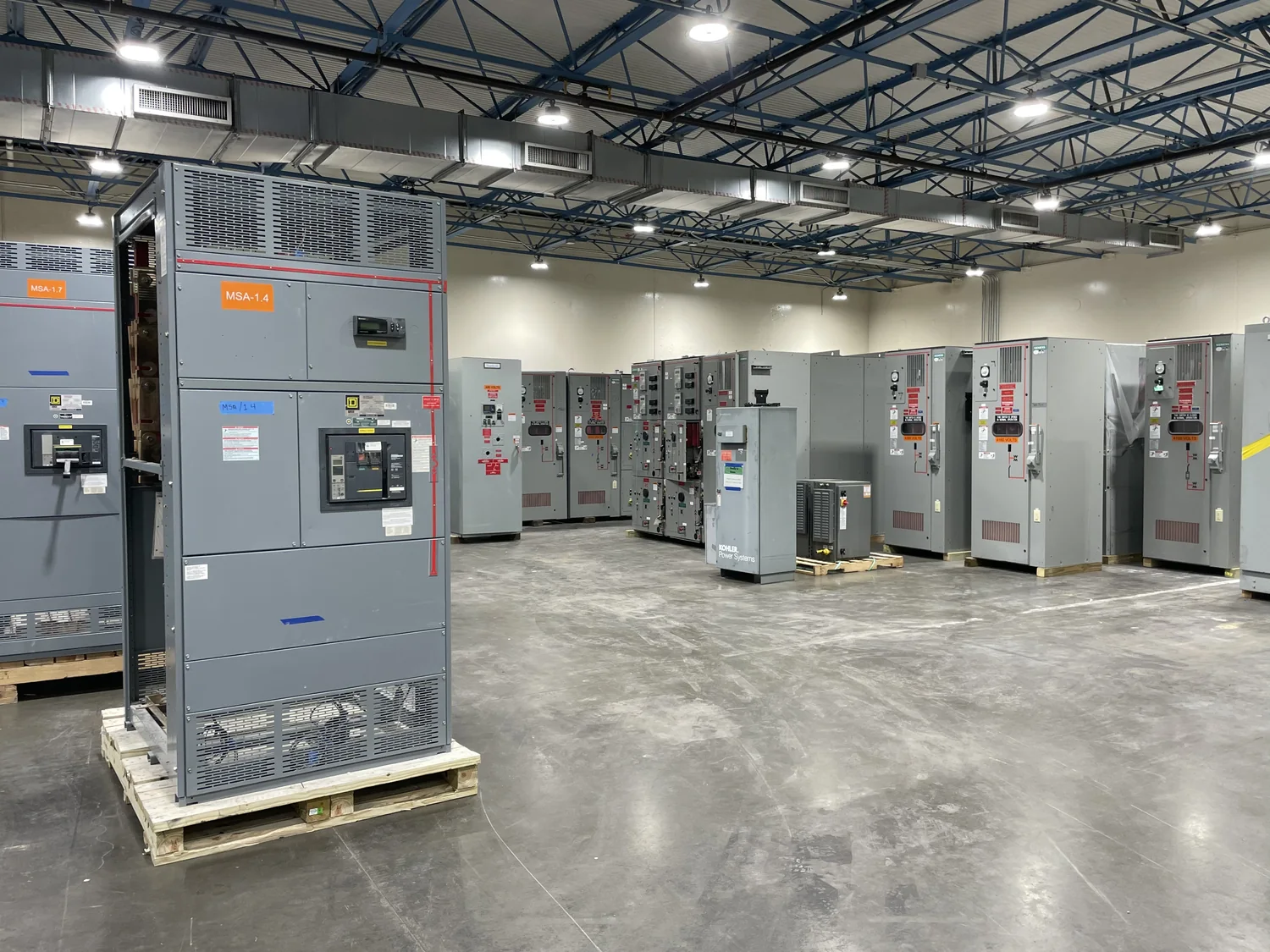
Recover Value During a Northern Virginia Data-Center Exit
A data-center closure, migration, or electrical refresh can leave valuable switchgear in rooms that must be cleared on a strict schedule. We buy used, surplus, and decommissioned equipment from data-center owners, operators, landlords, general contractors, and decommissioning teams in Northern Virginia. Our role is to purchase equipment, not to sell replacement gear or add another layer of procurement. If a facility is retiring a power train, consolidating a campus, or removing an unused buildout, we can review the available switchgear as part of the closeout plan.
Data-center equipment is often surrounded by access rules, security procedures, live operations, and a long list of stakeholders. We tailor the buying conversation to those realities. Start with photographs, nameplate views, a basic equipment list if one exists, and the anticipated shutdown or removal window. We do not ask sellers to perform testing or create speculative technical reports. The objective is to understand what is present, what must remain in place, and which equipment can be released without disrupting the facility's approved work plan.
Built Around Colocation, Enterprise, and Campus Schedules
Northern Virginia sites may include operating data halls, white-space expansions, utility rooms, generator yards, electrical galleries, and stored project material. A decommissioning scope can therefore be staged rather than completed in one visit. We can review equipment by building, room, lineup, or release date and coordinate the purchase around the seller's sequence. Share the practical constraints early: loading dock hours, escort requirements, ceiling height, elevator limits, security screening, badging, blackout periods, and whether equipment is installed or already staged.
We make a cash offer after reviewing the actual equipment and project conditions. Payment is arranged upfront under the agreed terms, rather than being delayed until the equipment is tested, resold, or placed with another buyer. The offer can address the equipment that fits the scope, while items that must stay, lack essential context, or cannot be removed safely remain outside the purchase. A clear written scope helps the data-center team coordinate internal approvals without pretending that every lineup has the same value.
What We Review From a Data Center
We consider switchgear and related electrical equipment across all voltages, including installed or stored lineups, sections, breakers, transfer equipment, distribution assemblies, motor control equipment, busway, disconnects, panels, and project surplus. Condition can range from unused inventory to equipment removed during a phased upgrade. Completeness, visible condition, quantity, access, timing, and handling requirements all inform the purchase review. We do not make detailed technical claims or promise a price from a generic equipment description alone.
Photos should capture the front and rear where accessible, nameplates, section labels, breaker faces, visible damage, and the route from equipment to the loading area. Do not open energized compartments, remove barriers, operate breakers, or attempt de-energization for photographs. Qualified specialists manage de-energization, isolation, disconnects, rigging, and loading according to the approved project arrangements. Safety and operational continuity come first; a seller never needs to create a hazard in order to help us identify equipment.
We Coordinate the Heavy Work
For an accepted purchase, we cover freight and coordinate the removal logistics through qualified personnel. Depending on the building and scope, project arrangements may include crane planning, rigging, disconnects, equipment protection, loading, hauling, and final freight. We work with the responsible site contacts to establish the sequence and confirm who controls the facility, but the seller is not expected to find separate specialists for every step. The plan should account for data-hall protection, doors and ramps, dock reservations, fire or security rules, and any required escorts.
The seller's practical responsibility is to identify the release scope, provide available site information, approve the agreed plan, and receive payment. We do not require seller testing, and we do not present fake credentials, invented testimonials, or unsupported market statistics. There is no local office or address claimed for this project-based service. Instead, communication stays focused on the equipment, access, schedule, and documented responsibilities that allow a decommissioning team to clear space without taking on an unnecessary logistics burden.
Send a Data-Center Equipment Package
If a Northern Virginia data center is closing, relocating, modernizing, or releasing stored equipment, send photos and a short scope summary. Identify the campus or general area, the building or room, approximate quantities, installation status, known voltage information, and the target removal date. If the site has strict security or loading procedures, mention them at the start. Existing asset lists, room maps, or decommissioning schedules can help, but they are not prerequisites for an initial review.
We buy used, surplus, and decommissioned equipment and never sell equipment through this process. When the scope is suitable, you receive a cash offer, upfront payment under the project agreement, covered freight, and coordinated removal by qualified personnel. You do not have to test the gear, arrange a crane, disconnect the lineup, load the truck, or negotiate a chain of downstream buyers. Provide the available information, approve the plan, and let the project team handle the physical work while your facility follows its own safety and security controls.