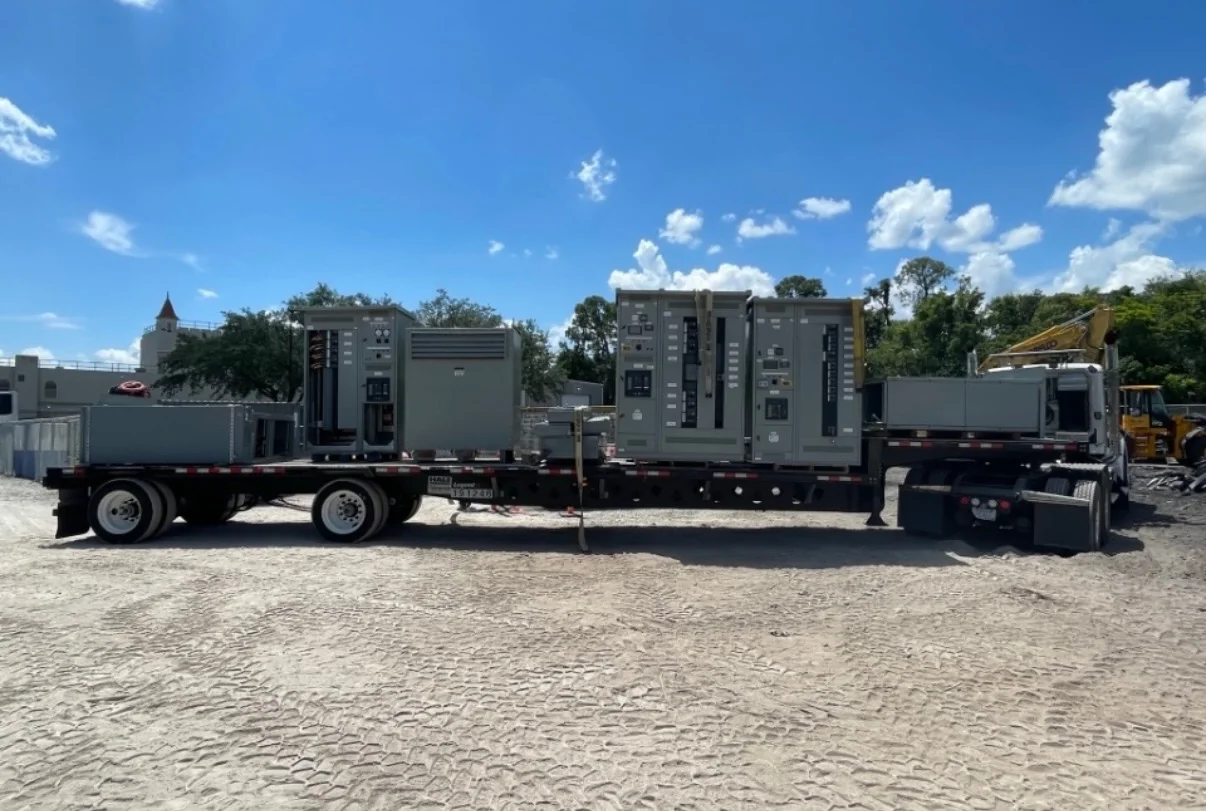
A Practical Buyer for Campus Closure Equipment
Closing a government building, hospital wing, medical office, or public campus can leave useful electrical equipment behind while the project team is focused on records, occupants, permits, and the next use of the property. We buy used, surplus, and decommissioned switchgear and related electrical equipment from these transitions. Our role is straightforward: review what is available, make a cash offer, arrange the project work, and pay upfront. We never sell equipment to you. We buy it from you.
A closure may involve equipment removed from a patient-care building, an administrative complex, a laboratory, a courthouse, or a maintenance compound. Some items may be installed and used, while others are spare, staged for a renovation, or left over from a canceled scope. Mixed lots are welcome. A complete inventory is helpful, but it is not a requirement before you contact us. Clear photos and any available nameplate information give us a practical starting point.
Built Around Public-Sector and Healthcare Schedules
Government and hospital closures rarely happen on a simple warehouse schedule. A facility may have a public deadline, a phased relocation, a lease turnover, a construction handoff, or a carefully sequenced shutdown. We can discuss the timing of your project arrangement rather than expecting you to move equipment immediately. Tell us what must remain in service, which rooms are restricted, and when access is available. We use that information to plan removal around the conditions established by your authorized facility team.
Healthcare environments also require sensitivity to patient safety, infection-control practices, privacy, and uninterrupted support systems. We do not ask your staff to improvise electrical work or handle heavy equipment. Qualified personnel manage de-energization, disconnects, crane or rigging needs, loading, freight, and hauling under the agreed project plan. Your facility’s responsible professionals control the site requirements; our team coordinates the removal work to fit them.
What We Can Review
We consider a broad range of equipment, including switchboards, panelboards, circuit breakers, motor control centers, transformers, automatic transfer switches, disconnects, busway, starters, and related assemblies. We can review low-voltage, medium-voltage, and other voltages represented in a closure or decommissioning project. Equipment does not need to be cosmetically perfect to start a conversation. Age, storage conditions, completeness, visible damage, labeling, and the overall lot will help shape our review, but you do not need to perform a seller-side test program.
Send photos of the front, sides, labels, nameplates, interior where safely accessible, and the surrounding room or storage area. Include quantities, approximate dimensions if known, manufacturer information, and whether items are installed, crated, or loose. If records are incomplete, say so. Honest context is more useful than a rushed technical conclusion. We can ask focused follow-up questions without requiring your staff to create a new engineering package for equipment that is leaving the site.
Removal Without Adding Work to Your Closure
The value of a buyer is not only the offer; it is also the amount of coordination removed from your closure checklist. Under project arrangements, we cover freight and handle the logistics needed to move the purchased equipment. Qualified crews coordinate rigging, cranes, disconnects, loading, hauling, and transportation as applicable to the site. We plan access, staging, protective measures, and pickup windows with the people you designate, while respecting facility rules and the boundaries of your closure plan.
Electrical systems must be made safe by qualified specialists. Do not open, isolate, cut, lift, or disconnect energized equipment based on website guidance or a photo review. Your authorized electrical and facility professionals establish the de-energization and access conditions, and the project team follows the approved arrangement. The goal is simple: you should not have to turn a surplus sale into an extra internal demolition assignment.
A Simple Path to an Upfront Cash Offer
Start by sending photos and a short description of the campus, building, or closure phase. Identify what is available, where it sits, whether it is installed or stored, and the date by which the area needs to be cleared. If several departments or buildings are involved, group the photos by location. That organization helps us understand the lot without asking you to produce a perfect catalog. We can review individual items or an entire closure package.
After reviewing the information, we will explain what we can buy and present a cash offer for the agreed equipment. Payment is made upfront according to the project arrangement, and all freight is covered. Once the scope and timing are confirmed, you hand off access coordination to the designated contacts and let the qualified removal team do the work. For a government or hospital campus, that means a cleaner closeout, fewer abandoned assets, and a seller experience focused on getting paid rather than managing another disposal task.