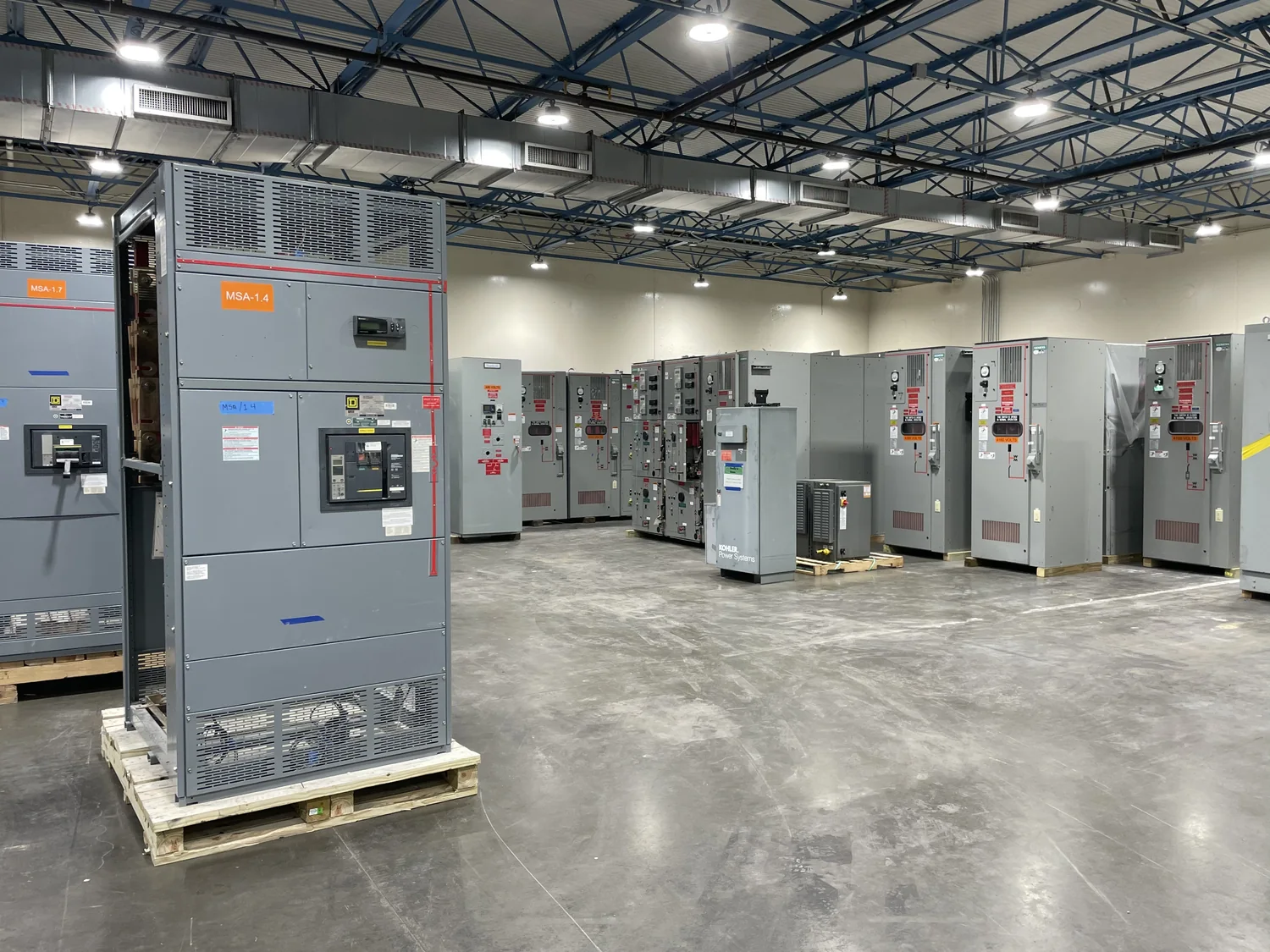
13.8kV Switchgear Removal: What Sellers Should Plan For
If your facility has switchgear identified as 13.8kV and you are considering removal, start with the equipment and the site—not assumptions about its condition, configuration, or resale value. The voltage label is useful for identifying the asset, but it does not by itself establish the lineup’s exact specifications, completeness, removal method, or price. Those details need review before the project scope is set.
This guide is for organizations in Washington, DC, Northern Virginia, and Maryland evaluating a sale and removal. The buyer purchases equipment only; it does not sell switchgear. It can make a cash offer, and if you accept, payment is arranged upfront. No testing is required from the seller. The buyer considers all voltage classes, while any offer and removal plan remain subject to review of the specific equipment, ownership, access, and project arrangements.
Gather Photos, Nameplates, and Lineup Information
Clear, current documentation helps the buyer identify what is present before anyone schedules removal. Photograph the lineup from several angles, including the front, sides, rear where safely accessible, and the surrounding room or outdoor area. Include readable nameplates and labels where possible, but do not open energized compartments or enter restricted areas to obtain a picture. Follow site rules and use qualified personnel whenever access or observation requires it.
Provide the lineup’s overall dimensions, including approximate length, height, and depth, and note how many sections or cabinets are included. Photos of nameplates can help establish the equipment’s identification and ratings; share any available drawings, schedules, or inventory records if they are readily accessible. Describe what appears to be included or missing, such as associated sections or components, without representing unverified items as complete. The buyer can review these details alongside the photos and nameplate information; a seller does not need to test the equipment.
Also share the equipment’s known status and history only to the extent you can support it. If it has been removed from service, is stored, or has visible damage or missing parts, say so plainly. Avoid guessing about internal condition. The goal is to give the buyer a useful picture of the asset and identify questions that should be resolved before a cash offer or removal scope is finalized.
Confirm Ownership, Authority, and Site Access
Before arranging a sale, confirm who owns the switchgear and who has authority to approve its disposition. If the asset belongs to a landlord, utility, tenant, contractor, lender, or another organization, clarify who must authorize the transaction. Share any known restrictions on transfer or removal early. Ownership and authorization are practical prerequisites to setting a dependable project plan; the buyer should not be asked to assume that the person requesting an offer can approve the sale.
Access details are equally important in the DC region, where a project may involve an occupied facility, controlled entry, limited staging space, scheduled freight access, or coordination with a property manager. Do not assume these conditions apply to your site: describe the actual route and restrictions. Useful details include entrance and loading-door dimensions, floor level, turns, ramps, elevators, overhead obstructions, available staging areas, truck access, security check-in, working-hour limits, and any restrictions on parking or equipment movement.
Tell the buyer about known removal constraints, including whether the lineup is anchored, whether nearby equipment or building features limit movement, and whether the route requires special planning. The buyer handles crane, rigging, loading, freight, hauling, and disconnect-related logistics subject to the project arrangements and site access. Confirm responsibilities, access requirements, timing, and scope with the buyer before removal; costs and practical arrangements should not be treated as settled until reviewed for the specific site.
Coordinate Disconnection and Outage Procedures Safely
Switchgear disconnection is not seller self-help. De-energization, isolation, verification, and disconnect work must be performed by qualified personnel under the site’s safety rules and outage procedures. The seller should not ask unqualified staff to open, disconnect, move, or otherwise handle electrical equipment. Coordinate the required qualified personnel, approvals, outage window, and site procedures with the facility’s responsible team before setting a removal date.
The buyer can coordinate disconnect and removal logistics as agreed for the project, but the facility’s safety controls and access requirements still govern the work. Make clear who is responsible for each step, when the equipment may be accessed, what permits or internal approvals the site requires, and whether other systems or operations depend on the lineup. Do not assume a particular outage duration or removal sequence before the equipment and site have been reviewed.
Timing can be especially important where a facility has limited access windows or must coordinate multiple building teams. Share any scheduling constraints as early as possible, including blackout dates, escort requirements, delivery or loading-hour limits, and the lead time needed for internal approvals. A workable plan depends on both the equipment and the site conditions, so dates should be confirmed only after the relevant parties have reviewed scope and logistics.
Request an Offer and Set Scope Before Removal
To begin, send clear equipment photos, readable nameplates, lineup dimensions, a description of apparent completeness, confirmation of ownership or sale authority, and practical access details. Include the site location within Washington, DC, Northern Virginia, or Maryland, along with a contact who can answer project questions. If you know of crane, rigging, loading, freight, hauling, disconnect, or timing constraints, describe them rather than leaving them for the day of removal.
The buyer reviews the information before making an offer. There is no need for the seller to perform testing, and the buyer considers all voltage classes. A final price cannot be responsibly stated from the 13.8kV designation alone: the equipment identification, included sections, condition as represented, completeness, ownership, access, and removal requirements may all matter. Any offer is subject to review, and no price or removal outcome should be treated as guaranteed before the buyer has assessed the project details.
If you accept a cash offer, payment is arranged upfront. Before removal, confirm the payment timing and method, the specific equipment included, the removal date and site window, access conditions, and who is responsible for each agreed task. The buyer handles crane, rigging, disconnects, loading, freight, and hauling, with the project responsibilities and logistics confirmed in advance. Clear documentation and early coordination help both sides set a realistic scope without relying on assumptions about the switchgear or the facility.