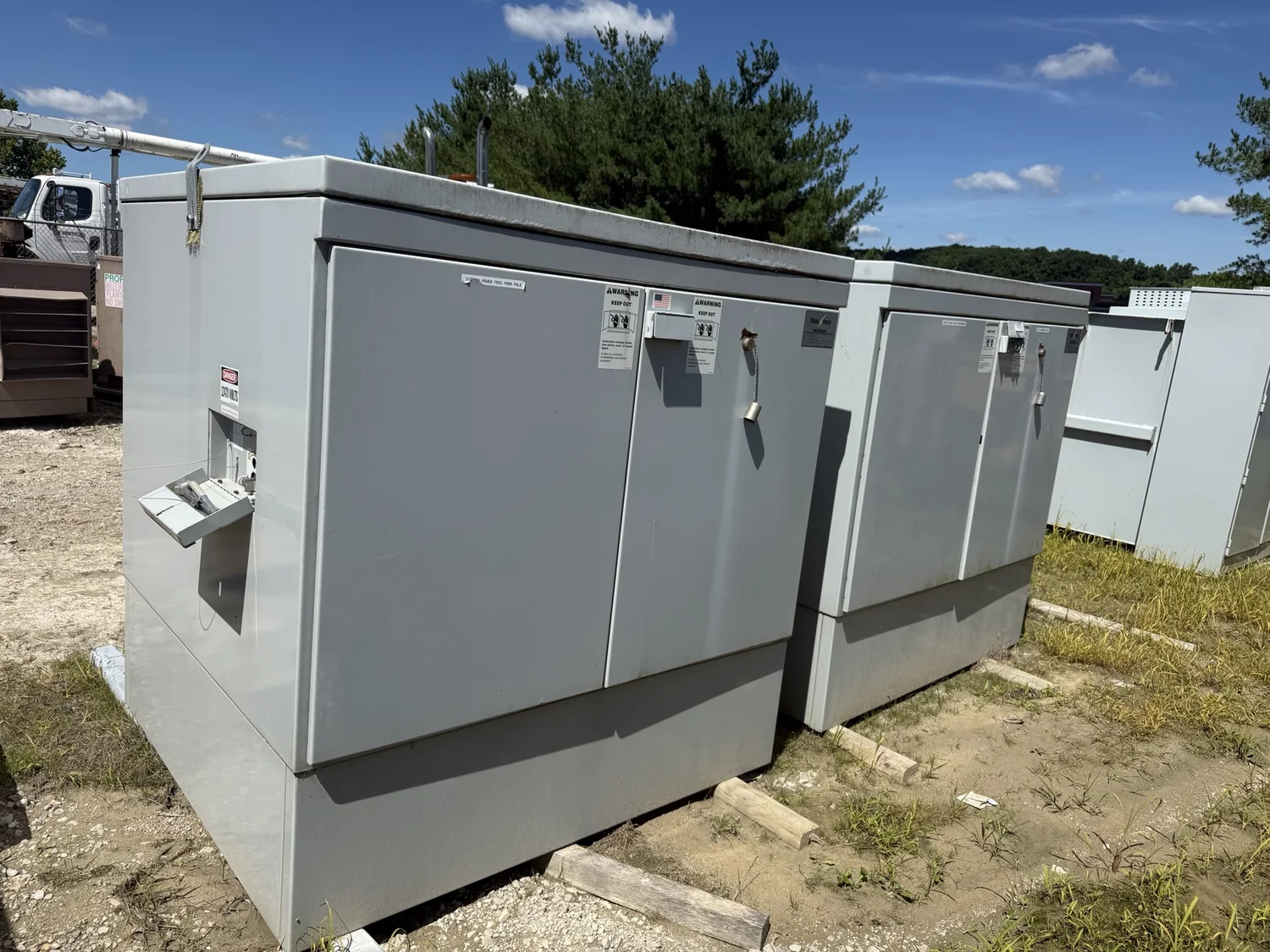
15kV Switchgear Removal: Plan the Sale Before Scheduling Work
Removing switchgear identified as 15kV is both an electrical-safety project and an asset-disposition decision. For sellers in Washington, DC, Northern Virginia, and Maryland, the first step is not to arrange a truck or begin dismantling. It is to document the equipment, confirm who owns it, and coordinate a review of the site and removal requirements. A buyer can consider the equipment for purchase and make a cash offer after reviewing the available information; the offer and removal plan depend on the actual equipment and project conditions.
The 15kV designation is a useful starting point, not a complete specification. Equipment carrying that identification may differ in configuration, condition, completeness, dimensions, and installation. Do not assume that a voltage label alone establishes compatibility, resale value, or the work needed to remove a lineup. A practical review should connect the identification on the equipment with clear photographs, nameplate details, physical measurements, and a description of what is included in the sale. All voltage classes are considered, but any particular offer requires review of the equipment being presented.
Gather Nameplates, Photos, Ratings, and Lineup Dimensions
Take clear, well-lit photographs of the overall lineup and its surroundings, along with close-ups of every accessible nameplate and identification label. Useful views can include the front, rear where safely accessible, sides, doors, compartments, and visible connections. Photograph labels without removing covers or entering restricted areas. If a label is unreadable, note that rather than guessing at its contents. Sellers are not required to test the equipment; do not open energized compartments or perform electrical work just to gather sales information.
Record the lineup’s approximate overall length, height, and depth, and identify whether it is a single section or multiple sections. Note any visible ratings or configuration details shown on nameplates, and share them as written rather than interpreting them. Explain what is included or excluded: for example, whether associated sections, breakers, accessories, control components, or other parts are being offered with the lineup. The actual contents matter, so identify missing, detached, or separately stored components and provide photographs where available. A complete information package helps the buyer decide what additional review is needed before setting scope or making an offer.
Confirm Ownership, Access, and Removal Constraints
Before discussing removal dates, establish that you have authority to sell the equipment and identify any ownership, lease, or site-approval requirements that could affect the transaction. Share the facility’s general location in the DC-region service area, the name and role of the person coordinating access, and any relevant site rules. No local office location or particular facility condition should be assumed: access, working space, security procedures, delivery routes, and available scheduling windows vary by site.
Explain how the lineup can be reached and what may limit removal. Relevant details can include door and corridor widths, turns, floor or loading-area restrictions, overhead obstructions, stairs, elevators, dock availability, exterior access, and restrictions on staging equipment or vehicles. If known, provide the route from the equipment to the planned pickup point, along with photographs of narrow passages, thresholds, and loading areas. Mention nearby operating equipment, occupied areas, restricted zones, or time windows that could affect the work. These details help determine whether the equipment can be removed in sections, what lifting or rigging arrangements may be required, and how the project should be scheduled. Final arrangements are subject to site access and the agreed project scope.
Coordinate Safe De-Energization and Qualified Disconnection
Any de-energization, isolation, and electrical disconnection must be performed by qualified personnel under the facility’s safety procedures, outage process, and applicable site controls. The seller should coordinate with the responsible facility or electrical personnel on who will perform that work, when it can take place, and how the equipment will be made available for removal. Do not ask unqualified staff to disconnect, dismantle, move, or handle electrical equipment. A purchase review does not replace the site’s safety planning or determine that equipment is safe to touch.
Agree on timing and responsibilities before work begins. The project team may need to coordinate an outage window, access approvals, escorts, contractor scheduling, and confirmation that the equipment is ready for the agreed removal activity. The buyer handles crane, rigging, disconnects, loading, freight, and hauling, subject to the project arrangements and site access; responsibilities and timing should be confirmed before removal. Work scope can depend on how the lineup is installed, how it can be separated or moved, and the route available. No equipment should be disconnected or moved until qualified personnel and the project parties have coordinated the required site procedures.
Review the Offer, Payment, and Removal Plan
Once the buyer has reviewed the information, the parties can discuss a cash offer and the details needed to define the transaction. There is no final price based solely on the 15kV label, a brief description, or a single photograph. The amount and any conditions depend on review of the actual equipment and the agreed scope. Provide accurate information about condition and completeness, and disclose known damage, missing parts, prior removal, or other circumstances that could affect the review. No seller testing is required.
If an offer is accepted, payment is arranged upfront. Confirm the payment arrangement, equipment included, access requirements, scheduled work, and each party’s responsibilities before removal. The buyer pays the crane, rigging, loading, freight, and hauling costs, with those logistics confirmed for the specific project and site. Sellers should not assume a particular pickup date or removal method until access, qualified disconnection, equipment details, and the route have been reviewed and coordinated.
For a DC-region seller, the most useful first submission is a concise package: clear equipment and nameplate photos, approximate lineup dimensions, visible ratings, a list of included and missing components, confirmation of ownership or authority to sell, site-access details, and known removal or scheduling constraints. That information supports a more practical review without guessing at electrical specifications or facility conditions. From there, the buyer and seller can clarify scope, discuss an offer, and coordinate a removal plan suited to the equipment and the site.