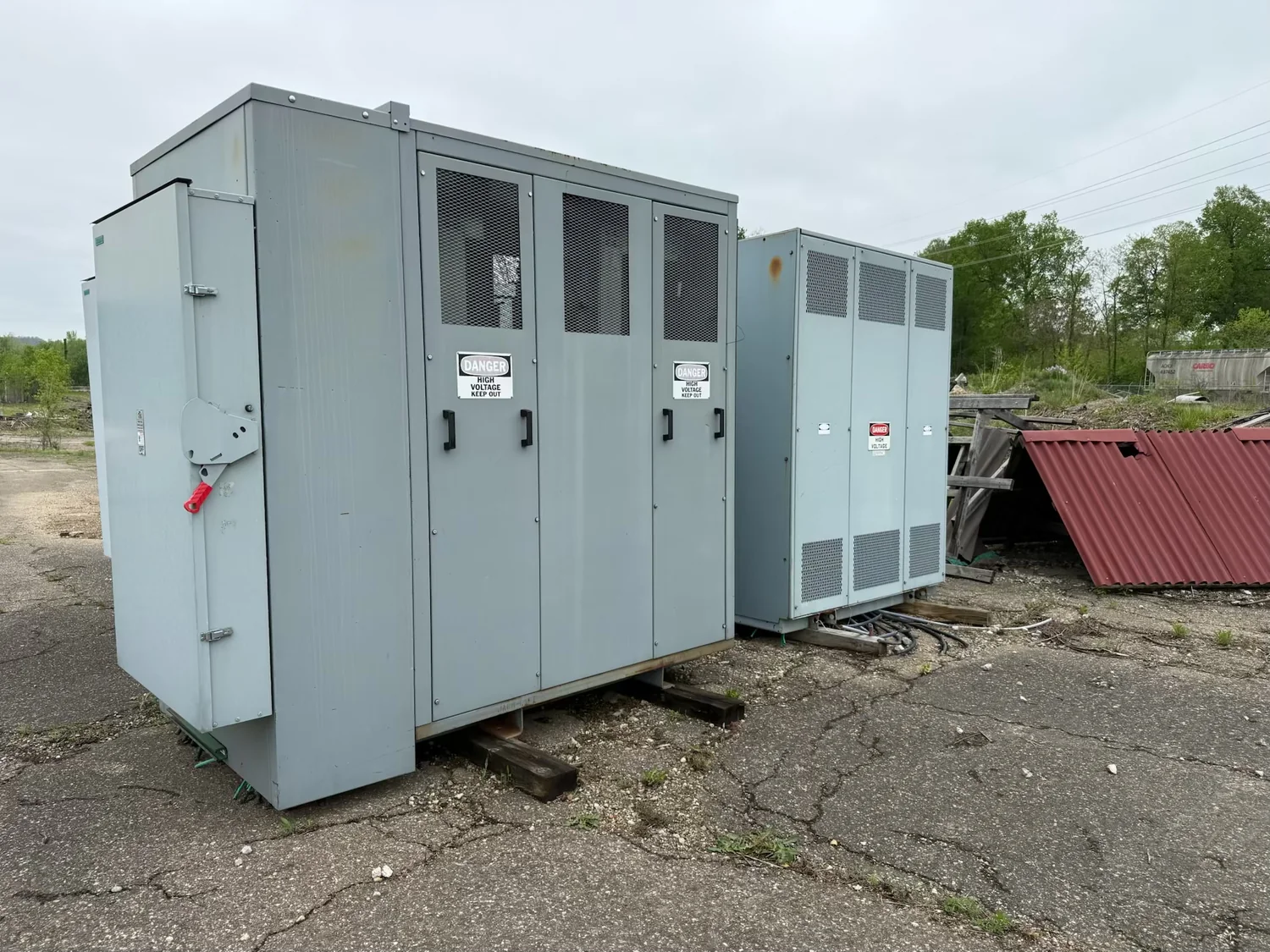
2.4kV switchgear removal: start with what is actually installed
Planning removal of switchgear identified as 2.4kV begins with documenting the equipment—not assuming that a voltage label tells the whole story. The voltage designation is useful for identifying the asset, but it does not establish its configuration, condition, dimensions, completeness, or the work needed to remove it. A buyer should review the actual lineup and project circumstances before discussing scope or making an offer.
For sellers in Washington, DC, Northern Virginia, and Maryland, the most useful first step is to assemble clear photographs and basic site information. Include overall views of the switchgear lineup, individual sections, nameplates, visible ratings, doors and compartments, and any accessories or connected equipment that are included in the proposed sale. Photographs should be taken only when they can be made safely; do not open energized compartments or enter restricted areas to obtain them. If a label is unreadable, a close, well-lit photograph may help, but nobody should approach exposed or potentially energized parts to improve a picture.
Send the lineup’s approximate overall dimensions, including height, width, depth, and the number of sections if known. Note whether the equipment is installed indoors or outdoors and whether it appears complete, partly dismantled, or missing components. These details help a buyer understand the asset and begin evaluating access and handling requirements. They do not replace a site review where conditions, removal routes, or lifting arrangements require further confirmation.
Information that helps establish a practical scope
A useful initial package pairs equipment details with ownership and access information. Confirm who owns the switchgear and who is authorized to approve its sale and arrange site work. If the equipment is part of a larger facility project, clarify what is included in the proposed disposition and what must remain. Ownership, asset boundaries, and authorization should be settled before removal planning advances; a buyer cannot assume that every adjacent panel, cable, control, or accessory belongs to the offered equipment.
Describe the route from the lineup to a potential loading point. Relevant details may include door and corridor dimensions, stairs, elevators, floor or pavement conditions, overhead obstructions, turning space, loading-dock or yard access, and whether a crane or other lifting arrangement could be positioned. State any known building rules, working-hour limits, escort requirements, security procedures, or restrictions on truck access. These are questions to confirm for the specific site, not conditions to presume about facilities across the DC region.
Also share the desired project window, the site’s outage or shutdown schedule, and any coordination requirements with facility staff or contractors. Timing may depend on qualified personnel completing de-energization, isolation, and disconnect work; site approval; the removal route; and the availability of agreed lifting and transport arrangements. Providing a preferred date is helpful, but it does not by itself confirm a removal date or establish that the equipment can be removed within that window.
Safety, disconnects, and responsibility for removal
Electrical equipment must not be disconnected or handled by unqualified personnel. De-energization, isolation, and disconnect work must be performed by qualified personnel under the facility’s safety rules, outage procedures, and applicable project controls. The seller should coordinate those activities with the site’s responsible personnel and confirm when the equipment and work area can be made available. The buyer’s review of photos or equipment information is not authorization to work on energized equipment and does not replace the site’s procedures.
The buyer handles crane, rigging, disconnects, loading, freight, and hauling, subject to project arrangements and site access. For this route, the buyer pays the costs of crane, rigging, loading, freight, and hauling, with responsibilities confirmed before removal. The parties should document the agreed scope, any site-provided support, access conditions, scheduling, and the point at which responsibility for the equipment and its movement changes. Clarifying those arrangements ahead of time helps prevent confusion about who is expected to provide labor, equipment, access, or coordination.
The seller does not need to test the switchgear for the buyer. Do not energize equipment, conduct electrical tests, or arrange intrusive inspection solely to prepare an inquiry unless that work is separately required and authorized for the site’s own purposes. If condition is uncertain, report what is known and provide photographs that can be obtained safely. The buyer can consider the available information and identify what, if anything, needs clarification before an offer or removal scope is discussed.
Offer review and payment arrangements
A preliminary inquiry should identify the equipment as switchgear listed as 2.4kV and provide the available nameplate information, photographs, lineup dimensions, completeness notes, ownership confirmation, and access details. Include known removal constraints, such as restricted routes, limited staging space, operating-facility requirements, or a narrow outage window. Incomplete information does not necessarily prevent an initial conversation, but it may mean that important scope questions remain open.
The buyer may make a cash offer after reviewing the information and the proposed project arrangements. No final price should be assumed from the voltage designation alone: configuration, completeness, condition as represented, access, and removal requirements can all matter. An offer is subject to review, and the parties should confirm what equipment is included, any agreed conditions, and the removal responsibilities before proceeding. There is no need for the seller to promise a particular outcome or describe unverified technical details.
When an offer is accepted, payment is arranged upfront. Confirm the payment and removal sequence in the project arrangements before work begins, including the accepted asset scope and the planned site schedule. Upfront payment is a practical planning detail, not a substitute for confirming ownership, authorization, site access, or the safe completion of required electrical work.
A clear checklist for Washington, DC, Northern Virginia, and Maryland sellers
Before requesting a review, gather what is readily available: clear exterior and lineup photographs; readable nameplate images; approximate overall dimensions and section count; a description of what is complete or missing; confirmation of ownership and authority to sell; and a concise account of access, staging, lifting, and truck constraints. Add the preferred timing, outage coordination needs, and the facility contact responsible for arranging qualified disconnect work. If some details are unknown, label them as unknown rather than guessing.
Regional logistics should be confirmed for the actual address and site. Washington, DC, Northern Virginia, and Maryland facilities can have different access rules, street or loading conditions, building procedures, and scheduling constraints. Do not assume a particular crane position, truck route, local office, or available removal date. The buyer and seller should review the proposed route and site arrangements together and confirm that the required equipment and work can be coordinated before removal is scheduled.
A careful information exchange makes it easier to decide whether the 2.4kV switchgear is suitable for an offer and what a removal plan may involve. Keep the process grounded in the equipment that is present, the authority to transfer it, and the conditions at the site. With clear documentation, qualified personnel handling electrical work, and responsibilities confirmed in advance—including buyer-paid crane, rigging, loading, freight, and hauling costs—the parties can discuss disposition and scheduling without relying on unsupported assumptions.