208V Switchgear Removal: Plan Around the Equipment You Have
Switchgear identified as 208V can vary in layout, condition, completeness, and removal requirements. The voltage label alone does not establish the equipment’s full specifications or determine its value. If you are preparing a sale in Washington, DC, Northern Virginia, or Maryland, begin by documenting the actual lineup and the conditions around it rather than assuming that equipment with the same nominal voltage will follow the same removal plan.
This guide is for sellers arranging the sale and removal of existing equipment. The buyer purchases equipment; it does not sell replacement gear or provide a substitute for your facility’s electrical, safety, or engineering procedures. A preliminary review can help identify questions and plan logistics, but the final scope and any cash offer depend on reviewing the specific equipment, ownership, access, and project arrangements. No seller testing is required for an initial evaluation.
Gather Photos, Nameplates, Dimensions, and Records
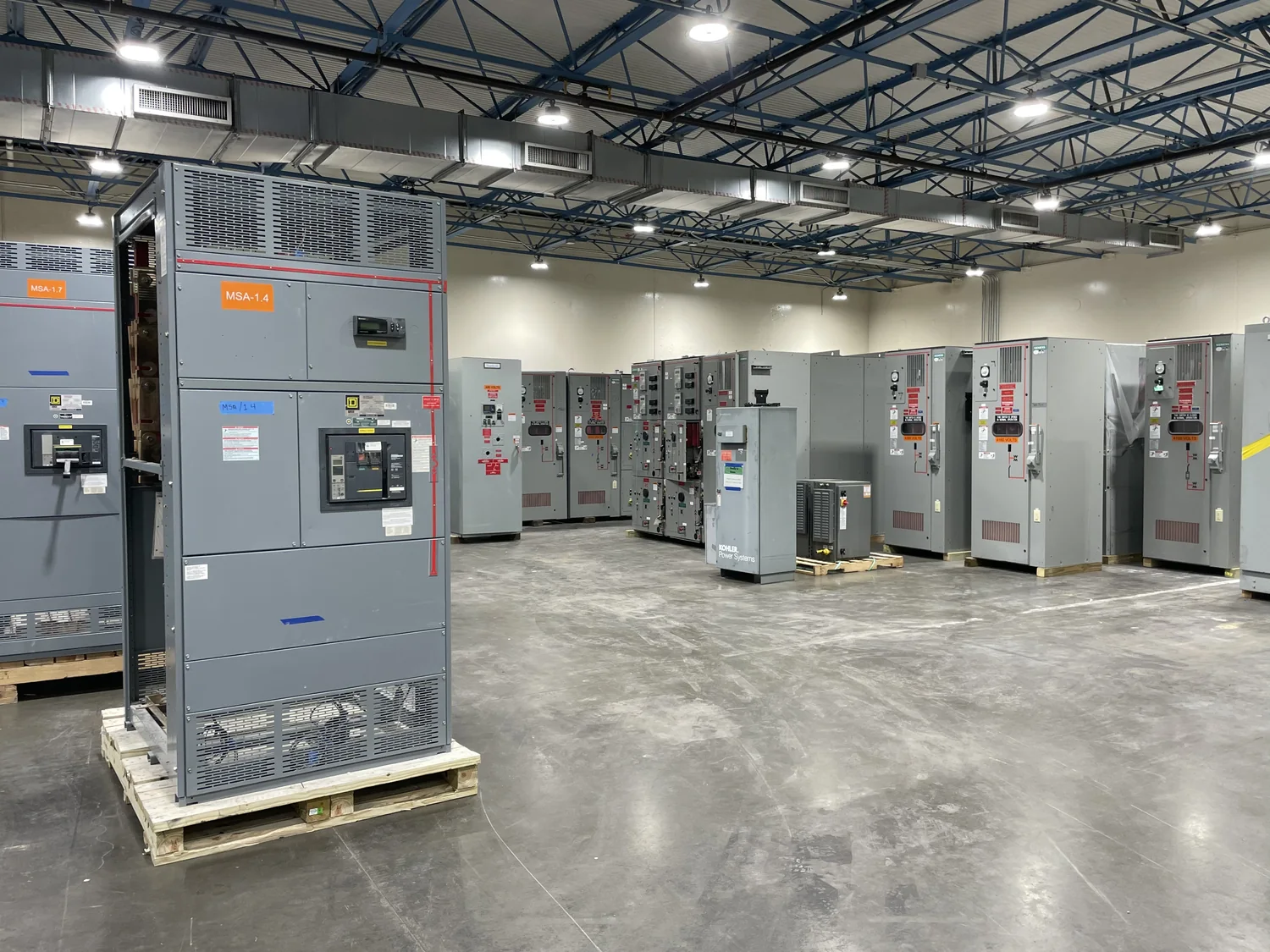
Take clear, well-lit photos of the complete switchgear lineup, its front and sides, visible compartments, and the surrounding area. Photograph each accessible nameplate so its text can be read, including any identifying model or serial information and ratings shown. Do not remove covers, enter restricted areas, or approach equipment to take pictures if doing so would conflict with site rules or electrical safety procedures. If a nameplate is obscured or unreadable, note that rather than guessing at its contents.
Record the lineup’s approximate overall length, height, and depth, along with the number of sections if known. Measurements help assess whether the equipment can pass through doors, corridors, loading areas, or other parts of the proposed route. Include available records or a list of major components, and identify whether breakers, auxiliary pieces, barriers, or other associated items are present, absent, or uncertain. Completeness can affect both the review and the work plan; do not assume that an incomplete lineup is either acceptable or unsuitable without discussion.
Share the equipment’s known condition and history as accurately as possible. Mention visible damage, missing parts, prior removal or storage, and any known constraints on documentation. Avoid making unverified technical claims based only on appearance. Photos and records support a more informed review, but they do not replace a site-specific assessment when access or removal conditions require one.
Confirm Ownership and the Right to Transfer
Before arranging a sale, confirm who owns the switchgear and who has authority to approve its transfer. If the equipment belongs to a building owner, tenant, contractor, or another organization, identify the responsible decision-maker and any internal approval process. State whether the equipment is surplus, scheduled for replacement, or otherwise being offered for disposition; the buyer may need enough context to distinguish the assets included in the offer from items that must remain at the site.
Describe what is included in the proposed sale and what is excluded. For example, clarify whether the offer is for the identified lineup only or also includes associated components stored nearby. Ownership and scope should be settled before removal is scheduled, so that the parties can confirm what the buyer may take and what must stay. The buyer can consider equipment across all voltage classes, but this does not mean every asset will receive an offer. Any offer is subject to review; a final price should not be assumed from the 208V identification alone.
Coordinate Qualified Disconnection and Safe Access
Disconnection is not a task for unqualified personnel. De-energization, isolation, and disconnect work must be carried out by qualified personnel under the site’s applicable safety procedures, outage requirements, and authorization process. The timing and sequence need coordination with the facility and the project team. Do not attempt to disconnect, dismantle, or handle electrical equipment to prepare it for a sale.
Discuss the planned outage window, work hours, access permissions, escort or check-in requirements, and any restrictions on vehicles or equipment. In the DC region, the route to the asset may involve site-specific building access, loading arrangements, or scheduling coordination. These conditions vary by facility; do not assume a particular building layout, permit requirement, or access restriction. Share known constraints early so the parties can determine whether the proposed removal plan is workable.
The buyer handles crane, rigging, disconnects, loading, freight, and hauling, subject to project arrangements and site access. Responsibilities and scope should be confirmed before removal. The buyer’s handling of these activities does not replace the facility’s required safety controls or authorize anyone to perform electrical work without the necessary qualifications and site approval.
Review Removal Constraints, Payment, and Next Steps
Along with photos, nameplates, dimensions, ownership, and equipment completeness, describe the path from the lineup to the loading point. Relevant details may include doorway and corridor clearances, turns, floor or ground transitions, stairs, overhead obstructions, distance to the vehicle, loading-area availability, and any limits on crane placement or staging. State whether the lineup is accessible as a whole or whether project-specific work may be needed to move it. Do not dismantle equipment or alter the site on the assumption that a particular method will be used; the removal approach must be coordinated with the project conditions and qualified personnel.
Send the available information for review and flag what remains unknown. The buyer can use it to discuss the potential scope, confirm responsibilities, and determine what further review is needed before setting a removal date. A cash offer may be made after review, but neither a price nor a removal schedule is guaranteed until the relevant details and arrangements are confirmed. If an offer is accepted, payment is arranged upfront. Confirm the payment timing and the agreed removal responsibilities before work begins; the seller is not asked to test the equipment.
A useful first submission is straightforward: clear photos of the lineup and nameplates, approximate overall dimensions, a description of included components and known condition, confirmation of ownership or transfer authority, and practical details about site access and removal constraints. This lets the buyer evaluate the actual 208V switchgear and plan around the specific project, rather than relying on assumptions about voltage, building access, or equipment specifications.