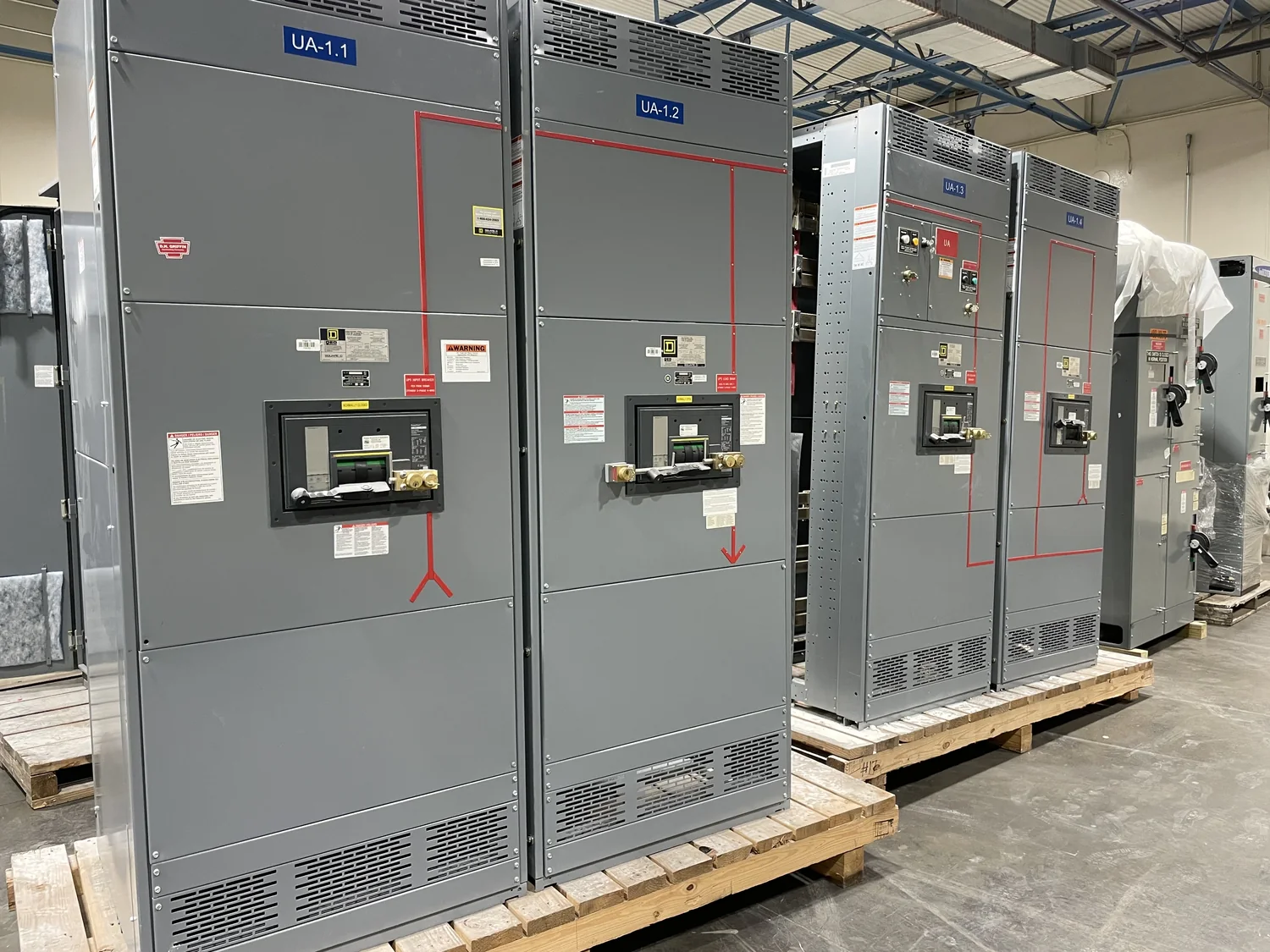
27kV Switchgear Removal: Plan the Sale Before the Outage
If you are responsible for switchgear identified as 27kV at a facility in Washington, DC, Northern Virginia, or Maryland, removal planning starts with a clear understanding of the equipment and the site—not an assumption that every lineup with the same voltage label has the same configuration. A buyer can review the available information and make a cash offer, but the equipment, removal scope, and logistics need to be assessed before a price or schedule is confirmed.
This is a purchase service: the business buys eligible equipment and does not sell switchgear. If you accept an offer, payment is arranged upfront. The seller does not need to test the equipment for the buyer. The buyer considers all voltage classes, including equipment identified as 27kV, while the specific asset and project details remain subject to review. No final price can be established from the voltage description alone.
Identify the Exact Lineup and Its Condition
Start by collecting clear, well-lit photographs of the complete lineup, its exterior, visible compartments, and any detached or associated components being offered. Include close-ups of every legible nameplate and identification label. A nameplate can help establish how the equipment is identified, but the buyer will need to review the information provided rather than infer detailed electrical specifications from “27kV” alone. Do not remove covers or enter restricted areas to obtain photographs; follow the facility’s access and safety rules.
Provide the lineup’s approximate overall dimensions, including length, height, and depth, and note any unusual protrusions or connected structures that could affect movement. If available, share an equipment list or describe what is included in the sale, such as sections, controls, or other associated items. Mention visible damage, missing parts, or changes in completeness as accurately as you can. Seller testing is not required, and nobody should energize, operate, open, or inspect equipment beyond their authorization just to prepare a sale submission.
The buyer may ask for additional images, measurements, or clarification after an initial review. These details help determine whether the equipment can be assessed as a complete lineup or as separate components and what removal approach may be practical. They do not guarantee an offer or establish a final value; an offer depends on review of the actual equipment and proposed project conditions.
Confirm Ownership, Authority, and Site Access
Before discussing a removal date, confirm that the seller owns the equipment or has documented authority to sell it. If the switchgear belongs to a landlord, tenant, utility, lender, or another party, establish who can approve disposition and who can authorize site work. Clear ownership and decision-making responsibility can prevent delays after the equipment has been reviewed.
For a DC-region project, describe the site’s location at an appropriate level and explain the route from the equipment to the loading area. Relevant details may include floor level, door and corridor clearances, loading-dock arrangements, elevator or stair restrictions, overhead obstructions, vehicle access, parking or staging limits, and any required escorts or scheduled access windows. Do not assume that a building’s access, equipment path, or lifting area will accommodate a particular removal method; those conditions must be confirmed for the actual site.
Share known restrictions on work hours, outage windows, building operations, deliveries, security procedures, and coordination with facility staff or other contractors. Scheduling in the Washington, DC, Northern Virginia, and Maryland service area is project-specific. Travel distance is only one consideration: the equipment’s location, readiness, approved work window, access, and required lifting arrangements can all affect timing. A proposed schedule should remain subject to confirmation by the parties responsible for the site and removal plan.
Coordinate Safe Disconnection and Removal
Any de-energization, isolation, and electrical disconnection must be performed by qualified personnel in accordance with the site’s safety procedures and outage requirements. The seller should not ask unqualified staff to disconnect, move, open, or handle switchgear. Coordinate the responsible electrical personnel, required approvals, and outage timing with the facility before removal is scheduled. The buyer’s purchase offer does not replace the site’s safety process or authorize electrical work.
The buyer handles crane, rigging, disconnects, loading, freight, and hauling, subject to project arrangements and site access. Confirm responsibilities and the planned scope before removal. In particular, discuss who will provide or perform electrical disconnect work, how the equipment will be made available, and whether the buyer’s planned access and lifting arrangements are workable at the site. The buyer pays the crane, rigging, loading, freight, and hauling costs; the practical method and project responsibilities still need to be confirmed before work proceeds.
A 27kV identification does not, by itself, determine how a particular lineup can be moved. Dimensions, configuration, weight information if available, completeness, location, clearances, and the approved route to the loading area may influence the removal plan. Share known lifting restrictions, floor or ground access limits, and any constraints on staging or vehicle positioning. Do not treat an initial discussion as a completed engineering or site assessment.
Submit Information and Set the Project Scope
A useful first submission includes clear equipment and nameplate photos, lineup dimensions, a description of what is included, known condition or completeness issues, ownership and sale authority, the facility’s general location, and details about access and removal constraints. Include a contact who can coordinate with facility personnel and answer practical questions about scheduling. If some information is unavailable, say so rather than estimating technical details or presenting unverified assumptions as facts.
After reviewing the submission, the buyer can discuss whether to make a cash offer and what additional information is needed to define the project. If an offer is accepted, payment is arranged upfront. The seller is not required to test the equipment. Before removal, confirm the accepted equipment scope, timing, access arrangements, qualified personnel responsible for de-energization and disconnection, and the buyer’s crane, rigging, loading, freight, and hauling plan. The buyer pays those removal and transportation costs, with responsibilities confirmed for the specific project.
Treat the removal date as a coordinated target, not a guarantee, until the relevant parties have confirmed site access, work authorization, outage timing, and logistics. Providing accurate information early gives the buyer a better basis for reviewing the 27kV switchgear and planning a practical disposition route across Washington, DC, Northern Virginia, and Maryland—without assuming specifications or site conditions that have not been verified.