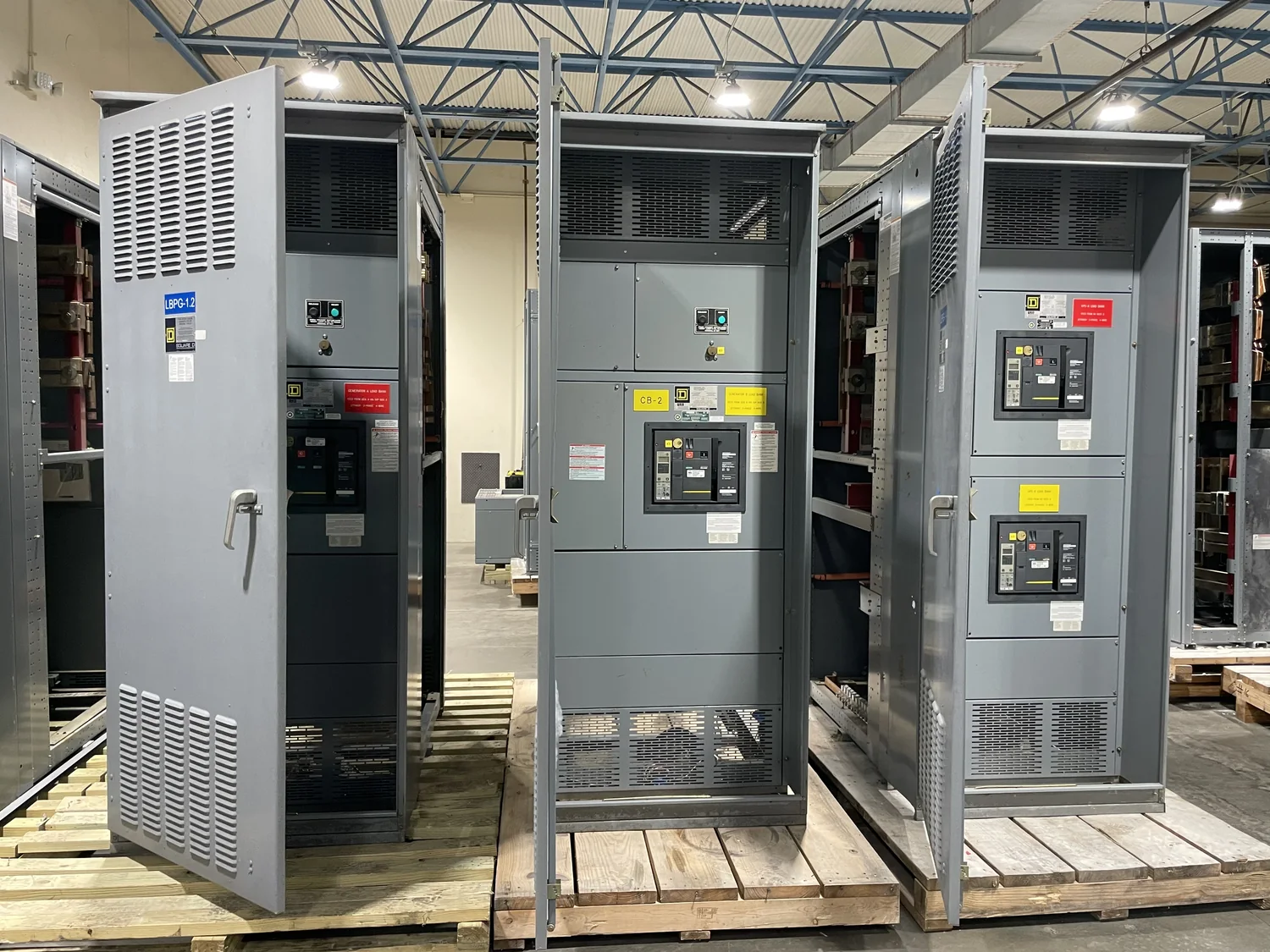
35kV Switchgear Removal: Start With a Clear Scope
Planning removal of switchgear identified as 35kV takes more than choosing a pickup date. The seller and buyer need to establish what equipment is included, how it can be accessed, and what work the site requires before the lineup can be moved. For businesses in Washington, DC, Northern Virginia, and Maryland, that planning is especially important when equipment is inside an active facility, below grade, behind controlled-access areas, or near other operating systems. These are possibilities to check—not assumptions about any particular site.
A buyer can review surplus 35kV switchgear and make a cash offer, subject to information about the equipment and the proposed removal. If the offer is accepted, payment is arranged upfront. The buyer handles crane, rigging, disconnects, loading, freight, and hauling, with responsibilities and project arrangements confirmed before removal. Site access, outage timing, and removal conditions still need to be coordinated with the seller. No testing is required from the seller, and equipment from any voltage class may be considered.
Identify the Equipment Before Discussing Removal
Begin with clear, well-lit photos of the complete lineup and its surroundings. Include wide views showing how the switchgear sits in the room, plus closer images of each section, visible nameplates, labels, and obvious damage or missing parts. Photos should help a reviewer understand the overall configuration without requiring anyone to open energized equipment or enter a restricted area. If a safe photograph cannot be taken without opening an enclosure or approaching a hazard, leave that work to qualified site personnel.
Share nameplate information when it is visible and safe to document. The exact wording matters: equipment described as “35kV” should not be assigned additional technical characteristics from that label alone. A reviewer may need the manufacturer and model information shown on the plates, available ratings, identification numbers, and any lineup or section markings to understand what is being offered. Do not guess at unreadable details; note that they are unclear and provide another image if one can be taken safely.
Include approximate lineup dimensions, such as overall length, height, and depth, and note whether those measurements cover the entire lineup or a single section. The number of sections, approximate weight if documented, and whether the equipment appears complete can help frame handling and removal questions. Mention known accessories, separate components, loose parts, or items that are not included. These details support an initial review, but they do not replace a site visit or confirm the final removal scope.
Confirm Ownership, Included Materials, and Access
Before an offer or removal plan is finalized, clarify who owns the switchgear and who has authority to release it. If the equipment is leased, subject to a lender’s interest, owned by a landlord, or otherwise controlled by another party, resolve the relevant permissions before scheduling. Identify precisely what is included in the proposed sale, including any separate sections or accessories, and distinguish those items from cables, building infrastructure, or equipment the facility intends to retain.
Describe the route from the equipment’s installed location to the loading point. Useful details include door and corridor clearances, stairs or changes in elevation, elevator limits if relevant, loading-area conditions, vehicle restrictions, and any need to work through secured or occupied areas. For a DC-region facility, street access, loading windows, building rules, traffic conditions, and coordination with property management may affect the schedule. They must be checked for the specific address and project; a service-area description does not establish what access is available at a particular site.
Point out removal constraints early: limited working hours, restricted delivery or loading windows, nearby operations, overhead obstructions, narrow turns, floor-loading concerns, or a requirement to protect adjacent equipment. Share available drawings or measurements where useful, but label estimates as estimates. The buyer and seller should agree who will confirm access conditions, obtain any required site permissions, coordinate the work window, and communicate changes before mobilization.
Plan Disconnects and Removal With Qualified Personnel
Switchgear must be de-energized, isolated, and disconnected under the facility’s safety procedures. Disconnect work is for qualified personnel, not unqualified sellers, building staff, or a buyer’s general-purpose crew. The facility’s authorized personnel should determine the required outage and safety process, establish when the equipment can be released, and coordinate the timing with the buyer. The buyer handles disconnects as part of the agreed removal arrangements, but that does not replace site control, qualified work practices, or coordination with the people responsible for the electrical system.
Agree on the scope before work begins. Confirm which equipment will be disconnected and removed, what the site will isolate or retain, and how interfaces with cables, conduits, grounding, control wiring, or adjacent systems will be handled. These items can differ from project to project, so they should be reviewed rather than assumed. Establish who is responsible for access, escorts, work-area preparation, outage coordination, and any site-specific documentation or procedures.
The buyer handles the crane, rigging, loading, freight, and hauling, subject to project arrangements and site access. Discuss lifting and movement constraints in advance, including whether the lineup can be moved as assembled or requires a different handling plan. Do not assume that equipment can be lifted through a particular opening or removed in one piece based on photos alone. The final approach depends on the actual dimensions, configuration, route, available working space, and conditions confirmed for the project.
Request an Offer and Settle Responsibilities Before Scheduling
To request a review, provide the photos, available nameplate details, approximate lineup dimensions, a description of completeness, ownership information, and a practical summary of site access and removal constraints. Add the location within the Washington, DC, Northern Virginia, or Maryland service area and the timing the facility can consider. If a shutdown window has not been approved, say so; a proposed date should not be treated as confirmed until the required people and site conditions are aligned.
An offer requires review of the specific equipment and circumstances. No final price can be set from the “35kV” identification alone, and an initial discussion should not be treated as a guaranteed valuation or commitment to remove. Sellers do not need to test the equipment to submit it for consideration. Share existing records if available, but do not arrange testing or open equipment solely to prepare a request unless the site’s qualified personnel have approved that work.
Before removal is scheduled, document the accepted offer and confirm that payment is arranged upfront. Confirm that the buyer is responsible for crane, rigging, disconnects, loading, freight, and hauling, and record any project-specific arrangements, access conditions, exclusions, and timing. Clear agreement on these points helps the seller plan asset disposition and helps the buyer prepare a workable removal. Where a facility has multiple stakeholders, designate a site contact to coordinate access, qualified electrical personnel, the outage window, and communication on the day of work.