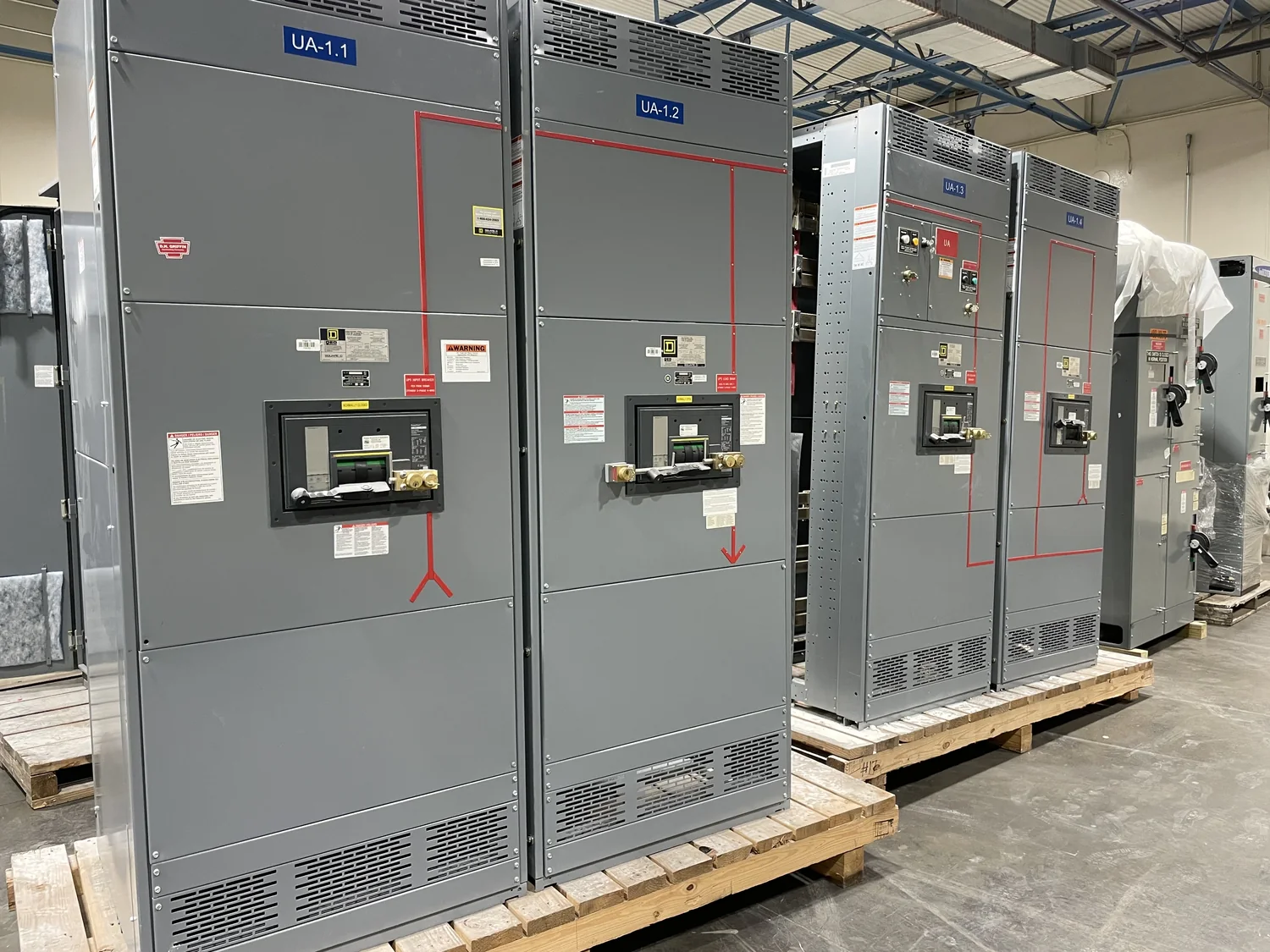
480V Switchgear Removal: Start With a Clear Scope
Planning to remove switchgear identified as 480V from a facility in Washington, DC, Northern Virginia, or Maryland? A smooth project starts with a clear picture of the equipment and the work required to access it. The 480V identification is useful context, but it does not establish the lineup’s full configuration, condition, dimensions, or removal requirements. Those details need to be reviewed before the project scope or an offer can be confirmed.
This business buys electrical equipment; it does not sell switchgear or provide an electrical installation service. It considers equipment across all voltage classes, and the seller does not need to test the switchgear before requesting a review. Cash offers are available, and payment is made upfront once an offer is accepted. The buyer handles crane, rigging, loading, freight, and hauling, subject to project arrangements and site access. Responsibilities and timing should be confirmed before removal begins.
Gather Photos, Nameplates, and Lineup Dimensions
Begin with clear, well-lit photos of the complete lineup and its surroundings. Useful views include the front, sides, rear where safely accessible, visible sections or compartments, and the route from the equipment to the loading point. Include close-ups of each legible nameplate and any identification labels. Do not open compartments or approach exposed electrical parts to obtain photographs; have qualified site personnel determine what can be photographed safely.
Share the lineup’s overall length, height, and depth if known, along with the number of sections and any obvious protrusions, attached structures, or components that affect its footprint. Note whether the equipment appears complete, whether parts or sections are missing, and whether related items are included in the proposed sale. Photos and measurements help establish what is being considered, but they do not replace a project review or guarantee that the equipment can be removed as pictured.
When sending details, identify the equipment as 480V only if that is supported by its labeling or reliable facility records. Include other legible ratings and nameplate information without guessing at specifications that are not visible. If a label is obscured or unreadable, say so. The buyer can review the information provided and request clarification before setting the scope; no final price should be assumed from a voltage label or photograph alone.
Confirm Ownership, Completeness, and Access
Before an offer can be considered, clarify who owns the switchgear and who has authority to approve its sale and removal. If the equipment belongs to a landlord, tenant, contractor, or another organization, confirm the appropriate decision-maker and any internal approval process. Describe what is included: the main lineup, associated sections, loose components, or other equipment being offered. Accurate descriptions help prevent a mismatch between the reviewed asset and what is present on removal day.
Access can shape the work plan as much as equipment dimensions. Explain where the lineup is located, the path to the building exterior, relevant door or corridor clearances, floor or level changes, and the distance to a suitable loading area. Flag restrictions such as limited working hours, shared loading areas, narrow approaches, overhead obstructions, occupied spaces, or other site rules that may affect equipment movement. Do not assume a crane or hauling vehicle can reach the facility without reviewing the actual approach and available working area.
For sellers across the Washington, DC region—including Northern Virginia and Maryland—building access and scheduling should be confirmed with the facility contact before a removal date is set. Share known site requirements and preferred timing, then allow the project scope to account for access, equipment dimensions, and removal constraints. The buyer’s handling of crane, rigging, loading, freight, and hauling remains subject to those arrangements and the site’s practical access conditions.
Coordinate Disconnection and Removal Safely
Removing switchgear involves more than moving equipment. De-energization, isolation, and disconnect work must be performed by qualified personnel under the site’s safety procedures and outage requirements. Do not ask unqualified staff to disconnect, open, move, or otherwise handle electrical equipment. Coordinate the responsible qualified personnel, required approvals, outage window, and work sequence with the facility before removal is scheduled.
The buyer handles crane and rigging, loading, freight, and hauling, with the specific plan confirmed for the project. That does not mean every site has the same lifting route or removal method. Building conditions, the lineup’s size and configuration, available access, and site rules may affect how the work is arranged. Identify known removal constraints early, including any sections that cannot pass through the available route or any limits on staging, lifting, or vehicle access.
Settle responsibilities and timing before the equipment is disconnected or moved. Confirm who will coordinate site access, who will carry out electrical isolation and disconnection, what the buyer will handle, and when each step can occur. This advance coordination reduces avoidable delays without assuming that a particular crane, rigging method, schedule, or site arrangement will suit every project.
Request a Review Before Setting the Date
To begin, provide clear equipment photos, readable nameplates where available, lineup dimensions, a description of completeness, ownership confirmation, and practical access details. Include the facility location within the DC, Northern Virginia, or Maryland service area and explain any removal or scheduling constraints you already know. If measurements or access information are uncertain, identify what still needs to be checked rather than filling gaps with estimates.
The buyer reviews the submitted information before making an offer or confirming a removal scope. A 480V label by itself is not enough to establish value, completeness, loading needs, or removal feasibility. The seller is not required to test the switchgear. If an offer is accepted, payment is arranged upfront; crane, rigging, loading, freight, and hauling are handled by the buyer subject to the project arrangements and site access confirmed for the work.
Once the information has been reviewed, coordinate the proposed timing with the facility and qualified personnel responsible for de-energization, isolation, and disconnect work. Keep the equipment and access conditions consistent with the agreed scope, and raise any changes before removal. A careful review helps both sides establish what is being bought, what the buyer will handle, and what the site must coordinate—without promising a final price or removal plan before the project details are known.