ABB Switchgear Surplus Review: A Practical Seller Guide
If your organization has surplus ABB switchgear after a changeout, facility closure, or equipment refresh, a review can help determine whether the equipment is a fit for purchase. This is a buyer service for businesses in Washington, DC, Northern Virginia, and Maryland. The buyer purchases surplus equipment only; it does not sell switchgear, represent ABB, or imply manufacturer endorsement. No specific model, configuration, condition, or voltage should be assumed from the brand name alone.
The first step is a preliminary review of what is actually on site. Clear photographs, readable nameplates, lineup dimensions, ownership information, and a description of site access help establish whether an offer may be appropriate and what removal planning could involve. The buyer considers all voltage classes, but that does not mean every lineup or component will receive an offer. Any potential purchase and removal plan are subject to review of the equipment and project conditions; a final price is not available without that review.
Information to Gather Before Scope Is Set
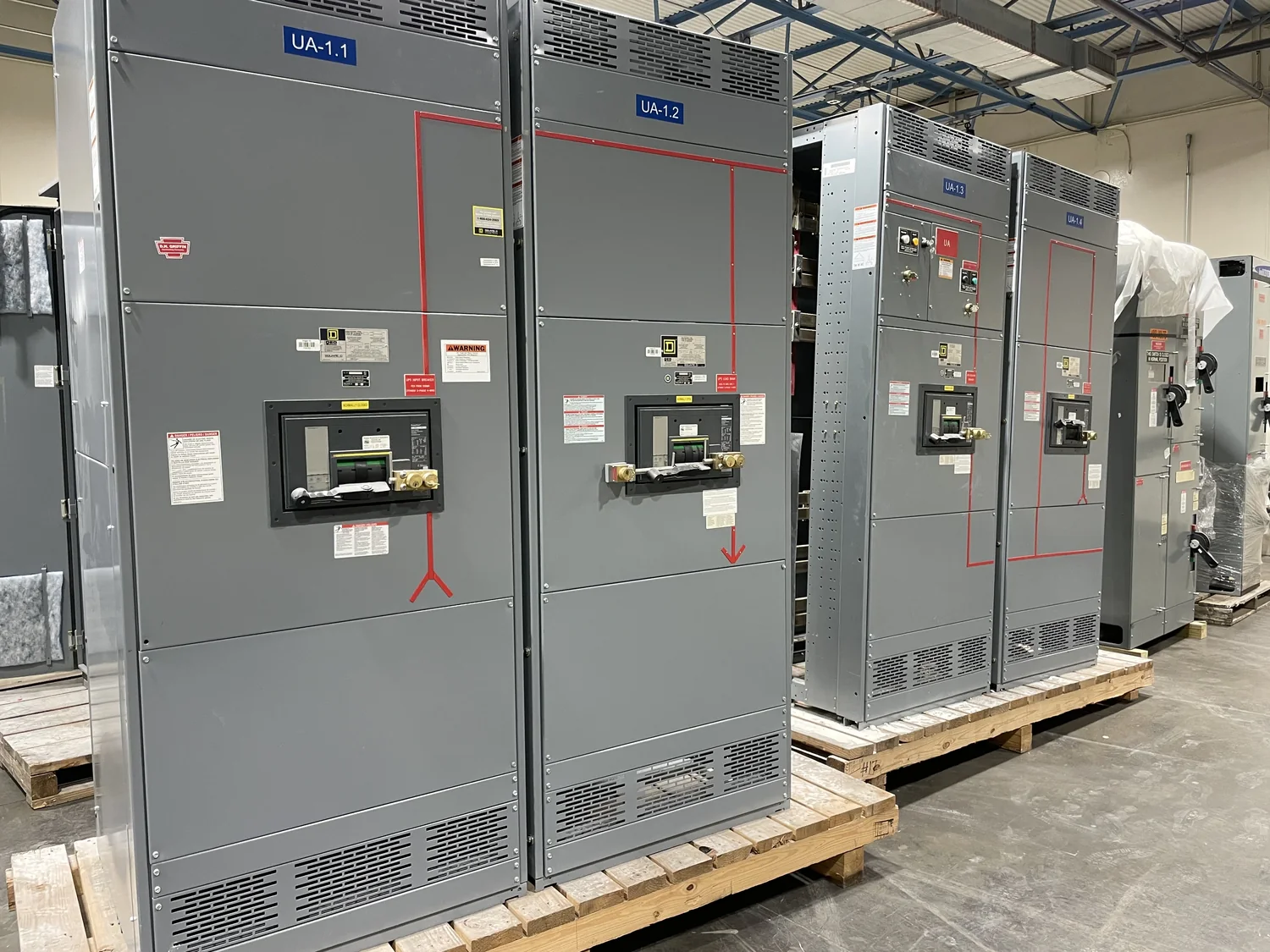
Start with photographs that show the overall lineup, its arrangement, and the surrounding space. Include clear close-ups of available nameplates and identifying labels; avoid relying on a handwritten model description if a readable plate is present. Photos of visible damage, missing doors or covers, disconnected sections, and loose components can also help describe completeness. Do not remove covers or enter restricted areas to obtain images. Follow your facility’s access rules, and have qualified personnel provide information that requires access to electrical spaces.
Dimensions help assess whether removal and transport are practical. When available, provide the number of sections, approximate overall lineup length, height and depth, and any known shipping or lifting dimensions. Note whether the equipment is indoors or outdoors, whether it is on a raised floor or in a basement, and whether doors, corridors, stairs, elevators, or loading areas may limit movement. These details are planning inputs, not a substitute for a site-specific removal assessment.
Describe what is included in the proposed sale, such as sections, associated components, or loose parts, and identify anything that is excluded or already committed elsewhere. The buyer may ask about condition, completeness, and whether equipment is assembled or separated. A seller does not need to test the equipment to request a review. Be straightforward about known issues and uncertainty; avoid presenting unverified operating condition as confirmed fact.
Ownership, Access, and Regional Coordination
Before an offer or removal scope is finalized, confirm that your organization has the authority to sell the equipment and identify any owner, landlord, lender, or other party whose approval is required. If equipment belongs to a customer or is located at a leased facility, clarify who can authorize disposition and who will coordinate site access. These details can affect scheduling even when the equipment itself is suitable for consideration.
For projects in Washington, DC, Northern Virginia, and Maryland, access and timing should be discussed in the context of the actual site rather than assumed from the location alone. Share the available work windows, loading-area rules, escort or check-in requirements, applicable building restrictions, and any planned outage or move dates. If the equipment must pass through occupied areas or shared spaces, explain the constraints early. The buyer can coordinate project logistics, but access, schedule, and responsibilities need to be confirmed for the specific site.
Do not treat a preliminary indication as a completed scope. The condition, included materials, ownership approval, access route, and removal constraints may all affect the final review. A site visit or additional information may be needed before the parties can agree on the work plan. No removal date or purchase amount should be assumed until the relevant details have been reviewed and confirmed.
Safe Disconnection and Removal Planning
Electrical equipment must be de-energized, isolated, and disconnected by qualified personnel under the site’s safety procedures and outage plan. Do not ask unqualified staff to disconnect, move, or handle switchgear. Coordinate the required work, equipment status, access, and timing with the facility’s responsible personnel before removal begins. The seller should not assume that the buyer’s logistics responsibility replaces the site’s control of safety procedures or electrical work.
Subject to project arrangements and site access, the buyer handles crane services, rigging, disconnects, loading, freight, and hauling. The parties should confirm responsibilities and sequencing before removal, including who will coordinate qualified disconnect work, when the equipment can be released, and how the removal team will reach and extract it. Crane access, lift paths, rigging points, floor loading limits, overhead obstructions, and the space needed to stage equipment may be relevant. These are project-specific considerations, not universal requirements; the actual plan depends on the equipment and site.
Removal constraints can change the practical scope. For example, a lineup may need to be moved through a narrow opening, separated into sections, lowered from a raised level, or handled during a restricted work window. Share known constraints rather than making assumptions about what can be dismantled or lifted. Any disconnection and handling sequence must be coordinated with qualified personnel and the facility’s procedures.
Offer and Payment: What Sellers Can Expect
After reviewing the available equipment information and project context, the buyer may make a cash offer. The offer is not guaranteed, and no final price should be expected before review. If the offer is accepted, payment is made upfront. The buyer pays crane, rigging, loading, freight, and hauling costs, with project responsibilities and arrangements confirmed before removal. This is a purchase transaction—not a sales inquiry—and the buyer does not require the seller to conduct testing before requesting consideration.
To begin, provide clear photos, readable nameplates where available, lineup dimensions, a description of included equipment and known completeness, confirmation of ownership authority, and practical access and removal details. Include the location within the DC, Northern Virginia, or Maryland service area and any important scheduling constraints. With those basics, the buyer can assess whether additional information is needed and whether a purchase offer may be appropriate for the specific surplus ABB switchgear.