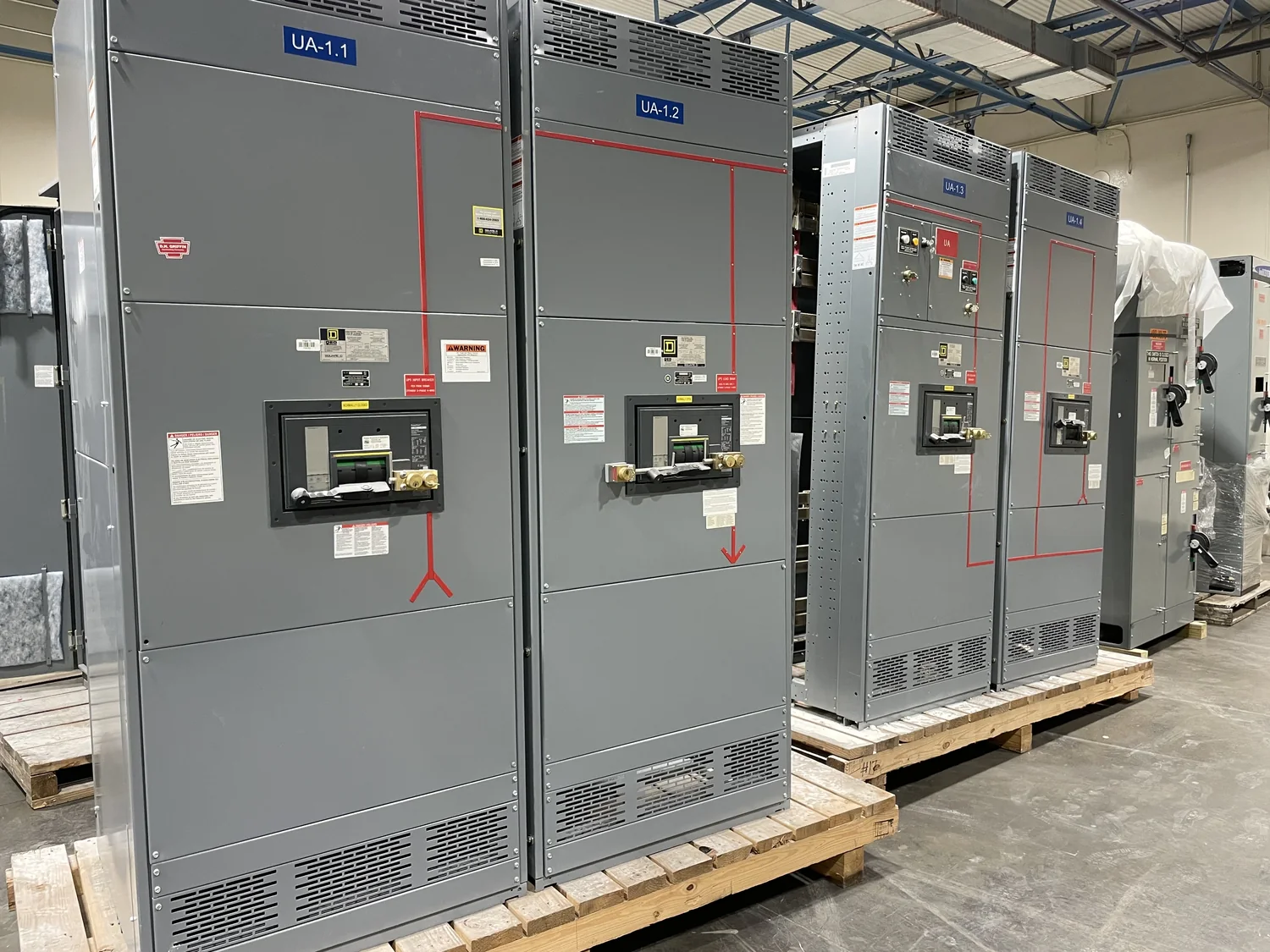
Allen-Bradley Switchgear Surplus Review
If your organization has surplus Allen-Bradley switchgear after a changeout, facility closure, or equipment refresh, a buyer review can help establish whether the equipment may be suitable for purchase. This page is for sellers in Washington, DC, Northern Virginia, and Maryland. The buyer purchases equipment; it does not sell switchgear, and it does not represent or claim endorsement by Allen-Bradley or its manufacturer.
A review starts with the specific equipment and the conditions around its removal—not an assumed model, voltage, or configuration. The buyer considers all voltage classes, but the equipment must still be described and reviewed before an offer can be made. Clear photos, nameplate information, lineup dimensions, completeness, ownership, access, and removal constraints help clarify what is being offered and what the project may involve. No testing is required from the seller.
What to share for an initial review
Send clear, well-lit photos of the full lineup and, where safely accessible, views of the front, sides, rear, sections, and visible interior components. Include close-up images of each available nameplate and other identifying labels. Do not remove covers or enter restricted areas just to take pictures; follow the site’s access and safety rules. If a label is unreadable or a detail is unknown, say so rather than guessing.
Provide the lineup’s overall length, height, and depth if available, along with the dimensions of individual sections when the lineup is divided or irregular. Note any known ratings or configuration information shown on the equipment, such as voltage or current ratings, without inferring specifications from appearance. A basic equipment list can help identify which sections and major components are included. Mention whether the lineup is complete, whether any parts have already been removed, and whether associated equipment is part of the offer.
Include the equipment’s location, current condition as observed, and its ownership or authority-to-sell status. The buyer will need to understand who can approve the sale and who can grant access for inspection or removal. Photos and records support an initial scope, but they do not by themselves establish a final price or guarantee that the buyer will make an offer. The buyer reviews the available information and project requirements before making a cash offer.
Condition, completeness, and scope
Switchgear from a changeout or closure may be offered as a complete lineup, as individual sections, or with associated components. Describe exactly what is included and identify anything excluded, retained, damaged, missing, or already disconnected. If you have available drawings, equipment schedules, maintenance records, or removal plans, they may help explain the configuration; sharing them is optional, and their existence should not be assumed.
Be candid about visible damage, corrosion, contamination, storage conditions, incomplete sections, or parts whose status is uncertain. Do not dismantle equipment to improve its presentation or try to determine internal condition if that requires opening barriers or working near electrical hazards. No seller testing is required. A review is based on the information available and any agreed project review; it is not a substitute for an electrical assessment or a site safety determination.
A final offer depends on the equipment and the practical scope, including what is present, how it can be accessed, and what removal will require. The buyer considers all voltage classes, but this does not mean every item or configuration will receive an offer. No price should be treated as final until the buyer has reviewed the relevant equipment details and project arrangements.
Access, disconnection, and removal planning
Removal planning is specific to the facility. Share the equipment’s location within the site, the route from its installed position to the loading point, doorway and corridor clearances, floor or loading-area limitations, overhead obstructions, and any known restrictions on vehicle or lifting access. Explain whether the lineup must be moved through occupied areas, a controlled-access space, or a shared loading area, and identify site rules that could affect scheduling. These details help the parties assess whether the proposed removal approach is workable.
The buyer handles crane, rigging, disconnects, loading, freight, and hauling, subject to the project arrangements and site access. Responsibilities, equipment, timing, and access conditions should be confirmed before removal. The buyer pays those crane, rigging, loading, freight, and hauling costs, with the specific arrangements agreed for the project. A clear understanding of who coordinates site access and when removal can occur helps prevent avoidable delays, especially when an equipment changeout or facility schedule is still in progress.
De-energization, isolation, and disconnect work must be performed by qualified personnel under the site’s safety procedures and outage requirements. Do not ask unqualified employees, contractors, or the buyer’s transport crew to disconnect or handle energized equipment. Coordinate the required shutdown, access authorization, and work window with the people responsible for electrical safety at the facility. The buyer’s removal responsibilities do not replace the site’s safety rules or the need for qualified personnel to complete electrical work.
Offers, payment, and next steps
To begin, send the available photos and nameplate details, lineup and section dimensions, a description of what is included, and the equipment’s location. Add ownership or authority-to-sell details, access conditions, and any known removal constraints. If the information is incomplete, identify what remains unknown; an accurate description is more useful than unsupported assumptions about the model, ratings, or condition.
After reviewing the information and project scope, the buyer may make a cash offer. If the offer is accepted, payment is arranged upfront. Confirm payment and removal arrangements with the buyer before scheduling work, including the agreed equipment scope, site access, timing, and the responsibilities for the removal project. The buyer handles the crane, rigging, disconnects, loading, freight, and hauling under the agreed arrangements, and pays the associated costs.
For sellers across Washington, DC, Northern Virginia, and Maryland, advance coordination is especially useful when equipment is inside a facility with controlled access, scheduled outages, shared loading areas, or limited removal windows. Those conditions are not assumed; they should simply be described if they apply to your site. A straightforward review begins with clear identification, honest scope details, verified ownership authority, and a practical account of how the equipment can be reached and removed.