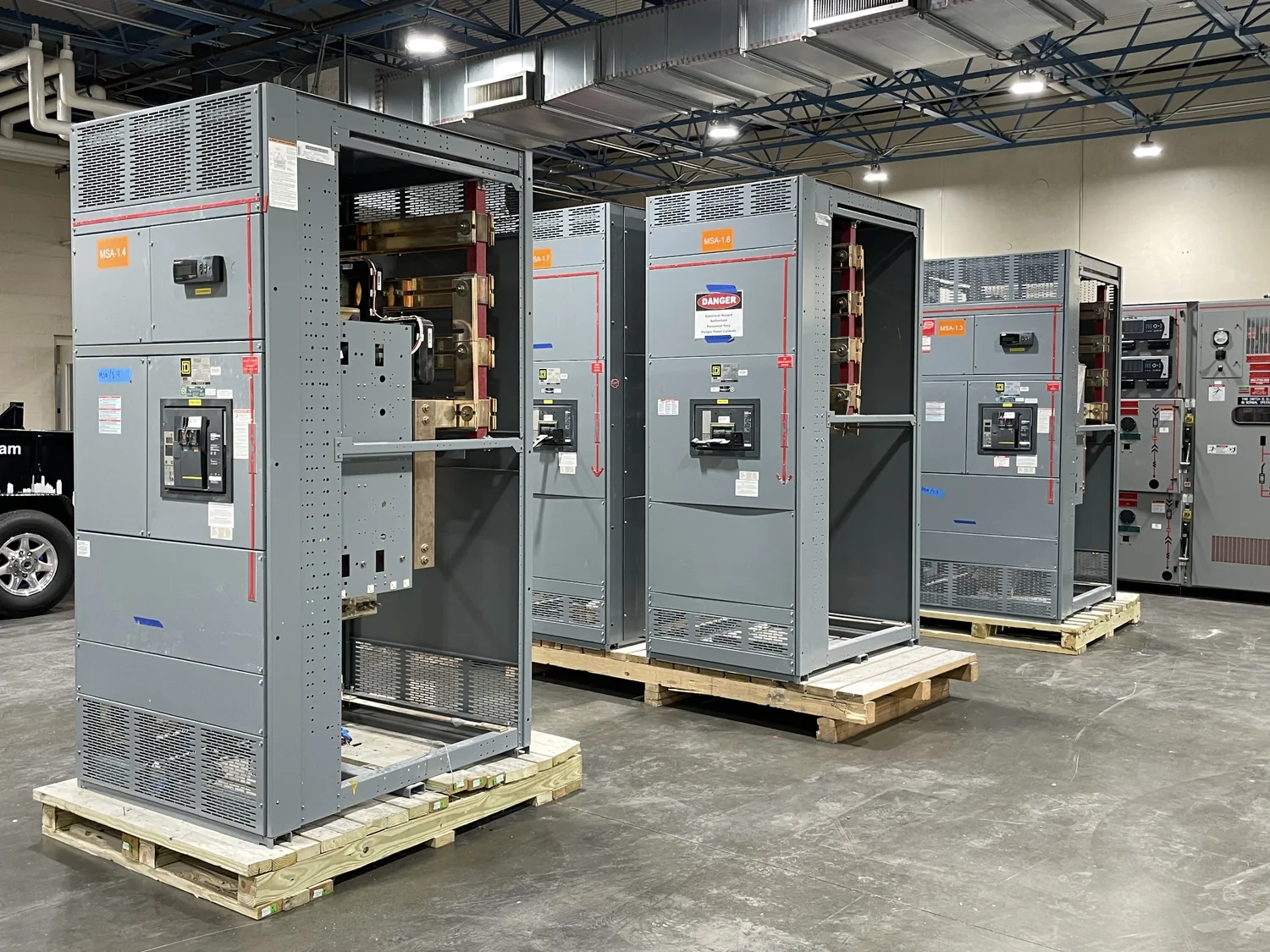
We Buy Used Switchgear in Arlington, Virginia
If your organization is preparing a facility closeout, renovation, equipment replacement, or other planned change in Arlington, you may have used switchgear to disposition. We buy used switchgear located in Arlington, Virginia, and consider equipment across all voltage classes. We are a buyer, not a seller: we review the equipment and project details, make a cash offer when appropriate, and arrange payment upfront if you accept. The seller does not need to test the equipment for us.
A useful first step is to gather clear photos of the switchgear, its nameplates, and the surrounding installation. Include the overall lineup, individual sections and visible labels, plus enough context to understand where it sits in the facility. Send the lineup’s approximate dimensions and any available records that help identify its configuration, ratings, completeness, and condition. These details support an initial review, but they do not substitute for a project-specific assessment or establish a final price.
Prepare Information Before Setting the Removal Scope
Switchgear lineups can vary in size, arrangement, and what is included. When you contact us, identify the equipment you intend to sell and note whether the offer should cover the complete lineup or only particular sections. Photos and nameplate information can help clarify the equipment’s identity and ratings; dimensions help assess the physical scope and possible removal path. If parts, doors, barriers, bus components, or other associated items are missing or excluded, describe that as accurately as you can. No seller-performed testing is required, and no particular voltage class is excluded from consideration.
Ownership and authority to release the equipment also matter. Explain who owns the switchgear, who can approve its sale, and whether another party must sign off before it can be removed. If the equipment is part of a larger asset-disposition or closeout process, identify any internal approval steps and the target date for release. Sharing these points early helps keep the offer, payment arrangements, and loading plan aligned with the people responsible for the facility and the asset. A final offer depends on review of the specific equipment and project information; it should not be assumed from photos or a preliminary description alone.
Coordinate Payment, Access, and the Closeout Schedule
A planned closeout often has several linked milestones: approval to release the equipment, confirmation of the offer, payment, preparation of the site, and a removal window. We arrange payment upfront when an offer is accepted. Before removal, confirm the payment details and timing with the appropriate parties, and coordinate the asset-release authorization so payment and loading can proceed according to the agreed project arrangements. If a facility has an internal closeout calendar, share the relevant target dates early so the proposed removal window can be discussed before other work is scheduled around it.
Arlington facilities may have site-specific access rules, operating constraints, or scheduling requirements, but these vary by property. Tell us what is known rather than assuming a particular access condition. Useful details include delivery or loading-area access, available working hours, check-in or escort procedures, vehicle restrictions, loading-dock or doorway dimensions, and any limits on staging. Also describe whether the switchgear is indoors, elevated, in a restricted area, or positioned behind other equipment. These details help determine whether the planned crew and equipment can reach the lineup and whether the removal sequence needs to be adjusted.
If operations are continuing nearby, coordinate access and the removal window with the facility team so loading activity does not conflict with normal work or other contractors. A proposed schedule is subject to confirmation of site access, equipment scope, and the required removal arrangements. Flag any outage windows, closeout deadlines, or periods when access is unavailable. Clear communication does not remove the need for the site’s own approvals or safety planning, but it can make the handoff between the asset owner, facility personnel, and removal team more orderly.
Safe Disconnection and Removal Responsibilities
Electrical equipment must not be disconnected or handled by unqualified personnel. De-energization, isolation, verification, and disconnect work must be performed by qualified personnel in accordance with the facility’s safety requirements and outage procedures. The site’s responsible personnel must determine when the equipment can be safely released and coordinate the required work and timing. Agree in advance who is responsible for each site-controlled step, what approvals are needed, and when the equipment will be ready for removal.
Subject to the agreed project arrangements and site access, the buyer handles the crane, rigging, disconnects, loading, freight, and hauling. Confirm those responsibilities before removal rather than relying on assumptions about what the facility or another contractor will provide. The handling plan may depend on the lineup’s dimensions and weight information, its position in the building, available clearances, overhead conditions, the route to the loading area, and the equipment needed to move it. If there are known restrictions on lifting, floor access, staging, or vehicle entry, include them when the project is reviewed.
The buyer’s responsibility for removal logistics does not replace site coordination. The facility must arrange authorized access, communicate applicable safety and outage procedures, and make the equipment available at the agreed time. Qualified personnel must complete any required electrical isolation and disconnection. The removal scope, timing, and division of responsibilities should be confirmed with the parties involved before work begins, especially when facility operations or a broader closeout schedule depend on the same area.
Request an Offer for Arlington Switchgear
To begin a review, provide clear photos, readable nameplates where available, approximate lineup dimensions, a description of what is included, and any known condition or completeness details. Add the equipment’s location within the facility, ownership and release status, access information, preferred timing, and any removal constraints. You can also identify whether the equipment remains in place, whether qualified personnel will perform required site-controlled isolation and disconnect work, and what closeout milestone the removal needs to support.
We will review the available information and discuss the project scope before making an offer. We do not promise a price or removal date without reviewing the specific equipment and arrangements. If you accept a cash offer, payment is arranged upfront, and the buyer handles crane, rigging, disconnects, loading, freight, and hauling as confirmed for the project. Share the details early enough for the asset owner, facility team, and removal parties to coordinate release, payment, safe access, and loading without treating an unconfirmed schedule as guaranteed.