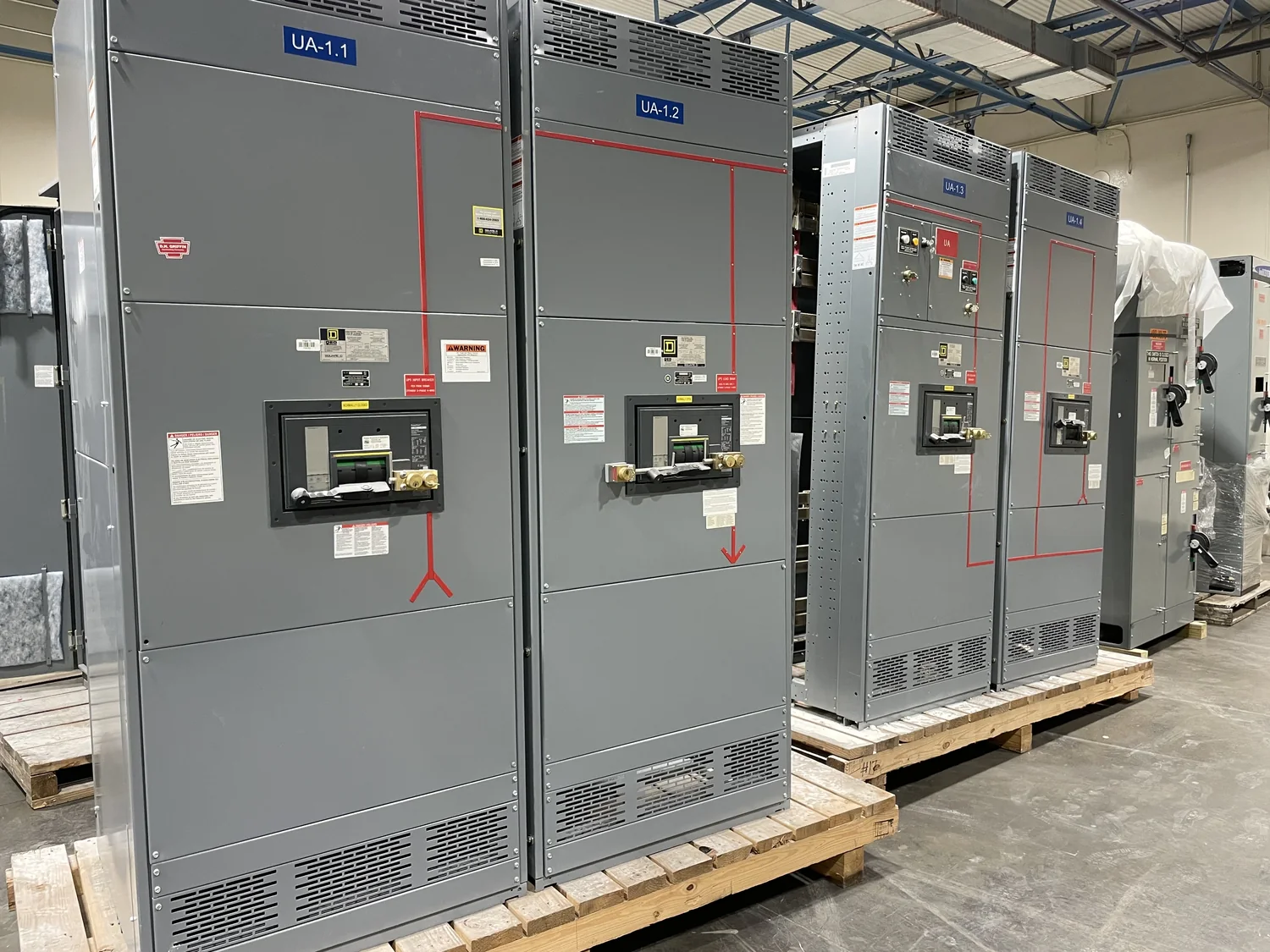
We Buy Used Switchgear in Falls Church, Virginia
If your business has used switchgear in storage at a facility in Falls Church, Virginia, we can review it for purchase. We are a buyer, not a seller, and consider switchgear across all voltage classes. A review is based on the actual equipment, its condition and completeness, ownership, and the practical requirements for access and removal—not on a generic estimate for a particular location.
To begin, share clear photographs of the equipment and its nameplates, along with the lineup’s overall dimensions. Include what is known about the asset’s condition, the loose or associated parts stored with it, who owns the equipment, and how the storage area can be accessed. These details help us understand what is being offered and what may be needed to move it. We do not require the seller to test the switchgear, and we will not provide a final price without reviewing the information and scope.
What to Include in the Initial Review
Photograph the switchgear from several angles, including the front, sides, rear where safely accessible, and any visible sections or compartments. Take close, readable images of each available nameplate and equipment marking. If the lineup consists of multiple sections, show how they are arranged and identify any labels that distinguish one section from another. Do not open equipment or enter restricted areas to obtain photographs; follow the site’s safety rules and use only information that can be gathered safely.
Provide approximate overall dimensions, including the lineup’s length, height, and depth, and note any unusually heavy or awkward sections if that information is available. Dimensions help frame handling and staging needs, but they do not replace a site-specific removal review. Describe the condition as observed: for example, whether the equipment is stored indoors or exposed to weather, whether there is visible damage or missing material, and whether it appears complete. These observations are useful context, not a substitute for testing or a guarantee of operability.
List associated loose parts that are included in the offer, such as separately stored sections or components, and share photographs of them where possible. Keep included items distinguishable from equipment that is not for sale. Ownership should also be clear: confirm that the seller has authority to offer the switchgear and identify any other party whose approval may be needed. The buying review can proceed more effectively when the offered assets and the seller’s authority to dispose of them are established early.
Storage Condition and Completeness Affect the Buying Review
Stored switchgear can vary substantially in condition and completeness. The review may consider whether the described lineup is present, whether its sections and associated loose parts are accounted for, and whether visible conditions or storage history raise questions that need clarification. Missing labels, incomplete photographs, uncertain section counts, or parts mixed with equipment outside the offer can make it harder to define the asset being reviewed. Clear descriptions and organized photos help avoid assumptions.
No seller testing is required. Do not energize, operate, dismantle, or attempt to inspect internal components for the purpose of preparing an offer unless that work is part of an approved site process performed by qualified personnel. If documentation or condition details are unavailable, say so rather than guessing. A buying decision and any offer remain subject to review of the available information and confirmation of the equipment and project scope.
For equipment already in storage, staging matters as much as the item’s description. Tell us whether the switchgear is accessible in its current location, whether it is already positioned for pickup, and whether loose parts are consolidated, palletized, or stored separately. Note relevant constraints such as narrow routes, stairs, low clearances, restricted doors, limited maneuvering room, or requirements to coordinate with facility operations. We do not assume a particular facility layout in Falls Church; the actual site conditions determine what removal approach can be considered.
Removal, Safety, and Site Coordination
The buyer handles crane, rigging, loading, freight, and hauling, subject to the project arrangements and actual site access. Responsibilities and scope must be confirmed before removal so the parties have a shared understanding of what equipment is included and what access and scheduling conditions apply. The buyer pays these removal and transportation costs under the agreed arrangements; no unreviewed description should be treated as a blanket commitment to a particular method or schedule.
De-energization, isolation, and disconnect work must be handled by qualified personnel in accordance with the facility’s safety rules and outage procedures. Do not ask unqualified staff to disconnect, move, or handle electrical equipment. Coordinate the required personnel, site access, outage timing, and any approvals before removal planning is finalized. A review of photographs or dimensions does not authorize electrical work or establish that a site is ready for pickup.
Before scheduling, share the site contact and access process, available pickup windows, staging location, and any known restrictions on vehicles or lifting equipment. Confirm whether the equipment can be reached and removed as staged, or whether additional coordination is necessary. If access, timing, or removal conditions change, the project scope may need to be reviewed again.
Offer and Payment Process
Send the photographs, nameplate information, dimensions, condition and completeness notes, ownership details, loose-parts inventory, and access information together when possible. This gives us a clearer basis to review the switchgear and identify questions before setting the scope. We consider all voltage classes, but a voltage rating alone is not enough to determine an offer; the equipment and proposed removal arrangement need review.
We can make a cash offer, and payment is arranged upfront when an offer is accepted. The offer and payment arrangements should be confirmed before removal, along with the assets included, responsibilities, access, and timing. We do not promise a particular price or acceptance before reviewing the equipment and project details. For sellers in Falls Church and the wider Washington, DC, Northern Virginia, and Maryland service area, a complete initial description is a practical first step toward determining whether the stored switchgear is a fit for purchase.