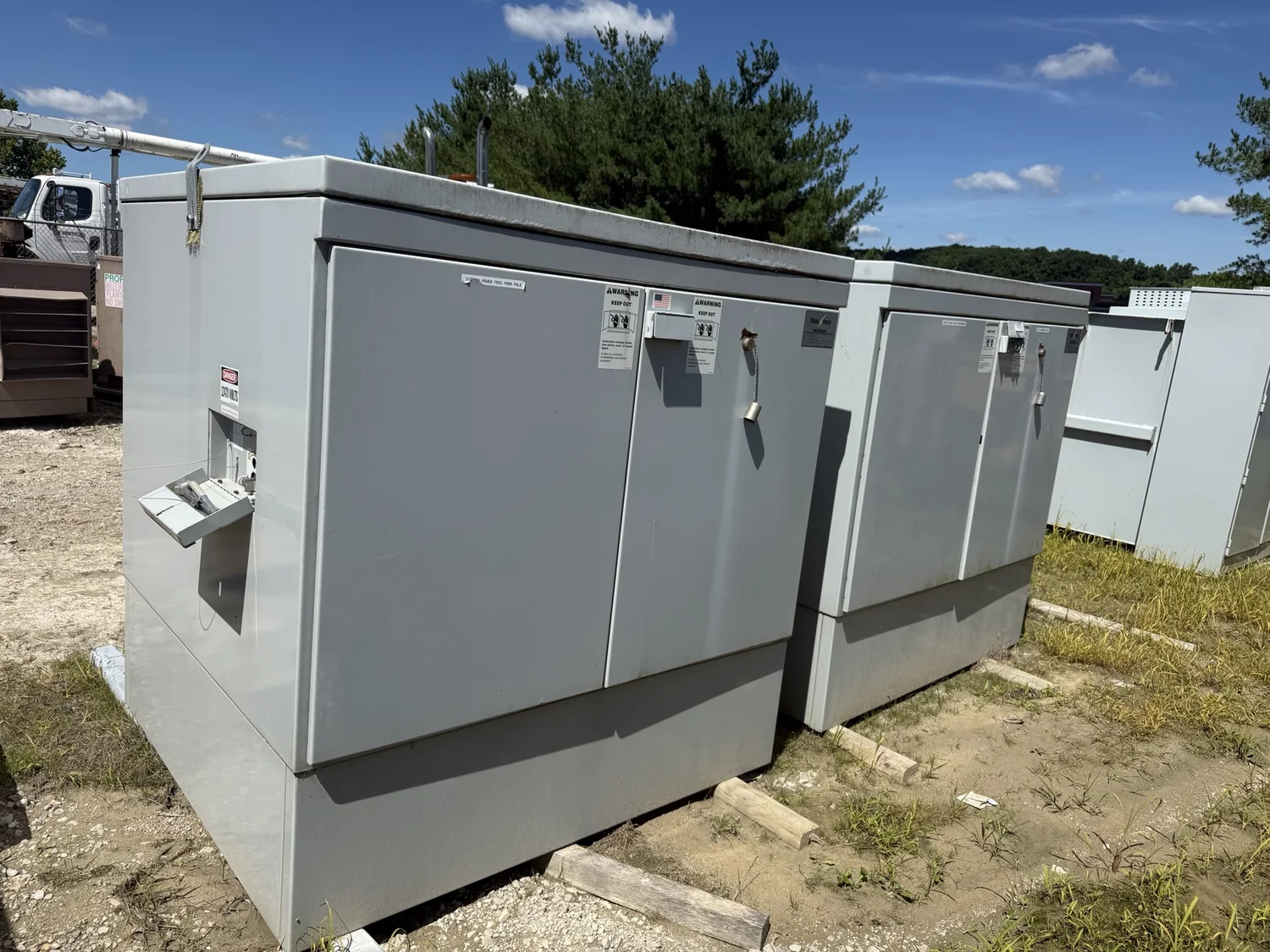
We Buy Used Switchgear in Foggy Bottom
If your facility in Foggy Bottom is replacing, consolidating, or changing out switchgear, you may be able to sell equipment that is no longer needed. We buy used switchgear from businesses across Washington, DC, Northern Virginia, and Maryland. We only buy equipment; we do not sell switchgear. We can consider equipment across all voltage classes, and you do not need to test it before asking us to review it.
A useful first step is to distinguish equipment available for removal now from gear that must remain in service. In a phased changeout, some sections may be surplus while adjacent equipment continues to support the facility. Identify which lineup sections, compartments, or related components are available, and which remain operational or are reserved for a later phase. That distinction helps shape a practical review without assuming that an entire lineup can be removed at once.
Start with Photos, Nameplates, and Lineup Dimensions
Send clear, well-lit photographs of the switchgear, including the overall lineup and any sections or components proposed for sale. Close-up images of readable nameplates can help identify the equipment and its ratings. Include available information such as manufacturer, model or type, serial number, voltage and current ratings, and other nameplate details; do not guess where a label is missing or unreadable. A seller is not required to perform testing to request an offer.
Provide approximate lineup dimensions, including length, height, and depth, and note whether the dimensions cover the full lineup or only the proposed surplus sections. Photos that show the equipment’s position in the room, nearby obstructions, doorways, corridors, and the route toward the loading area can help identify removal questions early. If equipment is incomplete, altered, damaged, or missing accessories or sections, describe that accurately and photograph the condition. Completeness and the relationship between sections may affect what can be considered and how removal is planned.
Clarify Ownership, Site Access, and Removal Conditions
Before scope is set, explain who owns the equipment and who is authorized to approve its sale and removal. If the assets are subject to a lease, lien, project contract, or another party’s approval, note that and resolve the required authorization before scheduling removal. Also share the facility contact responsible for coordinating access, the anticipated schedule, and any applicable site check-in, work-hour, loading, or contractor requirements.
Foggy Bottom is an urban setting, so access and timing deserve attention during project planning, but conditions vary from one facility to another. Do not assume that a truck, crane, or rigging crew can reach the equipment directly. Describe the route from the equipment room to the loading point, including stairs, elevators, narrow turns, overhead limits, restricted streets or loading areas, and any other known constraints. Photos, measurements, and a site review where appropriate can help the parties assess the route; final arrangements depend on the actual facility and project conditions.
Plan Disconnection and Phased Removal Safely
Any de-energization, isolation, or disconnection must be performed by qualified personnel under the site’s safety procedures and outage plan. Do not ask unqualified staff to disconnect, dismantle, or handle electrical equipment. Coordinate the work sequence with the facility’s responsible personnel, especially when some switchgear is available now while other equipment continues to serve the site. The buyer’s review of a purchase does not replace the facility’s electrical safety controls or determine when an outage can occur.
A phased changeout may require the parties to identify boundaries between the equipment being sold and equipment staying in service, along with the order and timing for each removal stage. Confirm what is included in the sale, what must remain undisturbed, and when each area can be accessed. Disconnect points, equipment configuration, lifting requirements, removal path, and site restrictions can all affect the plan. Set responsibilities and timing before work begins rather than assuming that equipment can be separated or removed on a particular date.
Offer, Payment, and Buyer-Handled Logistics
After reviewing the information and project scope, we can make a cash offer for consideration. No final price can be stated from a general description alone; the offer depends on the equipment details, condition, completeness, ownership authority, and practical removal requirements. If you accept an offer, payment is arranged upfront. The specific payment and removal arrangements should be confirmed with the responsible parties before the project is scheduled.
The buyer handles crane, rigging, disconnects, loading, freight, and hauling, subject to project arrangements and site access. Confirm responsibilities, sequencing, access, and timing before removal so the work can be coordinated with the facility’s qualified personnel and site procedures. To begin a review, gather the equipment photos and nameplates, lineup dimensions, a clear list of what is available now versus what remains in service, ownership or approval details, and information about access and removal constraints. That preparation helps establish a realistic scope for selling used switchgear from a Foggy Bottom facility.