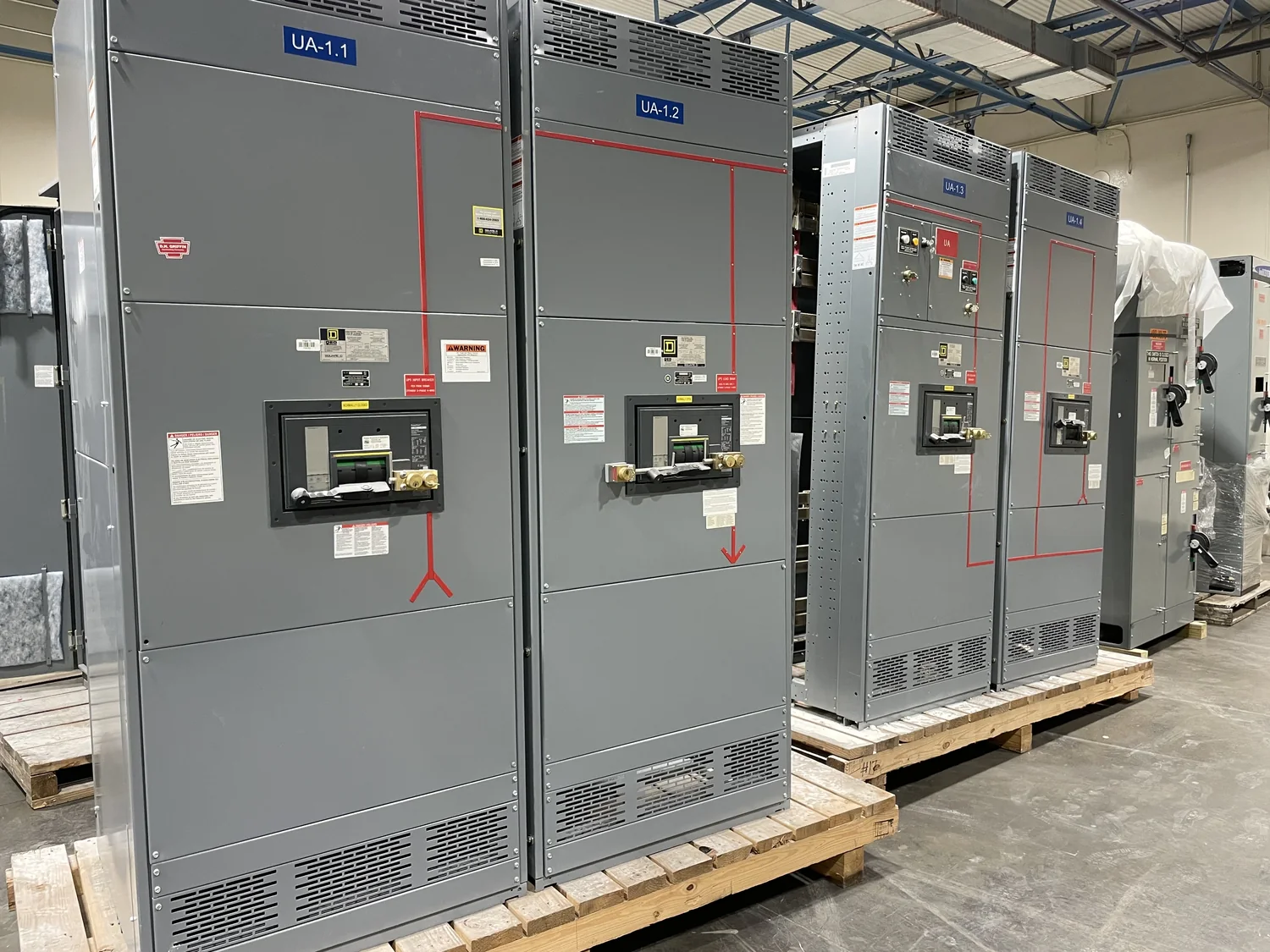
We Buy Used Switchgear in H Street NE
If your facility in H Street NE has used switchgear to sell, we can review the equipment and make a cash offer. We buy electrical equipment; we do not sell it. Every purchase is subject to reviewing the specific assets, ownership, site conditions, and removal plan, so a price is not final until those details have been discussed.
This guide is for owners and facility teams planning to sell a switchgear lineup, including cabinets and loose breakers that may be offered together. Whether equipment is still installed or already staged for removal can affect the information needed to scope the project. No seller testing is required. We consider all voltage classes, but we will need the available nameplate information to understand what is being offered.
Start with a Traceable Inventory
A clear inventory helps connect each cabinet, section, and loose breaker to the photos and nameplates provided for review. Use consistent identifiers—such as a cabinet number or a simple sequence—and include that identifier in the corresponding photo filenames or inventory notes. If breakers are stored separately, record where they came from or which lineup they belong to when that information is known. Avoid combining unidentified loose items into a single count if their ratings or origins differ.
For each lineup or cabinet, share the manufacturer and model details visible on the nameplate, the number of sections, and any available ratings or other legible nameplate data. Photograph nameplates straight on, in focus, and with enough light to read them. Also send wider views showing the equipment arrangement, front and rear where safely accessible, and any visible damage, missing covers, or signs that sections have been separated. Close-up photographs of loose breakers should show their labels and identifying markings. Do not open equipment or approach exposed electrical parts to take pictures; have qualified site personnel determine what can be photographed safely.
A simple schedule can list each cabinet or section, its dimensions, visible identification, and whether associated breakers or other included items are present. Note what is included in the proposed sale and what is excluded. If information is missing or unreadable, say so rather than guessing. A consistent photo set and inventory are particularly useful when cabinets and loose breakers are being considered together, because they reduce the risk of confusion when the proposed scope is reviewed.
Share Dimensions, Ownership, and Site Details
Provide approximate lineup length, individual cabinet dimensions where available, and the overall height and depth. If the equipment is installed, note its floor or room location and any known restrictions on moving it through the facility. Stairs, narrow doors, low clearances, corridors, loading areas, and distance to a pickup point can all affect the removal plan. These details should be confirmed for the actual site; H Street NE addresses and facilities can have different layouts, access conditions, and operating requirements.
Please also identify who owns the equipment and who is authorized to approve its sale. If ownership, leasing, a lien, a contractor relationship, or another party’s approval could affect disposition, explain that before scope is set. Confirm who can coordinate facility access, site rules, delivery or pickup windows, and any required advance notice. A facility contact may be needed to arrange the visit and coordinate removal timing, but we do not assume a particular building, loading arrangement, or local office location.
In H Street NE, project planning should account for the actual route from the equipment to the agreed loading point—not just the equipment’s position in the room. Share any known constraints on truck access, staging, parking, loading hours, elevator use, or street-side operations. These are planning questions, not assumptions about your facility. The removal approach and schedule depend on site access, equipment condition, and arrangements confirmed for the specific project.
Plan Disconnection and Removal Safely
Any de-energization, isolation, and disconnection must be performed by qualified personnel under the facility’s safety rules and outage procedures. Do not ask unqualified staff to disconnect, dismantle, lift, or handle switchgear. Coordinate the required shutdown, access, and work timing with the people responsible for the site. We do not require the seller to test the equipment before submitting it for review, and photographs should be taken only when site personnel determine that doing so is safe.
The buyer handles crane services, rigging, disconnects, loading, freight, and hauling, subject to project arrangements and site access. Before removal, confirm in writing how each activity will be coordinated, when it can take place, what access is available, and which site requirements apply. The practical scope may depend on equipment dimensions and weight information, the path out of the building, lifting or staging constraints, and the agreed division of work. Buyer responsibility for these logistics does not override the facility’s safety procedures or the need for qualified personnel to perform electrical work.
If cabinets and loose breakers are sold together, keep the agreed inventory aligned with what is set aside for pickup. Identify the items included, separate them from excluded material where practical, and tell us if the count or condition changes before removal. Any change in the equipment, access, or removal conditions should be reviewed before the schedule and scope are finalized.
Offer Review and Upfront Payment
To begin, send clear equipment photos, legible nameplates where available, lineup and cabinet dimensions, a traceable list of cabinets and loose breakers, ownership and authorization details, and information about access and removal constraints. We can review the submission and discuss the proposed scope. We do not set a final price without reviewing the equipment and project details, and an offer is not a guarantee of purchase until accepted and the arrangements are confirmed.
If you accept an offer, payment is arranged upfront. The buyer pays the crane, rigging, disconnect, loading, freight, and hauling costs, with responsibilities and project logistics confirmed before removal. The timing and execution of any work must be coordinated with the facility and its qualified personnel. If details are incomplete, sending follow-up photos or clarifying the inventory can help establish what is included and what needs to be planned.
For sellers in H Street NE and across the Washington, DC, Northern Virginia, and Maryland service area, a well-organized submission makes review more straightforward without requiring seller testing. Keep the records, equipment identifiers, and photo set together, and flag uncertainties early. That gives both parties a practical basis to review the switchgear, determine whether an offer can be made, and coordinate an appropriate removal plan for the actual site.