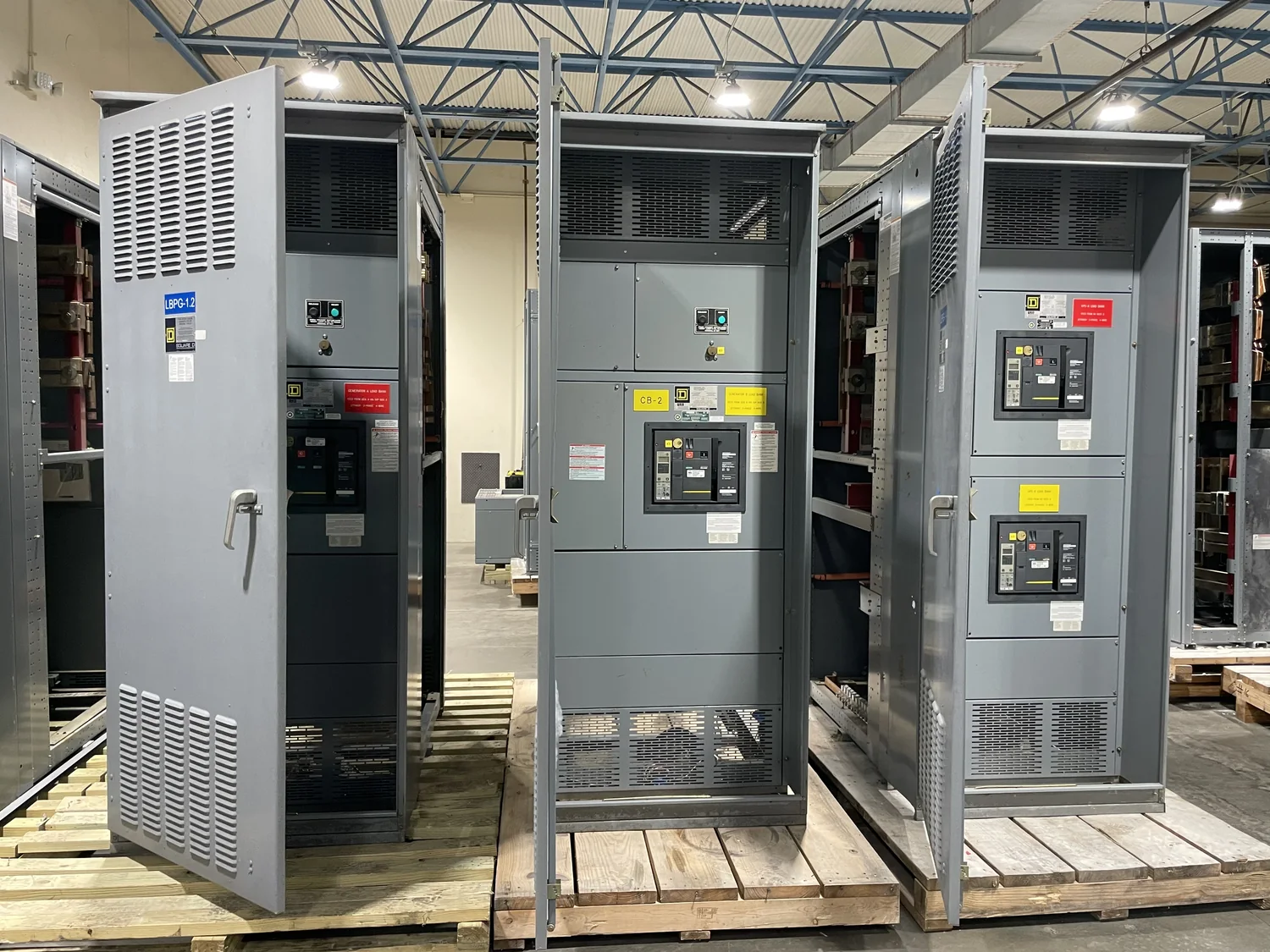
We Buy Used Switchgear in Logan Circle
If your facility in Logan Circle has used switchgear to disposition, we can review it for purchase. We buy electrical equipment; we do not sell it. We consider equipment across all voltage classes, including complete switchgear lineups, and can make a cash offer after reviewing the specific assets and removal conditions. No seller testing is required to start a review.
A useful first step is to send clear photos of the lineup and its nameplates, along with approximate dimensions and information about ownership and site access. Those details help us understand what is present and what a potential removal would involve. An initial review is not a final price or a commitment to purchase: the offer depends on the equipment information and project scope being confirmed. If an offer is accepted, payment is arranged upfront, with payment and removal responsibilities confirmed before work is scheduled.
What to Share About a Large Lineup
For a large or multi-section lineup, take photos that show the full assembly, its sections, visible labels, and the surrounding room or loading route where site rules permit. Include readable nameplate images for the lineup and individual sections when available. Do not open energized compartments or remove covers to obtain photographs; follow the facility’s access and safety requirements, and ask qualified site personnel to provide information that cannot safely be photographed from an authorized position.
Share approximate lineup length, height, and depth, plus section count and any known shipping or handling dimensions. If exact measurements are unavailable, say so rather than estimating with false precision. It is also helpful to note whether the lineup appears complete, whether sections or components are missing, and whether there are loose or separately stored parts. These observations inform review, but you do not need to test the equipment or make technical judgments about its condition.
Nameplate details and available records can help identify the equipment being offered, but avoid assuming that a label, drawing, or past configuration fully describes the lineup as it stands today. Tell us what is known and flag anything uncertain. The more clearly the asset and its completeness are documented, the easier it is to discuss scope before setting a removal plan.
Ownership, Access, and Logan Circle Scheduling
Before an offer is finalized, establish that the seller has authority to transfer the equipment. If ownership or disposition approval involves a property owner, tenant, contractor, lender, or another party, identify who can approve the sale and who will coordinate site access. The buyer may need a designated site contact to confirm access rules, permitted work hours, notice requirements, loading arrangements, and any building procedures that affect removal.
Logan Circle projects can require careful coordination around facility access, deliveries, loading areas, and the movement of large equipment. Conditions vary by site, so share the actual constraints rather than relying on assumptions about the neighborhood or building. Useful details include the route from the equipment room to the loading point, door or corridor clearances, floor or elevator restrictions, staging limits, truck access, and any time windows or scheduling steps imposed by the site. Photos or a simple route description can help identify questions for the project plan.
The site team should describe access and timing limitations, not perform a lift or arrange unsafe handling. Tell us whether equipment is indoors, how it can reach the agreed loading location, and whether the path is shared with other occupants or operations. Site-specific access and timing need to be coordinated before removal; an initial conversation cannot establish that a particular route, lifting method, or schedule will work.
Disconnection and Removal Responsibilities
Any de-energization, isolation, and disconnect work must be handled by qualified personnel under the facility’s safety procedures and outage requirements. Do not ask unqualified staff to disconnect, move, or handle electrical equipment. The facility and its qualified personnel should coordinate required approvals, safe work conditions, outage timing, and the point at which equipment is ready for the buyer’s removal crew.
The buyer handles crane services, rigging, loading, freight, and hauling, subject to the agreed project arrangements and actual site access. The buyer also coordinates the removal scope with the seller’s site contact. Before work is scheduled, confirm responsibilities, access conditions, timing, loading arrangements, and any site requirements so everyone understands how the equipment will be transferred and removed. The site team can provide information about constraints without conducting a lift.
Large lineups may need to be handled as multiple sections, and the practical approach depends on dimensions, weight information if available, configuration, route clearances, and loading access. Share any known limits or restrictions, but do not dismantle equipment or prepare it for lifting unless that work has been assigned to qualified personnel under the agreed plan. Crane and rigging needs cannot be determined reliably from a brief description alone; they must be reviewed against the equipment and site conditions.
Request a Review and Cash Offer
To begin, send the equipment photos, nameplate images, approximate lineup dimensions, completeness information, ownership confirmation, and a description of access and removal constraints. Include the facility’s preferred contact and any relevant outage or scheduling considerations. If some information is not available, explain what is unknown; a review can identify what further details are needed before the scope is set.
After reviewing the equipment and project details, we can discuss whether to make an offer. We do not quote a final price without review, and neither an offer nor a removal date should be treated as guaranteed until the details and responsibilities are confirmed. If you accept an offer, payment is arranged upfront. The buyer pays the crane, rigging, loading, freight, and hauling costs, with the specific arrangements confirmed before removal.
We serve businesses across Washington, DC, Northern Virginia, and Maryland, including sellers with equipment in Logan Circle. A clear account of the switchgear and the site’s actual access conditions helps move the discussion from an asset list toward a workable, coordinated disposition plan—without requiring the seller to test the equipment or perform a lift.