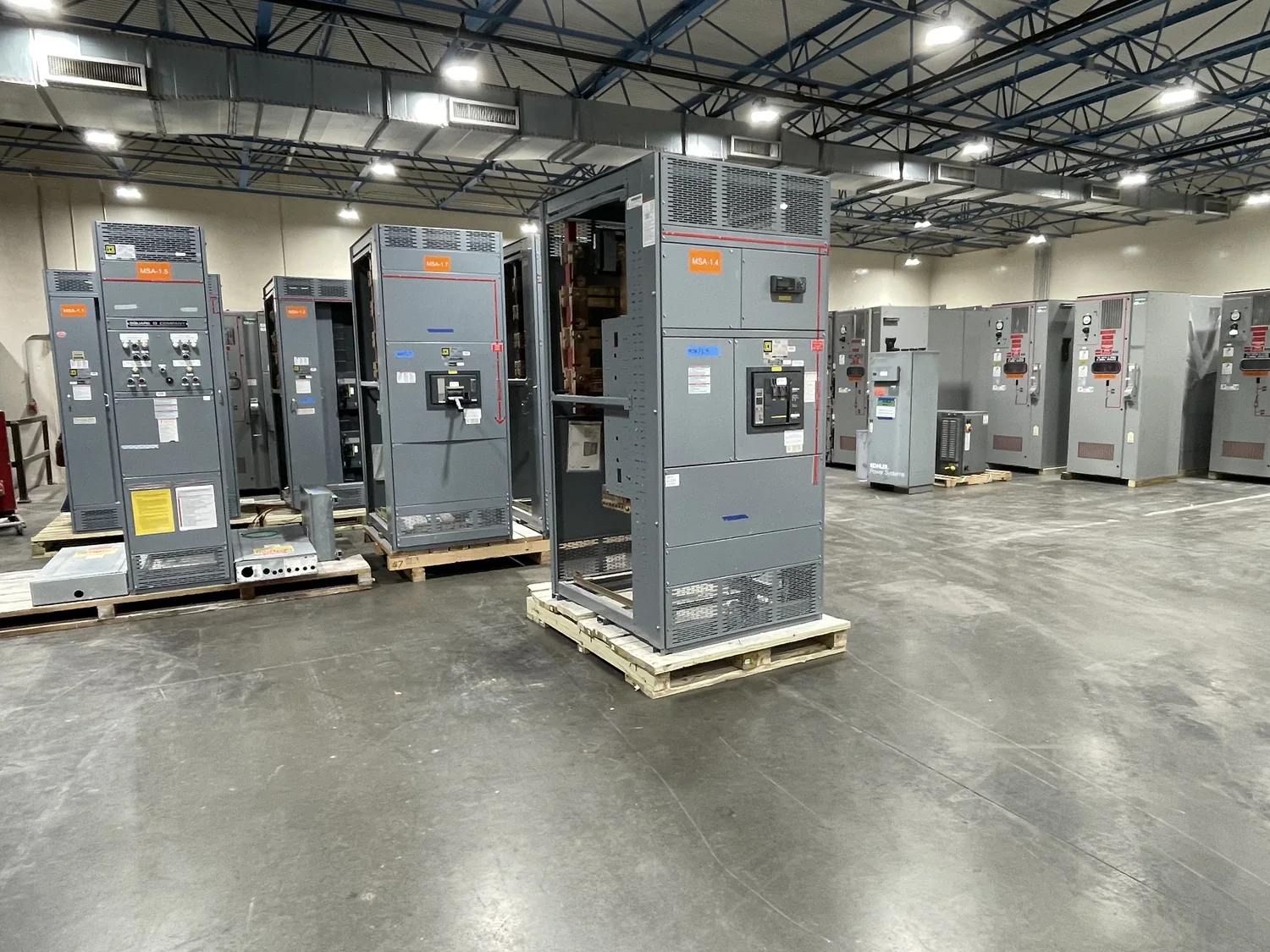
We Buy Used Switchgear in Navy Yard
If your organization has used switchgear at a facility in Navy Yard and is preparing to clear a former equipment room, the first step is to establish what is available and how it can be safely removed. We buy used switchgear and can make a cash offer after reviewing the equipment and project details. We buy; we do not sell equipment. We consider all voltage classes, and the seller does not need to test the gear before requesting a review.
A complete, organized description helps determine whether the equipment is a practical fit for purchase and removal. Send clear photographs, readable nameplate images, approximate lineup dimensions, and details about the equipment’s condition and completeness. Include the facility’s location, the seller’s ownership or authorization to transfer the assets, and any known access or removal constraints. These details support an initial review, but they do not establish a final price or guarantee an offer. Any offer depends on review of the specific equipment and project circumstances.
What to Document Before Scope Is Set
Photograph the switchgear from several angles, including the overall lineup, individual sections, visible doors and compartments, and any damage, missing covers, or apparent alterations. Capture each nameplate as sharply as possible, with enough detail to read the manufacturer and model information, ratings, serial or identifying numbers, and other marked data. Do not open energized equipment or enter restricted areas just to obtain a photograph. Arrange access and photography with the facility contact, following the site’s procedures.
Provide approximate lineup length, height, and depth, and note whether sections appear joined or whether any components have already been separated. If available, share drawings, an equipment schedule, or an inventory that identifies the lineup and its sections. Describe what is included with the gear, such as associated sections or components, and what is not included. Completeness can affect the review, so be candid about missing parts, incomplete assemblies, or equipment that has been altered or stored separately. No seller testing is required; do not energize or perform electrical work for the purpose of preparing a sale.
Also clarify who owns the equipment and who has authority to approve its transfer and release. For a facility disposition, confirm whether another owner, tenant, contractor, lender, or project stakeholder must authorize removal. Describe the building access route, loading area, working hours, any applicable scheduling or check-in process, and known limits on equipment movement. Useful practical details include doorway and corridor clearances, floor or dock access, elevator availability, loading-area restrictions, overhead obstructions, and whether the lineup can be moved intact. These items are project-specific and should be verified with the people responsible for the site rather than assumed.
Navy Yard Access and Removal Planning
A Navy Yard facility may have its own access controls, delivery or loading procedures, working-hour restrictions, and coordination requirements. Do not assume a particular building layout, street approach, parking arrangement, or staging area. The facility contact should identify the approved entry and loading route, any advance scheduling requirements, and who must be present for access. Share these details early so the equipment review and removal plan reflect the actual site rather than a generic pickup assumption.
The buyer handles crane, rigging, disconnects, loading, freight, and hauling, subject to project arrangements and actual site access. Responsibilities, timing, equipment, and the planned route should be confirmed before removal. A crane or other lifting method may or may not be needed; that decision depends on the equipment, its path out of the room, and the conditions at the facility. If the lineup must be dismantled or separated to pass through the route, that scope also needs to be discussed and coordinated before a removal date is set.
De-energization, isolation, and disconnect work must be performed by qualified personnel under the facility’s safety procedures and outage requirements. The timing of that work, confirmation that the equipment is released for removal, and access for the removal crew must be coordinated with the site. Do not ask unqualified staff to disconnect, open, move, or handle electrical equipment. A proposed pickup date is not a substitute for the facility’s required approvals, safe-work controls, or outage coordination.
Offer, Payment, and Cost Responsibilities
After reviewing the available equipment information and the removal circumstances, we can determine whether to make a cash offer. A useful review typically needs clear equipment photos and nameplates, lineup dimensions, an account of completeness, ownership or transfer authorization, and specific access and removal details. If information is missing or a site condition could change the scope, that may need to be clarified before the offer and arrangements can be finalized. No final price should be assumed from a brief description, equipment category, or voltage class alone.
If an offer is made and accepted, payment is arranged upfront. Confirm the payment sequence and the equipment-release details as part of the accepted offer so both sides understand when payment is made and what assets are covered. The buyer pays the crane, rigging, loading, freight, and hauling costs, with the responsibilities and scope confirmed for the project before removal. The seller should not assume that a particular removal method or schedule is included until the site conditions and arrangements have been reviewed.
Keep the asset list, agreed scope, payment arrangement, access plan, and removal responsibilities aligned. If the photos, inventory, ownership information, or site conditions change, tell the buyer before work is scheduled. A change in what is included, the route out of the building, or access to the loading area can affect planning, so it is better to resolve discrepancies in advance than during a scheduled handoff.
A Coordinated Handoff from a Former Equipment Room
A clear closing sequence helps a facility team release surplus switchgear without confusing the sale with the building’s electrical work. First, identify the exact lineup and establish that the seller is authorized to transfer it. Next, provide photographs, nameplates, dimensions, completeness information, and site access details for review. Once an offer is available, confirm the equipment covered, acceptance, upfront payment arrangement, and buyer-paid removal costs. Then coordinate the site’s required de-energization, isolation, disconnect work, access approvals, and timing with qualified personnel and the facility contact.
Before the removal crew arrives, confirm that the agreed equipment is identifiable, the approved route and loading area are available, and the site has completed its required release steps. Make sure any restrictions on hours, entry, staging, lifting, or movement are understood by the parties responsible for the work. The buyer handles the removal logistics within the confirmed project arrangements, while the site controls its own access, safety procedures, and authorization requirements. If an obstacle or difference from the agreed scope arises, pause and coordinate a resolution rather than improvising around electrical or building constraints.
This process is intended for sellers in Navy Yard and the broader Washington, DC, Northern Virginia, and Maryland service area. It does not depend on a claimed local office or a presumed facility layout. The most useful starting point is a clear, accurate equipment package and a direct description of ownership, access, and removal conditions. With those details in hand, both sides can assess the switchgear, discuss an offer without presuming a price, and plan a safe, orderly handoff from the former equipment room.