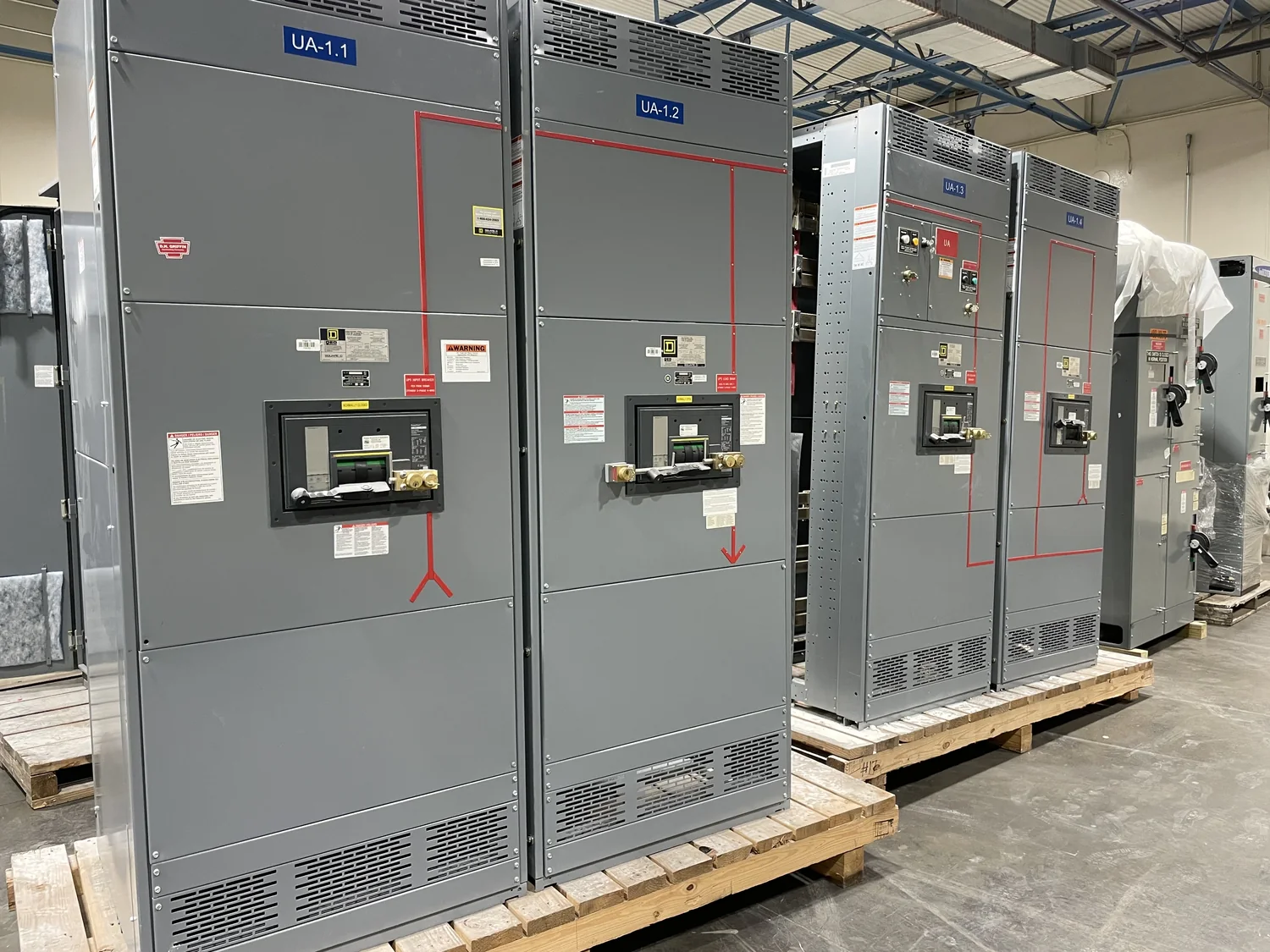
We Buy Used Switchgear in Rockville, Maryland
If your Rockville facility has used switchgear to sell, we can review the equipment for a purchase. We buy electrical equipment; we do not sell it. We consider all voltage classes, and the seller does not need to test the equipment before requesting a review. An offer depends on the specific equipment, its condition and completeness, ownership, and the practical requirements for removal. We do not set a final price from a brief description alone.
This guide is for facility owners, property managers, contractors, and other authorized representatives planning to release switchgear while a building remains occupied or electrical service must be retained. The first step is to share clear photos, nameplate information, lineup dimensions, and details about ownership and site access. That information helps establish what is being offered and what project arrangements may be needed before a removal scope is set. Service in Rockville is part of a broader Washington, DC, Northern Virginia, and Maryland service area; this page does not imply a local office or a particular facility arrangement.
Start with an accurate equipment description
Photograph the full lineup from several angles, including the front, sides, rear where safely accessible, and visible compartments or sections. Add close, readable images of each available nameplate and any labels that identify ratings or equipment configuration. Do not remove covers or enter restricted areas just to obtain a photograph. If a label cannot be accessed safely, note that rather than asking unqualified staff to reach into or open equipment.
Record the lineup’s overall length, height, and depth, plus the number of sections if known. Include approximate weights only when reliable documentation is available; do not estimate weight by appearance. Useful details may include the equipment type, voltage and current ratings shown on its nameplates, number and arrangement of sections, and whether associated components or accessories are included. We consider all voltage classes, but the actual ratings and configuration still matter to review and handling plans.
Describe completeness honestly. Note missing doors, panels, breakers, internal components, bus connections, or accessories if known, and identify equipment that is included in the proposed sale versus items that must remain. Mention visible damage, modifications, storage conditions, or uncertain identification. Clear disclosure helps avoid a mismatch between the equipment reviewed and the equipment available for removal. No seller testing is required for an initial review; do not energize equipment or perform tests solely to support a request.
Confirm ownership, access, and building needs
Before an offer or removal scope is finalized, establish who owns the switchgear and who has authority to sell it. If the equipment belongs to a landlord, tenant, utility, lender, or another party, clarify the applicable approval process and who can authorize release. Identify whether the proposed sale includes only the lineup or also related parts, and whether any components must be retained for the facility. The buyer can review the information provided, but the seller is responsible for confirming that the equipment is available for sale.
In an occupied Rockville building, access can shape the project as much as the equipment itself. Share the building’s access windows, receiving or loading procedures, tenant coordination needs, security requirements, elevator or corridor restrictions, and any limits on staging or vehicle access. Provide the route from the equipment to the loading point where practical, including narrow doors, turns, steps, floor-level changes, or other known obstacles. Identify constraints on crane placement, rigging, loading, and hauling, but do not assume a particular lifting method before the site and equipment are reviewed.
If the building must retain electrical service, explain which systems or areas need to remain in service and what outage windows, sequencing, or coordination requirements apply. De-energization, isolation, and disconnect work must be performed by qualified personnel under the facility’s safety procedures and outage controls. Site access and timing for that work must be coordinated for the project. Do not ask unqualified staff to disconnect, open, move, or handle switchgear.
Removal planning and buyer-paid logistics
Removal responsibilities are confirmed for the specific project before work is scheduled. Subject to project arrangements and site access, the buyer handles crane, rigging, disconnects, loading, freight, and hauling, and the buyer pays those costs. The exact scope, timing, access conditions, and responsibilities must be agreed before removal; unusual site restrictions or a change in the equipment available may require the plan to be reviewed. Do not treat a preliminary discussion as confirmation that a particular method or schedule will work.
The facility and its qualified personnel remain central to safe release and service continuity. Coordinate required outage approvals, isolation, disconnect work, and any building or tenant notifications through the site’s established procedures. Agree on who will provide access, when work may occur, which areas must remain operational, and what equipment or electrical infrastructure cannot be disturbed. The removal plan should account for the actual lineup dimensions, route, loading area, and any limits on lifting or vehicle access. No one should attempt to work around a blocked route or access restriction without first revising the project arrangements.
Review, offer, and payment
To request a review, provide the equipment photos and nameplates, lineup dimensions, known ratings, completeness notes, ownership and sale authority, and a practical description of access and removal constraints. Also state whether the site is occupied, what service must be retained, and which access or outage windows may be available. These details help determine whether the offered equipment and proposed removal conditions can be reviewed together; they do not guarantee an offer or a particular value.
If an offer is made and accepted, payment is arranged upfront. The buyer can make cash offers, with payment terms and the agreed removal responsibilities confirmed for the project before work proceeds. A final price cannot be responsibly stated without reviewing the equipment and relevant project details. For sellers in Rockville and the wider DC, Northern Virginia, and Maryland area, a complete, accurate information package is the most practical way to begin a purchase discussion while protecting occupied-building operations and retained electrical service.