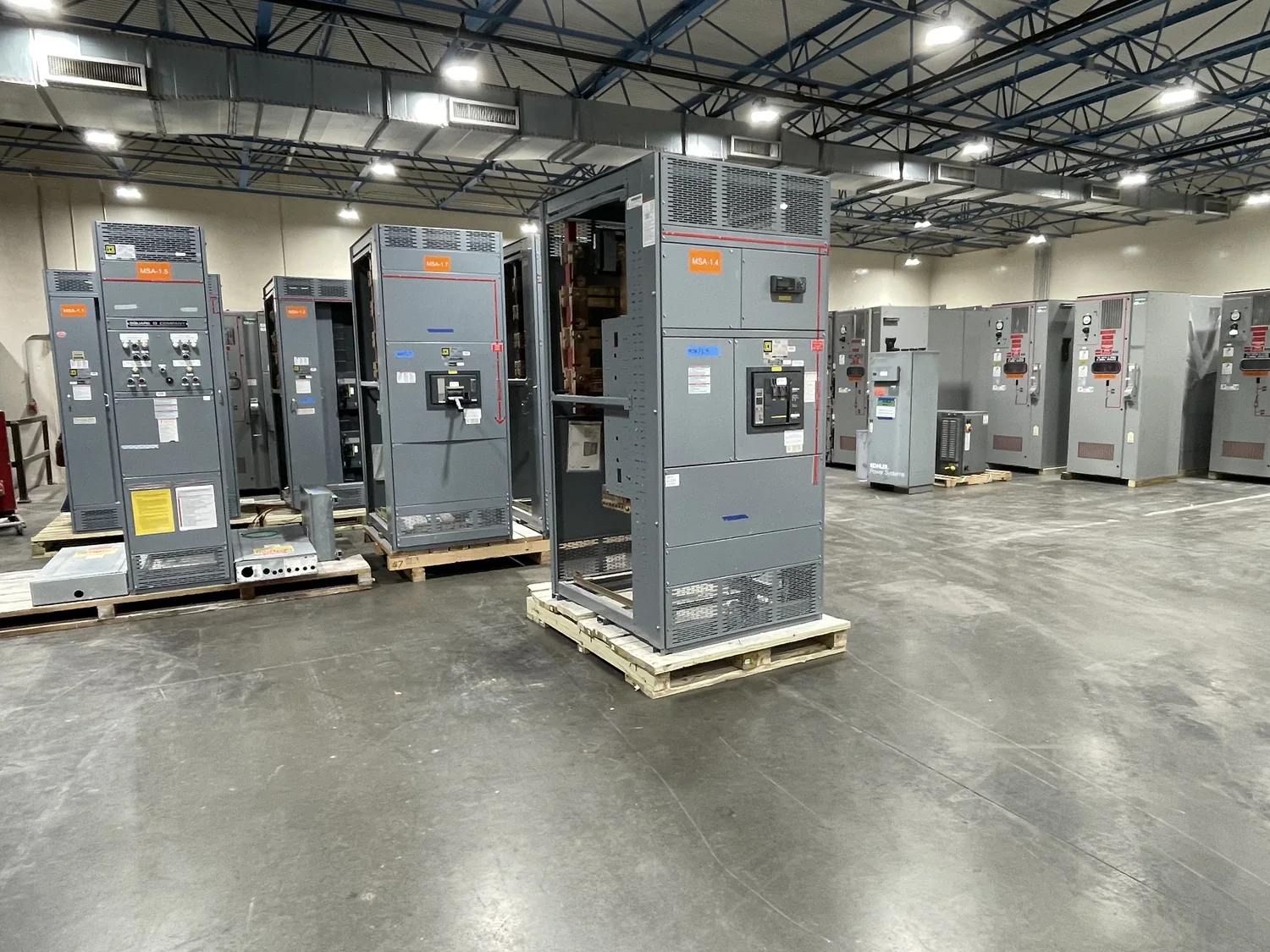
We Buy Used Switchgear in Washington, DC
If your facility in Washington, DC has used switchgear to remove, we can review it for purchase. We buy electrical equipment; we do not sell it. We consider all voltage classes, and the seller does not need to test the equipment before requesting a review. A possible purchase and removal plan depend on the specific assets, ownership, site conditions, and agreed scope.
A mixed lineup needs particular care in the initial description. Some sections may be available for removal while others must remain in service or stay with the facility. Before anyone sets a removal scope, document which sections are included, which are excluded, and where the boundary falls. Clear written approval of those boundaries helps prevent confusion during planning and removal.
What to Send for an Initial Review
Start with clear, well-lit photos of the full lineup and each section being considered. Include close-ups of available nameplates, plus overall and side views that show how the equipment is arranged. Share lineup dimensions, including approximate width, height, and depth when available, and note any known ratings or configuration details shown on the equipment. Do not guess at unreadable specifications; a legible photo is more useful than an assumption.
For a mixed lineup, label the photos or provide a simple marked-up layout that identifies each section as included, retained, or not yet determined. Note connections, barriers, shared structures, bus arrangements, and other features that may affect whether sections can be separated. If the boundary is not clear from the equipment itself, describe what must remain and request written confirmation of the proposed scope before removal planning proceeds.
Also provide the facility location, available access information, equipment ownership details, and a contact who can coordinate with the site. Explain whether the equipment is indoors or outdoors, where it sits within the facility, and any known constraints on moving it from its present location. These details support an initial assessment, but they do not replace a site-specific review. No final purchase price or removal plan can be confirmed without evaluating the equipment and project conditions.
Agree on the Scope Before Removal
Scope should be recorded in writing before work is scheduled. Identify the exact lineup sections and related components included in a potential purchase, along with anything that is excluded or must remain. Confirm whether covers, compartments, loose parts, accessories, or other associated items are part of the agreed package. If the equipment is integrated with adjacent assets, document the separation points and the condition the retained sections must be left in, as applicable to the project.
Ownership matters: the seller should be able to confirm that it owns the equipment or has authority to dispose of it. If ownership or internal approvals are still being resolved, raise that early. For a facility with ongoing operations, coordinate the proposed work area and timing with the people responsible for the equipment and site. The buyer can review the proposed scope, but the facility must provide accurate information and authorize access and removal under its procedures.
For a Washington, DC project, access and scheduling should be discussed in practical terms rather than assumed. Share relevant arrival, entry, staging, elevator, corridor, loading-area, and operating-hour restrictions if they apply. Mention known building rules, security coordination, work windows, and any limits on vehicle or lifting-equipment access. These are project details to confirm with the facility; they should not be presumed from the location alone.
Safety, Disconnects, and Removal Logistics
Any de-energization, isolation, and disconnect work must be performed by qualified personnel in accordance with the site's safety requirements, outage procedures, and authorized work planning. Do not have unqualified staff disconnect, move, or handle electrical equipment. The facility and its qualified personnel coordinate safe access, status, timing, and any required outage arrangements before removal activities begin.
The buyer handles crane services, rigging, disconnects, loading, freight, and hauling, subject to project arrangements, site access, and the agreed scope. Responsibilities and sequence should be confirmed before removal. The buyer's responsibility for these logistics does not eliminate the need to coordinate with facility personnel on access, work windows, safety controls, or any site-specific requirements. If the planned route or lifting approach could affect retained equipment or building operations, raise that constraint during review.
Useful removal information includes door and corridor clearances, turning space, floor or platform access, stairs or elevators, overhead restrictions, distance to the loading point, and any limits on staging or lifting. Share known obstacles and explain whether equipment can be separated into manageable sections. If there are retained sections beside the items for sale, identify the physical boundary and any protection or access needs for those assets. The appropriate method depends on the actual site and project arrangement.
Offer and Payment Arrangement
After reviewing the equipment information and proposed scope, we can discuss a purchase offer and the logistics needed for the project. An offer is subject to review; submitting photos and dimensions does not create a guaranteed price or commit either party to a removal plan. The condition, completeness, configuration, ownership, access, and separation requirements can all matter to the assessment.
If an offer is accepted, payment is arranged upfront. The buyer pays the crane, rigging, loading, freight, and hauling costs, with project responsibilities confirmed before removal. Make sure the accepted offer and written scope identify the equipment included, any retained sections, payment arrangements, and the agreed logistics. For sellers in Washington, DC, Northern Virginia, and Maryland, the same practical approach applies: document the assets, confirm authority and site access, and coordinate timing with the facility before work begins.
To begin, send clear equipment photos, nameplate images, lineup dimensions, ownership information, and access and removal details. Include a marked scope for any mixed lineup and request written approval of the included and retained sections before the project is scheduled. A complete, accurate submission helps us assess the opportunity and determine what additional information is needed without requiring the seller to test the equipment.