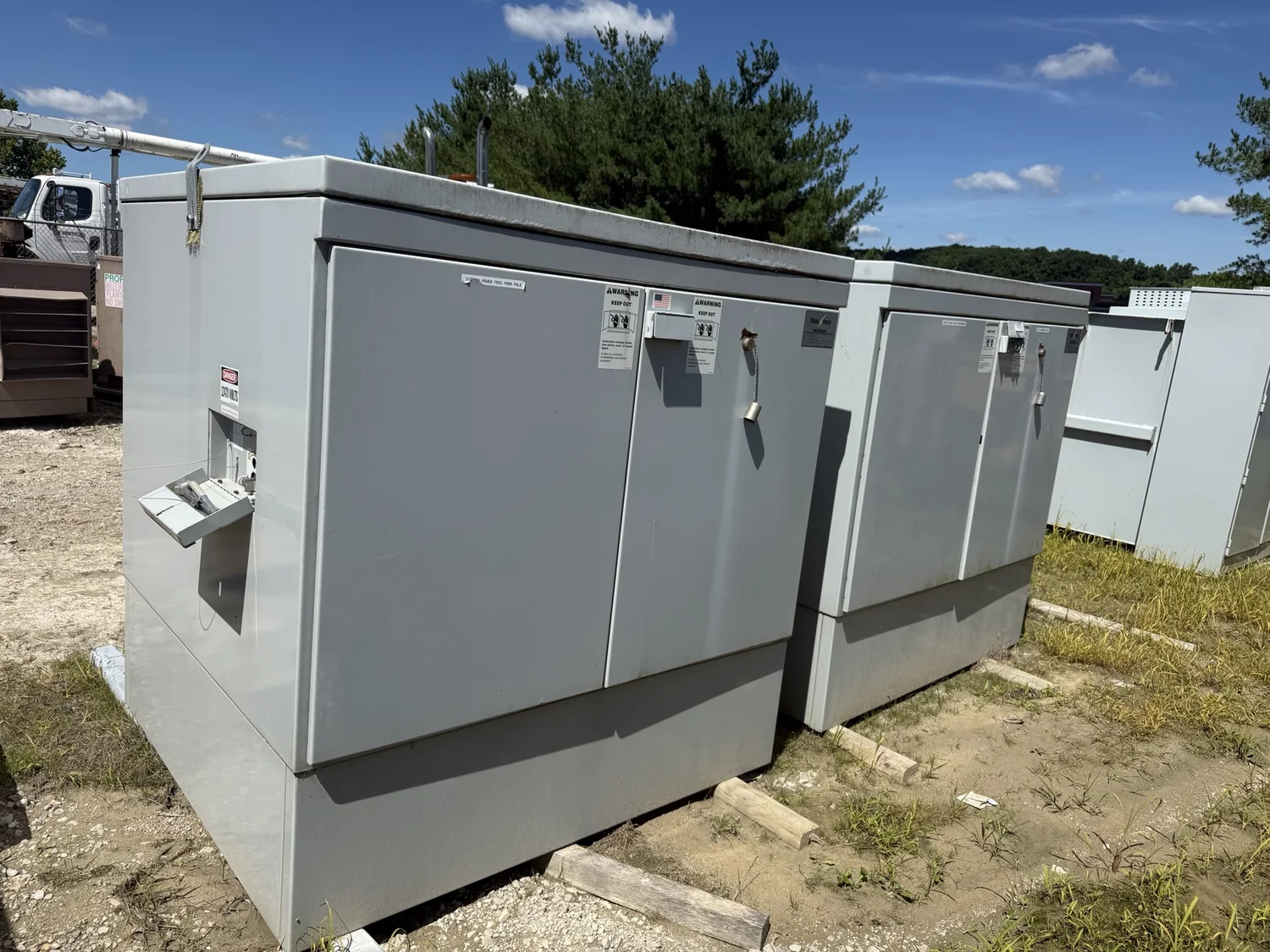
Circuit breaker removal planning for DC-area sellers
Planning the removal of circuit breakers begins with a clear picture of what is being offered and how the equipment can be reached. For sellers in Washington, DC, Northern Virginia, and Maryland, a purchase review can involve equipment at a commercial, industrial, institutional, or other site, each with its own access rules and operating schedule. A regional service area does not mean a buyer has a local office at your facility; arrangements are made around the actual site, equipment, and project conditions.
This is a buyer service: equipment is reviewed for purchase, not offered for resale. The buyer can make a cash offer after reviewing the information and confirming the proposed scope. If the offer is accepted, payment is arranged upfront. The buyer handles crane, rigging, disconnects, loading, freight, and hauling, subject to project arrangements and site access. Confirm those responsibilities, timing, and any site-specific conditions before removal is scheduled. No final price or removal plan should be assumed until the equipment and project details have been reviewed.
Start with photos, nameplates, and lineup dimensions
Send clear photographs of each breaker and its identifying nameplate. A legible nameplate may help establish the equipment’s manufacturer, model or type, ratings, and other identifying information without relying on assumptions. Include wide views showing where the breaker sits, closer views of its labels and connections, and images of any related sections or components being included. If the nameplate is worn, partly obscured, or unavailable, say so and provide the best available photos rather than guessing at the specifications.
For breakers installed in a lineup or switchgear assembly, provide overall lineup dimensions and, where practical, the dimensions of the relevant section and breaker compartment. Note how many breakers are included and whether they are installed, removed, or stored separately. Photos and dimensions can help identify the likely scope, but they do not replace an on-site review when access, removal path, or equipment condition needs confirmation. The buyer considers all voltage classes; sellers do not need to screen equipment out based on voltage before submitting it for review. No testing is required from the seller.
Describe completeness, condition, and ownership
Explain what is included with each breaker and what is not. Relevant details may include drawout or fixed construction, operating mechanisms, shutters, covers, auxiliary components, accessories, and any associated sections offered as part of the same scope. Do not assume that related equipment is included just because it appears in a photograph; identify the boundaries of the proposed sale. Mention visible damage, missing parts, corrosion, storage conditions, or other known issues so the buyer can assess the equipment based on the information available.
Also clarify who owns the equipment and who is authorized to approve its sale and removal. If ownership is held by a landlord, tenant, contractor, lender, or another party, identify the appropriate decision-maker and any internal approval steps that could affect timing. Asset-disposition procedures can take time, especially when multiple parties must authorize release or when equipment records need to be reconciled. Clear ownership information helps prevent a removal from being planned before the seller has authority to proceed.
Coordinate qualified disconnects and site safety
Electrical equipment must be de-energized, isolated, and disconnected by qualified personnel in accordance with the site’s safety requirements and outage procedures. Do not ask unqualified staff to open, disconnect, move, or handle a breaker. The seller should coordinate with its qualified electrical personnel and site operations team to establish the required outage window, isolation steps, access permissions, and release conditions. The buyer’s responsibility for disconnects is subject to the project arrangements; confirm who performs each task and how the work will fit the facility’s procedures before work begins.
Scheduling should account for the facility’s operating needs as well as the buyer’s crew, equipment, and transportation arrangements. In the DC region, site access may be affected by building rules, loading areas, security check-in, delivery or work-hour restrictions, limited staging space, or coordination with property management. These are possibilities to verify at the specific facility, not assumptions about every site. Share known restrictions early, including required escorts, advance notice, approved entrances, elevator or doorway limits, and any restrictions on staging or vehicle access.
Confirm removal path, lifting needs, and freight scope
Describe the route from the equipment’s location to the planned loading point. Note floor level, corridor and doorway clearances, turns, stairs, dock availability, overhead obstructions, and whether equipment must pass through occupied or controlled areas. Tell the buyer about tight clearances, limited maneuvering room, restricted vehicle access, or other constraints that could affect the removal plan. If a breaker is part of a larger assembly, clarify what may be removed as a unit and what must be separated on site; do not make that determination without the appropriate qualified personnel and project review.
The buyer handles crane, rigging, disconnects, loading, freight, and hauling, subject to site access and agreed project arrangements. The exact lifting and transport plan depends on the equipment, its location, the removal path, and the site’s rules. Confirm in advance who supplies or coordinates any required crane or rigging, how loading will take place, what access the hauling vehicle needs, and whether the facility has specific timing or documentation requirements. Responsibilities and practical arrangements should be settled before removal, rather than left to assumptions on the scheduled day.
Request a review before setting the schedule
For an initial review, provide the equipment count, nameplate and overall photos, lineup dimensions, available ratings and identifiers, completeness and condition notes, ownership status, site location within the DC/Northern Virginia/Maryland service area, and a description of access and removal constraints. Include your preferred timing and any outage or approval windows that could affect scheduling. The buyer may request additional details or a site review before confirming the proposed scope, offer, or logistics.
After the information is reviewed, the buyer can make a cash offer; the offer is not a guaranteed valuation or final price before review. If accepted, payment is arranged upfront. Removal timing and responsibilities are then confirmed against the actual equipment scope, qualified disconnect plan, facility procedures, access, and transportation requirements. A careful information exchange helps both sides understand what is being purchased and what must be coordinated, while leaving room to address site-specific conditions before work is scheduled.