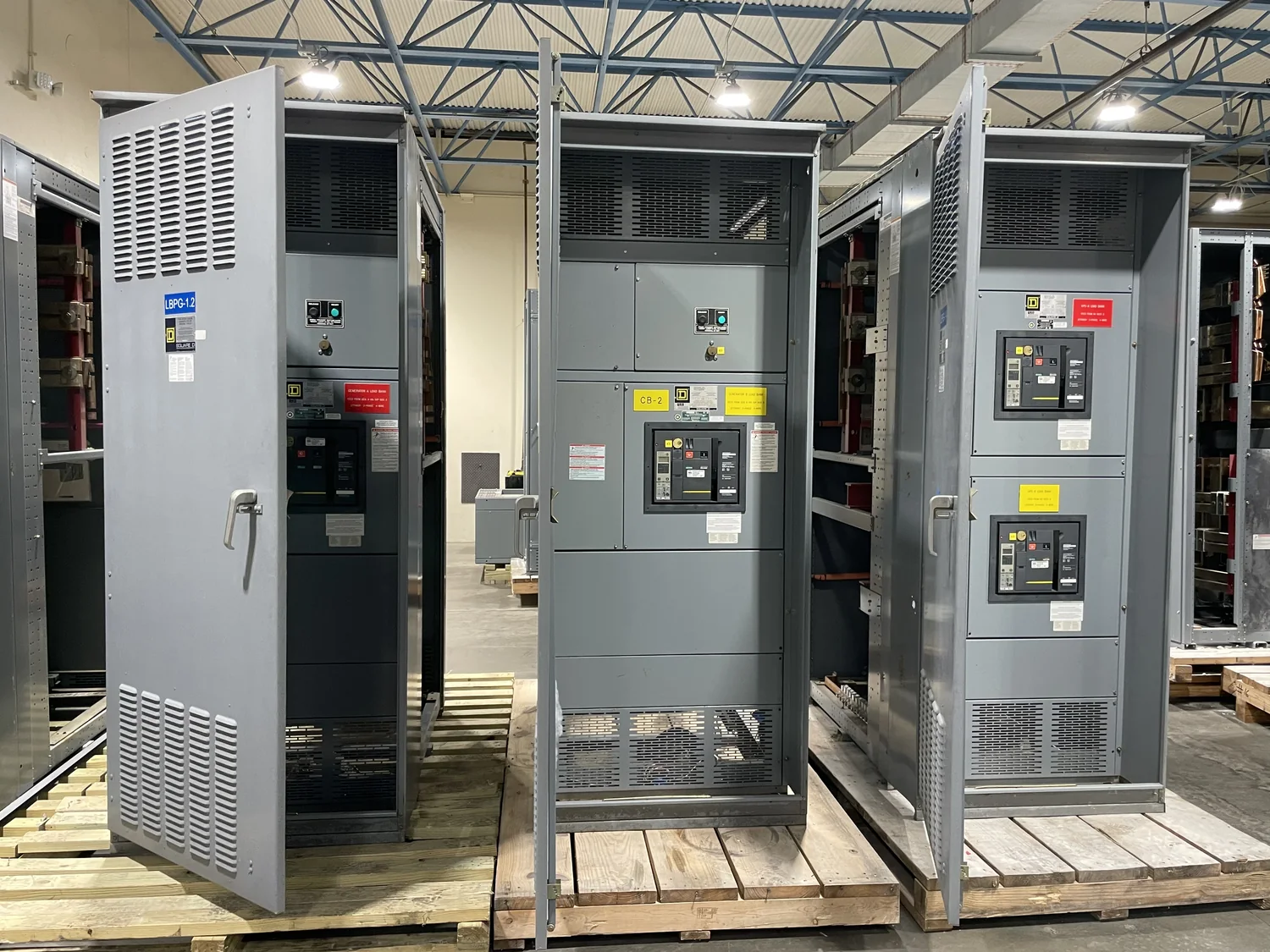
Cutler-Hammer Switchgear Surplus Review
If a facility in Washington, DC, Northern Virginia, or Maryland has surplus Cutler-Hammer switchgear after a changeout, closure, or equipment refresh, a buyer review can help determine whether the equipment is a fit for purchase. This is a purchasing service: the business buys surplus equipment and does not sell switchgear. The brand name alone is not enough to establish what a lineup contains, its condition, or its value, so the first step is to document the actual equipment and the circumstances around its removal.
No assumption should be made about a particular model, voltage, configuration, or manufacturer relationship. The buyer considers all voltage classes, but any specific equipment must be reviewed before an offer can be made. Sellers do not need to test the gear for the review. A clear, accurate description and visual record can begin the conversation; further scope and removal planning depend on the information available and the conditions at the site.
What to Send for an Initial Review
Start with clear photos of the switchgear lineup, including wide views that show its arrangement and closer views of the nameplates and identifying labels. If equipment is in place, photographs of both ends and the accessible sides can help show how the lineup sits in the room and what may affect removal. Do not remove covers or enter restricted areas to get photographs. Follow site rules, and have qualified personnel determine what is safe and accessible to document.
Provide the nameplate information that can be read safely, along with approximate lineup dimensions: overall length, height, depth, and, where relevant, the size of individual sections. Note any visible ratings, section identifiers, and included components, without guessing at missing details. A simple inventory can describe what appears to be included or excluded, such as associated sections or components, but should distinguish confirmed items from items that have not been verified. Photos and measurements help frame review; they do not replace inspection or establish a final price.
Also explain whether the equipment is owned by the seller or whether another party’s approval is needed before it can be transferred. Share the facility’s general location, site-access process, anticipated availability, and any deadlines or outage windows that may affect removal. If the seller has drawings, prior inventories, or other records, they may help clarify scope, but do not delay initial contact if those documents are unavailable.
Technical and Site Details That Affect Scope
Switchgear lineups can differ in layout, dimensions, completeness, and connection to surrounding equipment. For a useful review, describe what is known about the lineup and note uncertainty plainly. A partial lineup, a group of disconnected sections, and equipment that remains integrated with a larger installation can present different review and removal needs. Identify missing, separated, or inaccessible sections where known, and point out nearby walls, overhead obstructions, narrow doors, stairs, elevators, floor restrictions, or other features that could limit movement.
The buyer’s review should be based on the specific equipment and project conditions—not on the brand name or a broad category alone. Photos, nameplates, dimensions, ratings, completeness, ownership, and access details help determine whether the opportunity can be scoped and what questions remain. The seller is not required to perform electrical testing. Do not energize equipment, open enclosures, or attempt to disconnect conductors for the purpose of preparing a submission. Any technical verification or site work must follow facility requirements and be performed by appropriately qualified personnel.
Local project logistics also matter. In the DC region, access arrangements, building procedures, scheduled work windows, loading areas, and coordination with facility representatives may affect when removal can happen. Conditions vary by site; a buyer should not assume that a truck, lifting equipment, or crew can reach a lineup simply because it is inside a facility. Share known restrictions early so the parties can determine whether a workable removal plan is possible.
Disconnection, Removal, and Transportation
The buyer handles the crane, rigging, loading, freight, and hauling, subject to project arrangements and site access. Responsibilities and the removal plan should be confirmed before work is scheduled. The buyer can also coordinate disconnects as part of the project arrangements, but electrical de-energization, isolation, and disconnect work must be handled by qualified personnel under the site’s safety procedures and outage requirements. Unqualified personnel should not disconnect, move, or handle electrical equipment.
Before removal, coordinate the required work window, site access, utility or facility procedures, staging area, lifting path, and loading arrangements. Confirm which party is responsible for each task and when those tasks may occur; the exact plan depends on the equipment, the building, and the site’s rules. Do not treat an initial review or offer as permission to interrupt service, enter controlled areas, or begin removal. The facility’s authorized representatives must approve access and timing, and qualified personnel must carry out electrical work in accordance with applicable site procedures.
The buyer pays all crane, rigging, loading, freight, and hauling costs, with responsibilities confirmed before removal. This helps sellers understand that transportation and lifting costs are not being left for them to arrange or pay. Still, the project plan must account for access and scope: unusual constraints, incomplete information, changes in the equipment list, or a revised schedule may require the parties to revisit arrangements before work proceeds.
Offer, Payment, and Next Steps
After reviewing the available information, the buyer can determine whether to make an offer. No final price can be stated responsibly without reviewing the specific equipment and relevant project details. Any offer depends on the scope presented and remains subject to confirming what is included, ownership and transfer authority, and workable access and removal arrangements. The seller does not need to test the switchgear before requesting a review.
If an offer is accepted, payment is arranged upfront. Confirm the payment and removal arrangements with the buyer before scheduling the work, including the agreed equipment scope and the project responsibilities. This is a cash-purchase opportunity for eligible surplus equipment, not a promise that every submission will receive an offer or that a particular price or schedule is guaranteed.
To start, send clear equipment and nameplate photos, approximate lineup dimensions, available ratings and completeness information, ownership details, and an overview of site access and removal constraints. Include the facility’s general location within Washington, DC, Northern Virginia, or Maryland and any known timing requirements. A concise, factual submission gives the buyer a practical basis to review the surplus Cutler-Hammer switchgear and determine what additional information is needed before scope, offer, payment, and removal arrangements are settled.