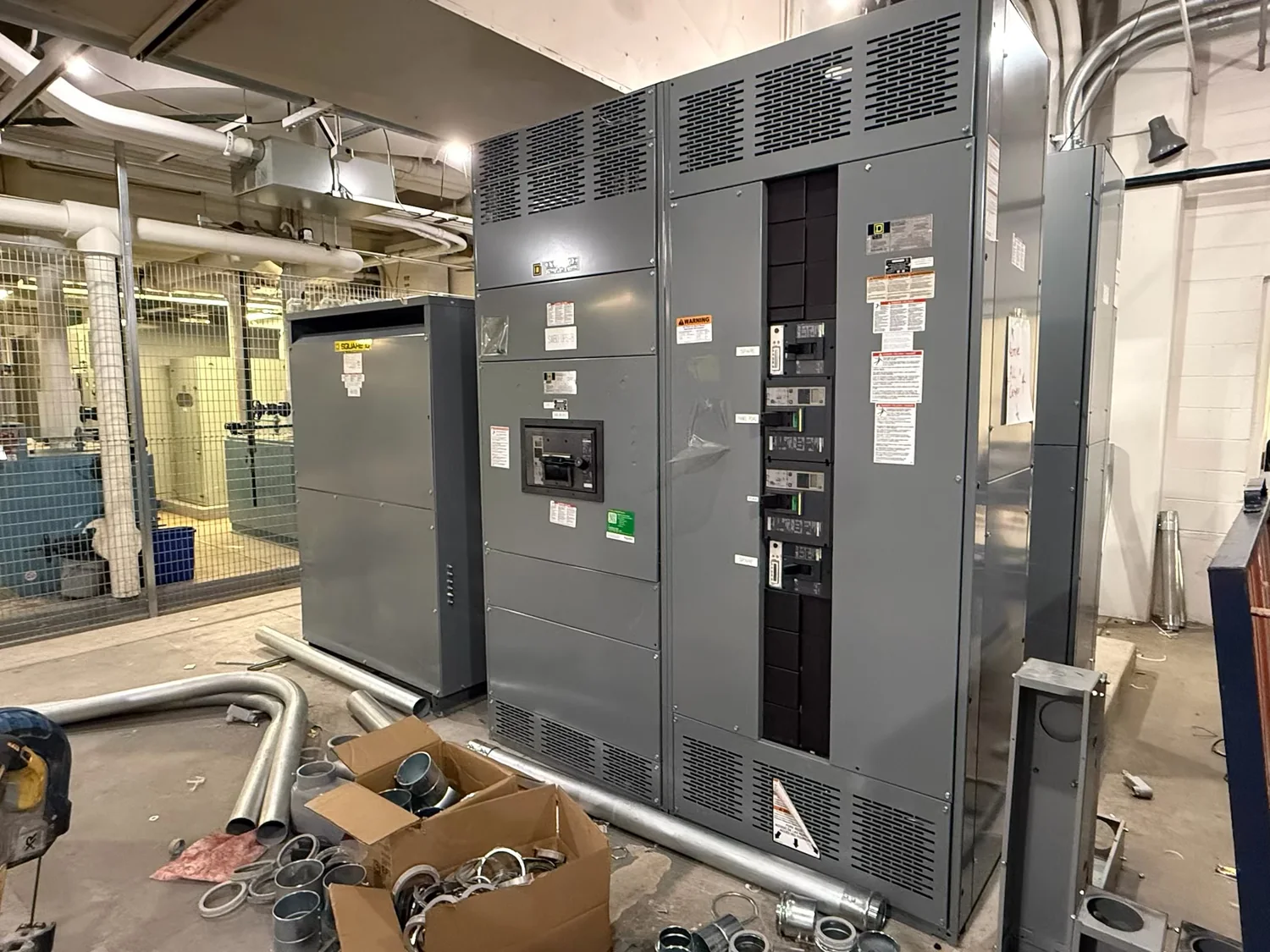
Federal Pacific Switchgear Surplus Review
After a facility changeout, closure, or equipment refresh, a Federal Pacific switchgear lineup may still have practical surplus value. The first step is a review of the equipment that is actually available—not an assumption based on the brand name, an incomplete inventory, or a general description such as “old switchgear.” This buyer serves Washington, DC, Northern Virginia, and Maryland, and considers surplus switchgear across all voltage classes. The business buys equipment; it does not sell it, and it does not claim manufacturer affiliation or endorsement.
A preliminary review helps establish what is present, whether the seller has authority to transfer it, and what removal would involve. No testing is required from the seller. An offer depends on review of the equipment and project conditions, so a final price should not be assumed from a photograph or a brand name alone. If an offer is accepted, payment is arranged upfront, with the transaction and removal responsibilities confirmed for the project.
Start With Photos, Nameplates, and Lineup Details
Clear photographs are often the most useful way to begin. Provide overall views of the lineup, front and rear views where safely accessible, and close-ups of each available nameplate. Photos should be taken only from locations permitted by the site; do not open energized equipment or enter restricted areas to obtain images. If labels are obscured, missing, or difficult to read, say so rather than guessing at the identification.
Include the lineup’s approximate overall dimensions—height, width, and depth—and note how many sections or cabinets are included. Nameplate information, visible ratings, section labels, and any available equipment schedules can help distinguish the assets and define the review. Do not infer a rating or configuration from appearance. The buyer considers all voltage classes, but the specific equipment details still matter when determining whether an offer is appropriate and how the removal should be scoped.
Describe what is included with the switchgear, such as associated sections, removable components, or other items being offered as part of the same lot. Note any known missing parts, visible damage, prior disassembly, or changes made during the project. Completeness can affect the review and removal plan, but sellers do not need to test the equipment or certify its condition. A straightforward account of what is present—and what is not—helps avoid mismatched expectations later.
Confirm Ownership and Asset-Disposition Authority
Before the review progresses, identify who owns the equipment and who is authorized to approve its sale and removal. A changeout contractor, facility operator, landlord, lender, or asset-disposition representative may be involved, but the person arranging the sale should confirm the seller’s authority and any required internal approvals. If the equipment belongs to another organization or is subject to a separate disposition process, resolve that point before scheduling removal.
For a closure or facility refresh, clarify whether the switchgear is being offered alone or as part of a larger equipment lot, whether other parties have claims to the assets, and when the site expects the area to be cleared. These details can affect coordination even when the equipment itself is readily identifiable. Sharing the project contact, decision-making process, and target timing helps the buyer plan a review without assuming that access or removal can happen on a particular date.
Plan Access, Disconnects, and Removal Together
Access conditions matter as much as equipment dimensions. Describe the route from the lineup to the loading area, including relevant door and corridor clearances, stairs, elevators, turning space, floor or loading-dock constraints, and any restrictions on vehicle access. Mention overhead obstructions, limited staging space, occupied areas, security check-in, escort requirements, and site hours when applicable. These details help determine whether the planned removal approach is workable and what coordination may be needed in the Washington, DC region, Northern Virginia, or Maryland.
The buyer handles the crane, rigging, disconnects, loading, freight, and hauling, subject to project arrangements and site access. Responsibilities, timing, and the removal plan must be confirmed before work begins. De-energization, isolation, and disconnect work must be performed by qualified personnel under the site’s safety rules and outage procedures; sellers should not have unqualified staff disconnect or handle electrical equipment. Coordinate the required outage window, approvals, work boundaries, and access with the site’s responsible personnel. A site visit or additional information may be needed to scope unusual access, lifting, or removal constraints.
Review the Scope Before Accepting an Offer
A useful submission combines the photos and nameplates with approximate lineup dimensions, an inventory of what is included, ownership or sale-authority details, the site location, and a description of access and removal constraints. Add the desired schedule and any known outage or occupancy limitations. If some information is unavailable, identify it clearly; the review can proceed with the facts on hand, while remaining questions are addressed before the scope is set.
Offers are made after the equipment and project circumstances have been reviewed. There is no guaranteed price based only on the Federal Pacific name, and no final value should be inferred before that review. The seller is not required to conduct testing. If an offer is accepted, payment is arranged upfront. The buyer also pays the crane, rigging, loading, freight, and hauling costs, with those responsibilities and the project arrangements confirmed before removal. Clear information at the outset supports a more practical surplus review and helps both sides coordinate a safe, orderly disposition.