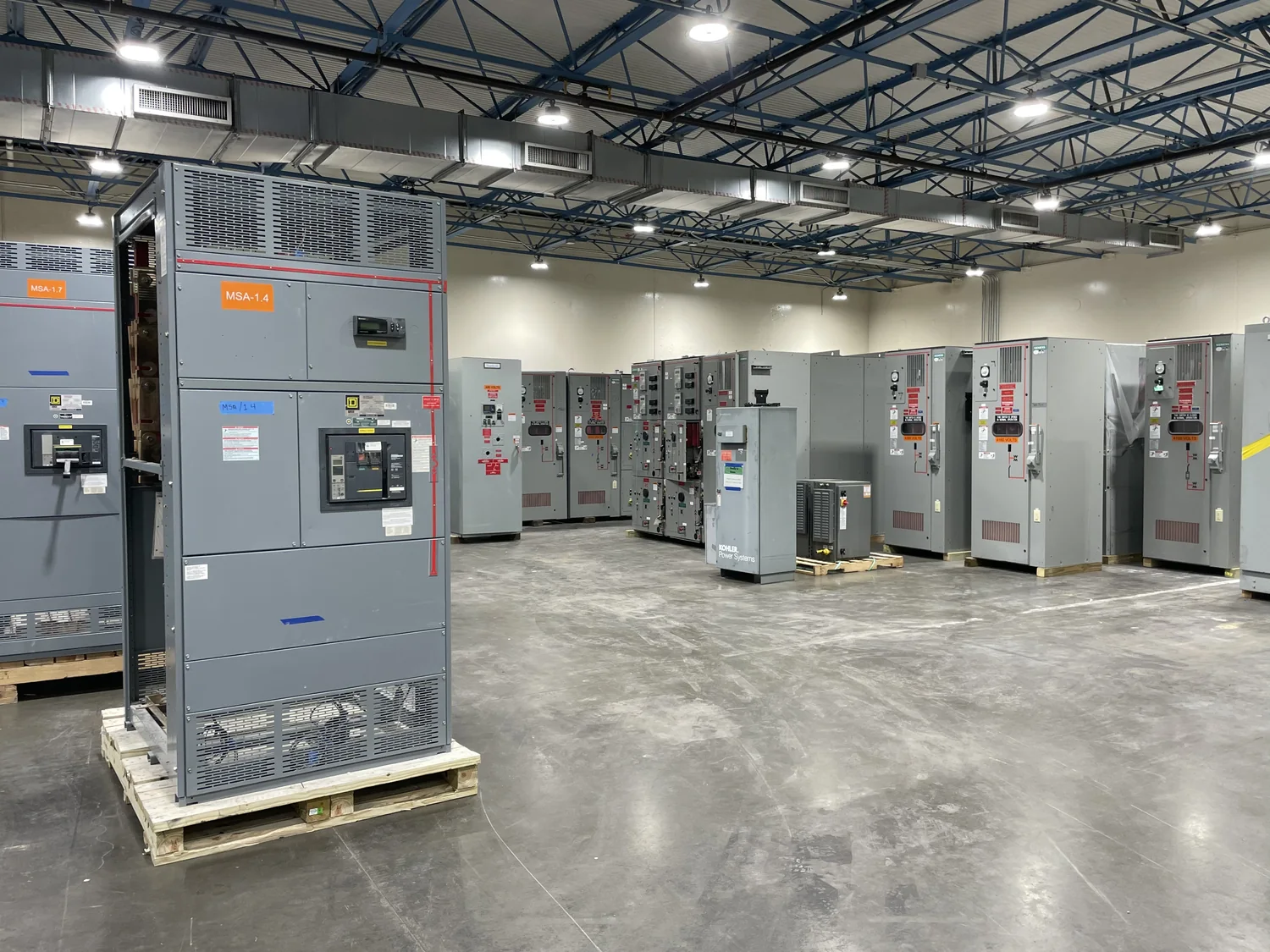
Low-voltage switchgear removal starts with a clear scope
Planning the removal of low-voltage switchgear in the Washington, DC region means coordinating an equipment review, the site’s safety and outage requirements, and the physical route out of the building. A buyer can review equipment for purchase, but the scope and any offer depend on the specific lineup and project conditions. There is no need to assume a particular manufacturer, configuration, or facility setup before the equipment has been reviewed.
Start by identifying what is included in the proposed sale. A lineup may consist of multiple sections, attached or adjacent equipment, and components that the owner intends to retain. Make a simple inventory of the sections and included items, and note anything missing, damaged, disconnected, or excluded. Clear boundaries help prevent misunderstandings about what is being purchased and what must remain in place.
The buyer purchases equipment; it does not sell or install switchgear. The buyer can make a cash offer and, if the offer is accepted, payment is arranged upfront. A seller does not need to test the equipment as a condition of submitting it for review. The buyer considers all voltage classes, but this guide focuses on planning the removal of low-voltage switchgear. No final price should be assumed until the equipment information and removal circumstances have been reviewed.
Gather photos, nameplates, and measurements
Good initial information helps the buyer understand what is being offered before removal responsibilities and timing are set. Send clear, well-lit photographs of the full lineup, the front and accessible sides, section interiors where safe and authorized, and any visible damage or missing parts. Include close-ups of available nameplates and labels. Do not remove covers or enter restricted areas to take pictures; follow site rules and have only authorized personnel access the equipment.
Nameplate details can help identify the equipment and its ratings. Photograph the information as legibly as possible rather than relying on a handwritten transcription. If a label is faded or obstructed, note that in the submission. The buyer considers equipment across voltage classes, so do not exclude a lineup based on an assumed voltage threshold. Share the information that is actually visible and let the review determine what details are useful.
Record approximate lineup dimensions, including overall length, height, and depth, and note the number of sections. Measurements help assess whether the equipment can travel through the intended exit route and whether the removal plan needs further review. If available, provide clearances around the lineup, doorway or corridor widths, elevator dimensions, floor or loading-area restrictions, and the distance to the pickup point. These are planning details, not a substitute for an on-site assessment when project conditions require one.
Also describe completeness as accurately as possible. Note whether doors, covers, internal components, accessories, and related sections are present, and flag anything that has already been removed. Do not make claims about operation or condition that have not been verified. No seller testing is required; the buyer can review available records and visual information without asking unqualified personnel to energize, open, disconnect, or handle the equipment.
Confirm ownership, site access, and removal constraints
Before an offer or removal scope is finalized, establish who owns the switchgear and who has authority to approve its sale and release. If the equipment is part of a leased, shared, or managed facility, identify the appropriate owner or authorized decision-maker. Clarify whether any components, wiring, controls, or connected equipment are excluded from the sale. Providing this information early supports an orderly asset-disposition process and avoids a last-minute question about whether the equipment can be released.
Describe access conditions without assuming the site is easy to enter or the equipment is easy to move. In the DC area, project routes can involve limited staging space, loading-dock rules, controlled building access, elevator or corridor restrictions, and coordination with other occupants. These are possibilities to check, not claims about any particular building. Share the site’s actual access hours, check-in requirements, pickup location, loading arrangements, and any restrictions on vehicle size, staging, or work timing.
Removal may also depend on floor loading limits, overhead clearance, turning space, stairs, ramps, door openings, and the condition of the route between the lineup and the pickup point. Identify known obstacles and whether the switchgear must be separated into sections to leave the space. Do not dismantle equipment or alter the building route on the assumption that the buyer has approved a particular method. The removal approach should be confirmed for the equipment and site before work is scheduled.
Keep access and scheduling details current as the project develops. An outage window, a building access slot, a loading-dock reservation, or a change in site rules can affect the practical removal plan. The buyer and seller should confirm the agreed timing, access conditions, pickup point, and responsibilities before removal begins. No specific schedule or removal method can be promised without reviewing the project details.
Coordinate disconnects and safe removal
Electrical de-energization, isolation, and disconnect work must be performed by qualified personnel under the site’s safety procedures and outage plan. Do not ask unqualified staff to disconnect conductors, open electrical compartments, operate equipment, or prepare the lineup for lifting. The facility’s responsible personnel should determine the required shutdown and isolation steps, and coordinate them with the planned removal window.
The buyer handles crane, rigging, disconnects, loading, freight, and hauling, subject to project arrangements and site access. Confirm those responsibilities before removal so all parties understand the scope and sequence. The statement that the buyer handles this work does not remove the need to coordinate qualified personnel, site authorization, safe access, and outage timing. Project-specific arrangements should clarify how the work fits the facility’s procedures and what access the buyer and its removal resources can receive.
Discuss the intended lifting and loading route before committing to a date. The buyer needs enough information to plan around the lineup’s dimensions, weight information if available, sectioning constraints, pickup location, overhead obstructions, and possible restrictions on crane or rigging access. If weight or lifting details are unknown, say so rather than estimating. The project team can identify what additional review is needed before removal is planned.
For sellers in Washington, DC, Northern Virginia, and Maryland, practical coordination may also include arranging building access and aligning pickup with site-specific operating hours. The buyer pays crane, rigging, loading, freight, and hauling costs, with responsibilities confirmed before removal. Clarify the agreed logistics and payment arrangements in advance; do not treat an initial discussion as confirmation that a particular access method, date, or removal plan will work.
Submit the details and confirm the next steps
A useful first submission includes the equipment location within the DC-region service area; clear lineup and nameplate photos; approximate section count and dimensions; known completeness or visible condition issues; ownership and sale authorization; and information about access, loading, and removal constraints. Add any available records that help identify the lineup, but do not delay an initial review simply because a record or label is unavailable. State uncertainties plainly so they can be addressed during review.
After the information is received, the buyer can review the offered equipment and discuss the project-specific removal scope. An offer is not a guaranteed valuation, and the final amount should not be assumed before the buyer has reviewed the equipment details and relevant logistics. If the seller accepts a cash offer, payment is arranged upfront. No seller testing is required as a condition of requesting a review.
Before removal, confirm what equipment is included, who is authorized to release it, how site access will work, when qualified personnel will handle required de-energization and disconnect coordination, and how crane, rigging, loading, freight, and hauling responsibilities apply to the project. This practical checklist supports a clearer purchase review and a more coordinated removal plan without presuming facts about the facility or promising a result before the equipment and site conditions are assessed.