Medium-voltage switchgear removal starts with a review
Planning the removal of medium-voltage switchgear in the Washington, DC region begins with understanding what is installed, what the seller owns, and how the equipment can be accessed. A lineup may be part of an active electrical system, a decommissioned area, or a larger facility project; those situations can require different timing and removal arrangements. A buyer needs enough information to review the equipment and discuss a practical scope before anyone sets a removal date or price.
This guide is for businesses in Washington, DC, Northern Virginia, and Maryland considering a sale. The buyer purchases equipment and can make a cash offer; it does not sell switchgear. If an offer is accepted, payment is arranged upfront. The buyer handles crane, rigging, disconnects, loading, freight, and hauling, subject to project arrangements and site access. Confirm responsibilities, timing, and access conditions before removal. No testing is required from the seller for an initial purchase review, and all voltage classes are considered. A final offer depends on reviewing the specific equipment and project details.
Gather the information that supports a useful offer
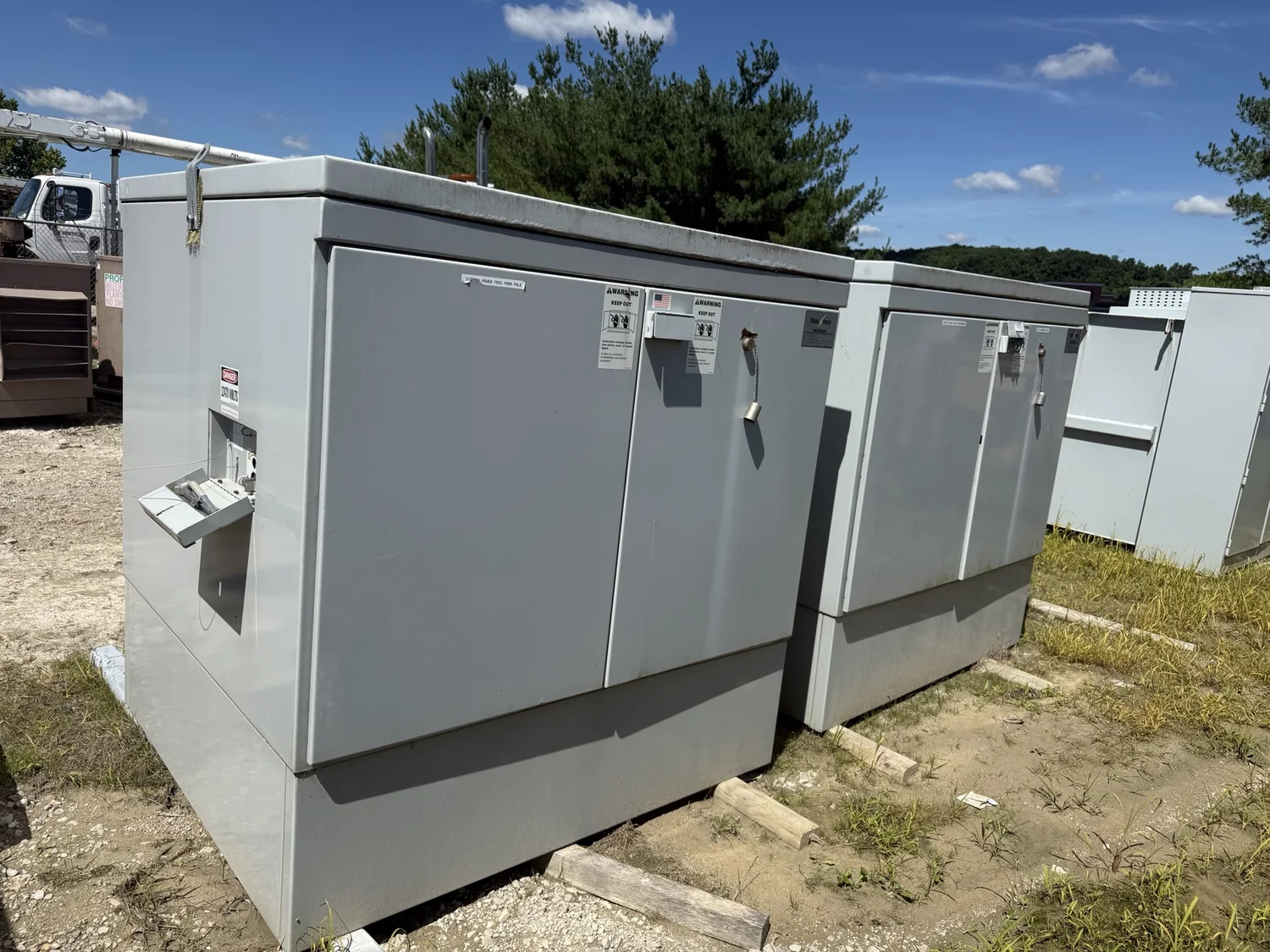
Start with clear, recent photos of the complete lineup and its surroundings. Include wide views showing how sections connect, front and rear views where safely accessible, and close-ups of legible nameplates. Photos can help identify the equipment configuration and visible condition, but they do not replace a site-specific review. Do not open energized compartments or enter restricted areas to take pictures; follow facility rules and use qualified personnel where access or electrical hazards are involved.
Share available nameplate information, including the manufacturer, model or catalog identifiers, ratings, and other markings shown. Do not estimate or infer missing specifications. Provide the number of sections, approximate overall lineup dimensions, and the dimensions of individual sections if they are known. Note any visible attachments, bus or connection components, control equipment, or other associated items that are included in the proposed sale. State plainly what is present, what is missing, and what is excluded rather than assuming that a complete lineup has all expected parts.
Ownership is equally important. Confirm that the business offering the equipment has authority to sell it, and disclose any ownership, lease, lien, or third-party approval considerations that could affect disposition. If equipment belongs to a landlord, utility, contractor, lender, or another party, clarify who can authorize the sale. Providing these details early helps keep the review grounded and avoids treating possession of equipment as proof of authority to transfer it.
Plan removal around electrical safety and facility procedures
Medium-voltage switchgear must not be disconnected or handled by unqualified personnel. De-energization, isolation, verification, and disconnect work must be performed by qualified personnel under the facility’s safety requirements and outage procedures. The seller and its site representatives should coordinate the required approvals, work windows, and boundaries with the people responsible for the electrical system. A buyer’s removal plan does not replace the facility’s procedures or the judgment of its qualified electrical personnel.
Before scheduling, discuss whether the equipment is operational, already de-energized, or awaiting a planned outage; who will perform and authorize disconnect work; and how the work area will be released for removal. Avoid assuming that a particular sequence, clearance, or outage duration applies. Those details depend on the installation and the site’s requirements. The buyer handles disconnects as part of the agreed project scope, but the work and timing must be coordinated with qualified personnel and the site. Confirm what each party is responsible for before work begins.
Check access, lifting, and removal constraints early
A lineup’s dimensions and weight affect whether it can move through doors, corridors, service elevators, loading areas, or other parts of a facility. Share approximate section dimensions, available route measurements, floor or dock restrictions, overhead obstructions, and any known limits on staging or vehicle access. If weight information is available from documentation or markings, provide it; do not guess when it is not. Photos of the route and loading area can help identify questions for a project review, but do not substitute for a site assessment where one is needed.
Discuss whether a crane, rigging, special lifting arrangements, or temporary access coordination may be required. The buyer handles crane, rigging, loading, freight, and hauling, with the specific approach subject to project arrangements and actual site access. Identify constraints such as limited work hours, security check-in, occupied spaces, restricted loading zones, shared access, or coordination with building management. In the DC-area service route, local access and scheduling should be treated as project-specific: confirm them with the relevant site contacts rather than assuming a curbside, loading-dock, or street-access arrangement will be available.
Also describe removal constraints that may affect the plan, such as equipment installed in a confined electrical room, sections that cannot be moved as a complete lineup, or surrounding systems that must remain undisturbed. Do not remove covers, cut connections, or move equipment to make it easier to inspect unless qualified personnel and site procedures authorize that work. The removal method, route, and schedule should be agreed before a crew arrives.
Coordinate the review, offer, and payment
Once photos, nameplate details, dimensions, ownership information, and access conditions are available, the buyer can review the proposed equipment and discuss a possible offer and removal scope. The review may consider the lineup’s identifiable ratings and configuration, visible condition, completeness, included components, and practical removal requirements. A photograph or brief description alone cannot establish a final value, and no final price should be assumed before the equipment and project details have been reviewed.
If the buyer makes an offer and the seller accepts it, payment is arranged upfront. Confirm the payment and removal arrangements before scheduling work, including how the equipment included in the sale is described and which party is responsible for each project task. No seller testing is required for the initial review. If records, additional photographs, or a site visit are needed to clarify the scope, discuss that before committing to dates.
A well-prepared submission makes the next conversation more efficient: identify the equipment, show its surroundings, state what is included, establish authority to sell, and flag any access or outage constraints. That gives both sides a clearer basis for discussing an offer and a coordinated removal plan without assuming facts about the facility or promising a particular price, schedule, or removal outcome.