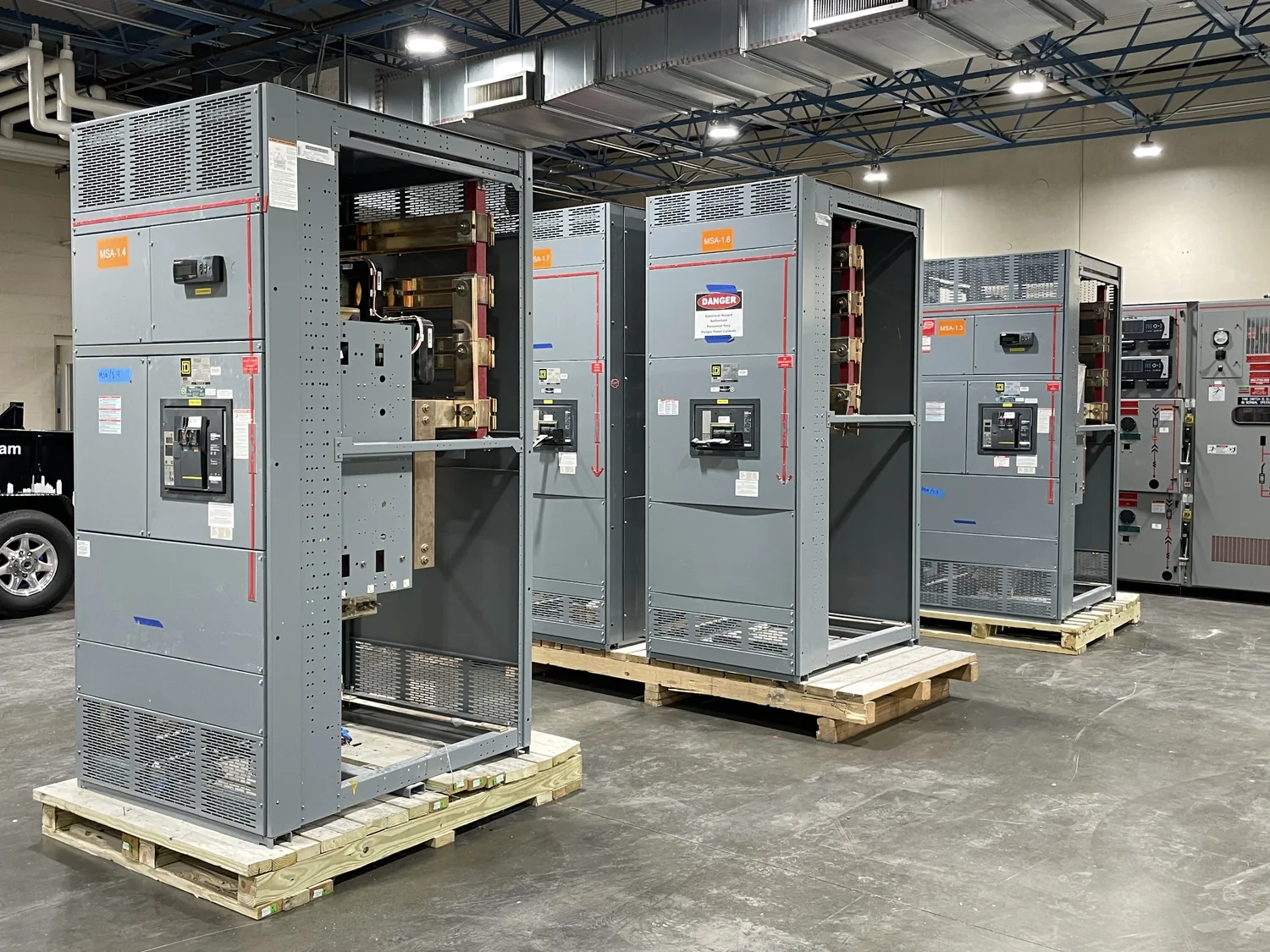
Sell Used 15kV Switchgear in the DC Region
If your facility is retiring switchgear marked 15kV, a sale starts with confirming what is actually installed—not with assumptions based on a single voltage label. Equipment marked 15kV can vary in configuration, condition, completeness, and removal needs. For sellers in Washington, DC, Northern Virginia, and Maryland, a careful review of the nameplates, photographs, lineup dimensions, ownership, and site access helps define a realistic project scope before anyone plans removal.
We buy used electrical equipment and can make a cash offer after reviewing the available information. We are a buyer, not a seller. If you accept an offer, payment is arranged upfront; the seller is not required to test the switchgear. We consider equipment across all voltage classes, but the 15kV marking alone does not establish the exact ratings, configuration, or value of a particular lineup. Final pricing depends on review and project-specific details, so an initial description or photo should not be treated as a final price.
Verify the Nameplate and Lineup Before Scope Is Set
Start with clear, legible photographs of each equipment nameplate. If a lineup contains multiple sections or different devices, provide images of the relevant nameplates throughout the lineup rather than relying on one representative label. Include overall photos showing the front, rear where safely accessible, ends, and general arrangement. Close-up images of visible labels, breakers, compartments, and missing or damaged parts can help establish what is present, but do not open compartments or approach equipment unless the site’s qualified personnel have made access safe and authorized it.
Along with photos, provide the lineup’s approximate overall length, height, and depth, plus the number and arrangement of sections if known. Note whether the equipment appears complete or whether breakers, controls, doors, bus components, or other parts are absent. These details are for review, not a substitute for a technical inspection or a guarantee of condition. Do not infer a specification from appearance or assume that every section shares the same rating. Nameplate information and clear images are the practical starting point for confirming the asset being considered.
Clarify Ownership and Facility Disposition
Before an offer is finalized, identify who owns the switchgear and who has authority to approve its sale and removal. If the equipment is part of a larger facility disposition, shutdown, renovation, or replacement project, explain any relevant timing or approval constraints. The buyer needs to understand whether the asset is available for transfer, whether other parties must authorize removal, and whether the equipment must remain in place until a particular project milestone.
Share the facility location at a level appropriate for planning, along with a site contact and the process for arranging a visit or removal window if one is needed. Do not send sensitive facility or security information unnecessarily; access instructions can be coordinated through the appropriate site representative. In the DC region, project planning may involve coordinating with facility operations, property management, contractors, or other stakeholders. Those arrangements are specific to the site and should be confirmed directly rather than assumed from the location alone.
Plan Safe Disconnection and Removal
Any de-energization, isolation, and disconnection must be performed by qualified personnel under the site’s safety requirements and outage procedures. Do not ask unqualified staff to disconnect, open, move, or handle electrical equipment. Coordinate the required work, access, and timing with the facility’s responsible personnel before removal is scheduled. The seller should explain what work the site will complete and when the equipment can be released; the buyer and seller can then confirm the project responsibilities before removal.
The buyer handles crane, rigging, disconnects, loading, freight, and hauling, subject to project arrangements and site access. Responsibilities and the removal plan must be confirmed for the particular project before work begins. Share practical access details such as loading-area location, travel path, door or gate clearances, floor or staging constraints, available working space, and any known restrictions on equipment or vehicles. Also disclose removal constraints such as limited access hours, sequencing needs, nearby equipment that must remain, or a requirement to remove sections in a particular order. These details help determine whether the proposed approach fits the site; they do not guarantee that a specific lifting or hauling method will work.
Request an Offer and Coordinate the Next Steps
To request a review, gather the clearest available nameplate photos, overall and detail images, lineup dimensions, a basic inventory of sections and included components, and a note about apparent completeness. Add the ownership and approval status, facility location, site-access process, preferred timing, and any known disconnection or removal constraints. If a detail is unknown, say so rather than guessing. This information helps the buyer evaluate the equipment and identify questions that need to be resolved before an offer or removal scope can be confirmed.
After reviewing the information, the buyer can discuss an offer and the logistics that apply to the site. There is no seller testing requirement, and no final price should be assumed before review. If you accept an offer, payment is arranged upfront. The buyer pays for crane, rigging, loading, freight, and hauling, with the specific responsibilities—including disconnect work—confirmed for the project. Clear documentation and early coordination can make a sale more straightforward while keeping technical decisions and site work with the qualified people responsible for them.