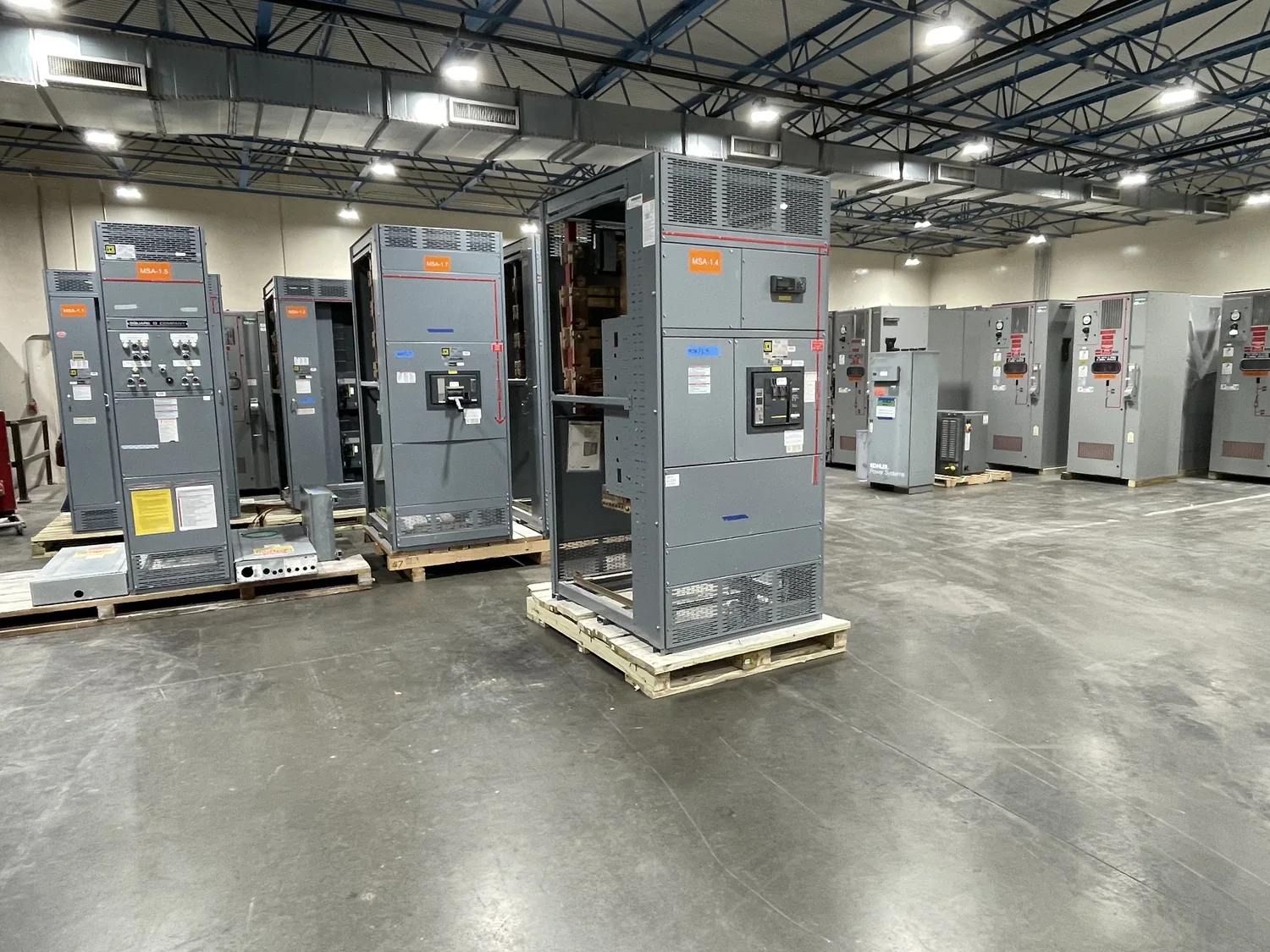
Sell Used 2.4kV Switchgear in the DC Region
If your facility is planning an electrical upgrade, retiring an older lineup, or clearing equipment from a project, selling used switchgear marked 2.4kV may be worth exploring. We buy electrical equipment; we do not sell it. We consider switchgear across all voltage classes, including equipment identified as 2.4kV, but the marking alone is not enough to define a purchase scope or establish value. Clear photos, legible nameplates, and basic project details help us understand what is actually present before discussing an offer.
This guide is for sellers in Washington, DC, Northern Virginia, and Maryland. It is intended to help facility teams, contractors, owners, and asset-disposition professionals prepare useful information without guessing about specifications or assuming a particular removal plan. We can make a cash offer after reviewing the equipment and project details. If an offer is accepted, payment is arranged upfront; the practical terms and timing should be confirmed before removal is scheduled. No seller testing is required.
Verify the nameplate and document the lineup
Start with the exact equipment identification rather than relying only on a project description, drawing label, or recollection that the lineup is “2.4kV.” Photograph every accessible nameplate clearly enough to read the manufacturer, model or type, ratings, serial or catalog information, and any other markings shown. Do not infer a missing rating from a neighboring section or from a site document that may describe a different configuration. If a plate is unreadable, say so and send the best available image rather than filling in the gap by assumption.
Take overview photos showing the full lineup and how its sections connect, then add closer views of labels, doors, compartments, visible components, and any apparent damage or missing parts. Include both ends of the lineup when accessible. A short video or a simple sketch can help communicate the arrangement, but it does not replace readable nameplates. Photos should be taken only from safe, authorized positions. Do not open compartments, remove covers, approach exposed conductors, or enter restricted areas to obtain images.
Provide approximate overall dimensions: lineup length, height, and depth, plus the number of sections if known. Note whether the equipment appears complete or whether breakers, covers, control components, bus sections, or accessories are absent or have been removed. Mention known modifications, storage conditions, or damage that may affect evaluation. These details are useful for understanding the asset and planning removal; they are not a substitute for a physical inspection where one is needed.
Share ownership, access, and project timing
Before scope is set, explain who owns the equipment and who is authorized to arrange its sale and removal. If the switchgear is part of a lease, contractor package, utility arrangement, secured project, or other agreement, confirm that you have authority to transfer it and identify any approvals or coordination steps that apply. We cannot determine ownership rights from photographs, so clear confirmation helps avoid delays later in the process.
Access conditions matter throughout the DC region, where a project may involve a secured building, active facility, limited loading area, shared dock, restricted work hours, or coordination with property management. These are possibilities to confirm—not assumptions about your site. Describe the equipment’s location within the building, the route from its current position to the loading point, door and corridor limitations, stairs or ramps, elevator constraints, available staging space, parking or loading restrictions, and any appointment or escort requirements. If you have measured clearances or access drawings, share them for review.
Include the proposed removal window and any outage, renovation, shutdown, occupancy, or contractor schedule that could affect the work. Timing and access must be coordinated for the specific project; an offer should not be treated as confirmation that a particular date, route, or removal method will work. If the equipment is installed, state whether it is operating, de-energized, or otherwise out of service only if that status has been verified by the responsible site personnel.
Plan disconnection and removal safely
Any de-energization, isolation, and disconnect work must be performed by qualified personnel under the site’s safety procedures and outage controls. Do not ask unqualified staff to disconnect, dismantle, move, or handle switchgear. Coordinate the required permissions, work boundaries, timing, and status verification with the people responsible for electrical safety at the facility. Seller-provided testing is not required for us to review an opportunity, but that does not remove the site’s responsibility to manage electrical hazards and authorize access.
The buyer handles crane, rigging, disconnects, loading, freight, and hauling, subject to project arrangements and site access. Confirm responsibilities and the planned scope before removal. The buyer’s handling of those logistics does not mean every site condition, permit, shutdown, or access approval is automatically included; project-specific arrangements must be reviewed and agreed. Share any known limitations on lifting, rigging points, overhead clearance, floor loading, door width, transport route, or equipment movement, and identify who can confirm those conditions on site.
A safe, workable removal plan depends on the actual lineup, its location, and the available route. Dimensions and photos help identify questions early, while an on-site review or additional information may be needed before a scope is finalized. Do not move equipment or change its condition in anticipation of a sale unless the responsible site team has authorized the work and the agreed project plan calls for it.
Request an offer with a useful submission
To begin, send the nameplate photos, lineup overview and detail photos, approximate dimensions, known completeness or missing components, ownership confirmation, access description, and preferred project timing. Add the site location at the level needed to assess logistics, along with any contact who can answer questions about access and removal coordination. If a drawing or equipment schedule is available, it may be helpful, but the physical nameplate and current photographs remain important because records and installed configurations can differ.
After reviewing the information, we can discuss whether the equipment is a fit and make an offer when there is enough detail to evaluate it. Final pricing and scope depend on review; no price should be assumed from the 2.4kV marking alone. If you accept an offer, payment is arranged upfront, with timing and transaction details confirmed before removal. We do not require the seller to test the switchgear.
A complete first submission does not need to answer every technical or logistical question. It should make the known facts clear and identify what remains unverified. That gives both sides a more practical basis to discuss the asset, confirm responsibilities, and coordinate a removal plan suited to the site in Washington, DC, Northern Virginia, or Maryland—without guessing at specifications, access, or timing.