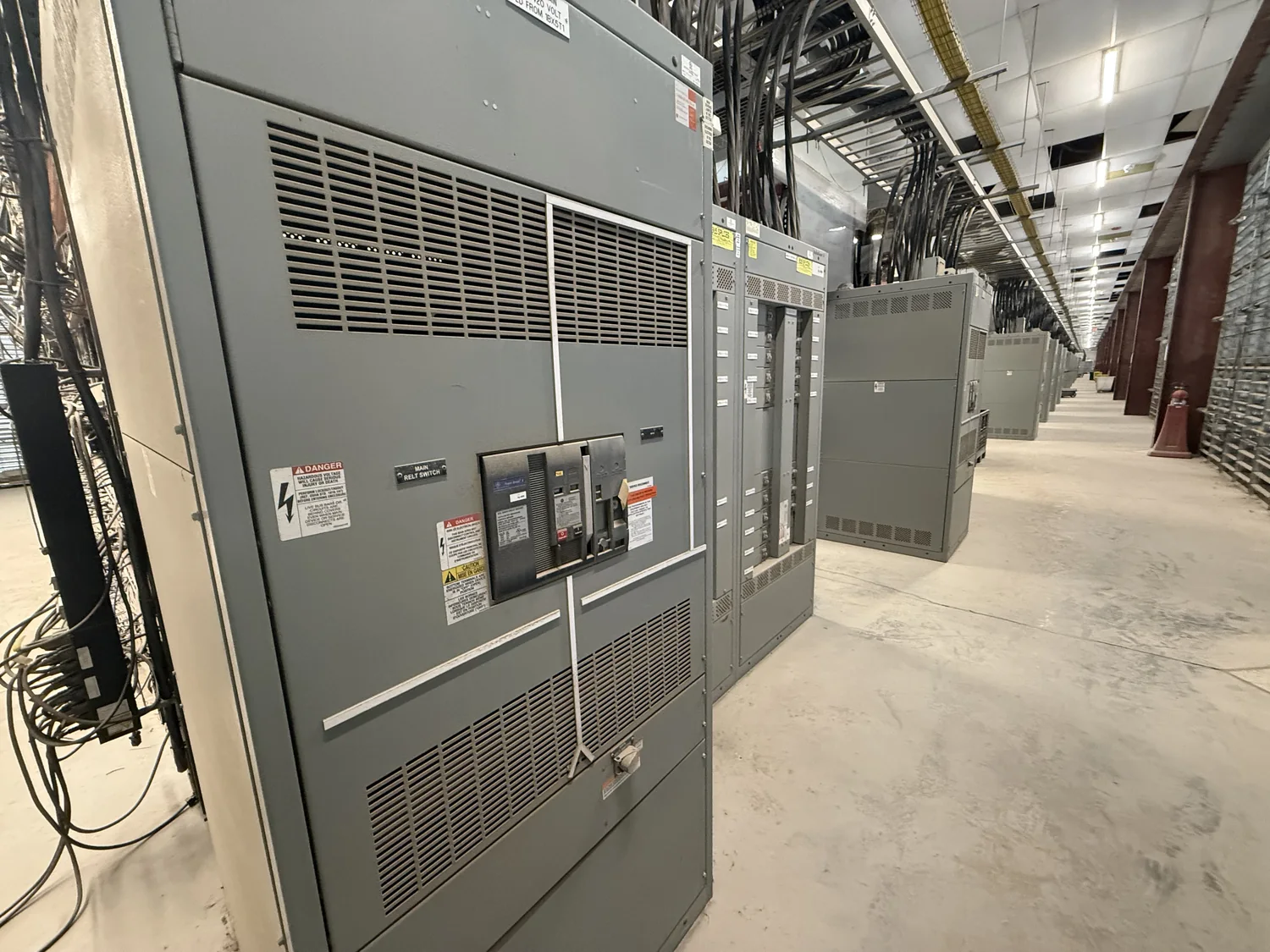
Sell Used 208V Switchgear in the Washington, DC Region
If your facility is replacing, consolidating, or retiring switchgear marked 208V, a buyer can review the equipment for a possible purchase. Service covers Washington, DC, Northern Virginia, and Maryland. The business buys electrical equipment; it does not sell switchgear. It can make a cash offer, and payment is arranged upfront if you accept the offer. The seller is not required to test the equipment as a condition of submitting it for review.
The 208V marking is a useful starting point, not enough to establish the lineup’s complete specifications or value. Equipment can vary in configuration, condition, completeness, and removal requirements even when a visible label shows the same voltage. Rather than infer details from a short description, provide clear nameplate images and photographs of the equipment so the buyer can review what is actually present. Any offer is subject to that review; a final price should not be assumed before the equipment and project details are considered.
What to Send for an Initial Review
Start with readable photographs of each relevant nameplate, including identifying information and ratings that are visible. Add wide views of the front, sides, rear where safely accessible, and the overall lineup, along with close-ups of sections, labels, and visible damage or missing components. Photos should help show how the lineup is arranged without asking anyone to enter restricted areas or approach equipment that has not been made safe under site procedures.
Include approximate lineup dimensions: overall length, height, and depth, plus the number and arrangement of sections if known. Note what appears to be included, such as associated sections, doors, internal components, or other equipment being offered with the switchgear. Do not guess at technical details that are not legible; flag them as unknown and let the buyer review the photographs and available records. The buyer considers all voltage classes, but the exact nameplate information is still important to identifying the equipment being offered.
A concise written inventory can make the review more useful. Identify the facility or project in general terms, describe the equipment’s current status, and distinguish the switchgear from items that are not included. If available, share relevant documentation or a prior equipment list, but do not treat a document as a substitute for current photographs and nameplate verification. Testing by the seller is not required.
Ownership, Site Access, and Removal Scope
Before an offer or removal plan is developed, clarify who owns the equipment and who has authority to approve its sale. If the assets are part of a lease, financing arrangement, public procurement, contractor-controlled project, or another disposition process, identify any approval or documentation steps that may affect timing. The buyer needs enough information to confirm that the seller can authorize the transaction; do not represent that ownership is settled if it still needs review.
Describe where the lineup is located within the property and the practical route from its current position to a loading point. Useful details include door and corridor widths, stairs or level changes, overhead limitations, loading-area access, restricted hours, security or escort requirements, and any limits on vehicles or equipment. For a DC-region project, access and scheduling can differ considerably between facilities and sites. Do not assume that a particular building, road, loading area, or operating window is available; share the site’s actual requirements so the parties can plan around them.
Also disclose removal constraints that may affect scope: whether the lineup is installed or already staged, how it is secured or connected, whether adjacent equipment must remain in place, and whether building rules require advance coordination. Provide known restrictions on noise, work hours, freight access, or staging. These details help determine whether the proposed removal approach is workable, but they do not replace the site’s own approval and safety processes.
Safe Disconnection and Project Scheduling
Do not have unqualified personnel disconnect, move, or handle switchgear. De-energization, isolation, and disconnection must be performed by qualified personnel in accordance with the facility’s safety requirements and outage procedures. The seller should coordinate the required site approvals, authorized personnel, outage window, and timing with the buyer before removal is scheduled. A photo review does not establish that equipment is safe to work on or ready to remove.
The equipment’s installed condition and the facility’s schedule can influence the sequence of work. Confirm what must remain operational, who controls the relevant electrical work, when the area can be accessed, and whether the lineup must be disconnected before the buyer’s removal team arrives. If the equipment is already disconnected or staged, say so and explain its current location and condition. Do not make or assume an electrical status designation from appearance alone; the responsible qualified personnel and site process must establish it.
Planning should also account for the physical route and the time needed to coordinate access. The buyer can review the proposed timing and logistical details with the seller, but scheduling remains subject to the project’s arrangements, site permissions, and access conditions. No removal date or method should be treated as confirmed until responsibilities and site coordination have been agreed.
Removal Responsibilities and Upfront Payment
The buyer handles crane service, rigging, disconnects, loading, freight, and hauling, subject to project arrangements and site access. Responsibilities and scope must be confirmed before removal, including the sequence for disconnection, the equipment and labor needed to extract the lineup, the loading plan, and any site-specific access requirements. This does not authorize unqualified work: disconnection and electrical isolation must still be managed by qualified personnel under the site’s procedures.
Before accepting an offer, make sure the parties have aligned on the equipment included, the information reviewed, payment arrangements, removal responsibilities, access, and timing. If the offer is accepted, payment is arranged upfront. The seller does not need to arrange testing, crane service, rigging, freight, or hauling, but should provide accurate ownership, equipment, and access information and coordinate the project’s approvals. A clear written scope helps prevent uncertainty about what is being purchased and what must be ready before removal.
To begin, send the available nameplate and equipment photos, approximate lineup dimensions, a description of completeness, ownership and approval details, and practical access and removal information. The buyer can then review the specific 208V-marked switchgear and discuss a cash offer and feasible project arrangements. Any price and schedule depend on that review and the site-specific scope; neither should be treated as guaranteed before confirmation.