Sell Used 240V Switchgear in the DC Region
If your business is considering selling used switchgear marked 240V, begin with the equipment itself—not an assumption about its configuration, condition, or resale value. A 240V marking is useful information, but it does not establish every detail a buyer needs to review the asset. The lineup, nameplates, installed components, completeness, and removal conditions all help determine whether the equipment fits a purchase opportunity.
We buy electrical equipment, including switchgear across all voltage classes. We can make a cash offer after reviewing the information provided, and payment is arranged upfront when an offer is accepted. The seller is not required to test the equipment. We do not sell equipment, and an initial inquiry is not a final price or a guarantee of purchase; the offer and project scope depend on review.
Send clear identification and condition information
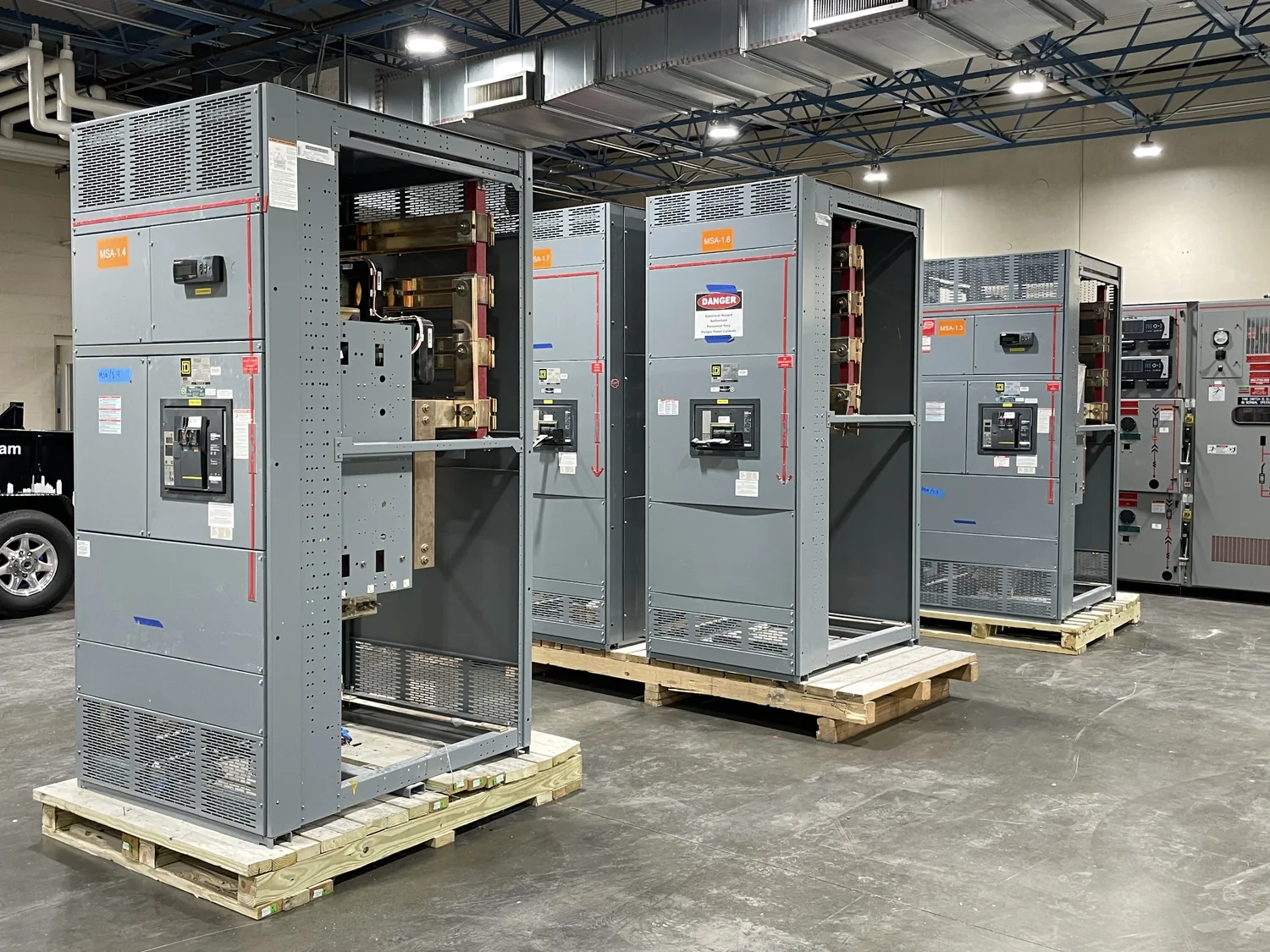
Start with readable photographs of each equipment nameplate and of the lineup as a whole. Include wider views showing the front, sides, and surrounding space where practical, plus close-ups of visible sections, labels, and included components. Avoid relying on a single image or on a handwritten voltage description when the nameplate can be photographed. If a label is damaged or hard to read, note that rather than trying to fill in missing ratings by guesswork.
Provide the lineup’s approximate overall dimensions—height, width, and depth—and, if available, the dimensions of individual sections. A simple section-by-section description can clarify whether the asset is one lineup or multiple pieces and what is included. Share any known information about completeness, such as whether doors, covers, breakers, or other components are present, missing, or being retained. Do not infer a manufacturer, model, rating, or operating condition that you cannot verify. The buyer will review the supplied information and may ask for additional photos or clarification before determining scope.
Establish ownership and disposition authority
Before an offer is considered, explain who owns the equipment and who is authorized to approve its sale. For company assets, confirm the appropriate internal contact for asset disposition and payment coordination. If the equipment is part of a lease, customer-owned installation, contractor inventory, or another party’s property, clarify the ownership and approval status before scheduling removal. The buyer needs enough information to understand what is being offered and whether the seller can transfer it.
Also identify what is included in the proposed sale and what must remain at the site. Switchgear can be part of a larger electrical system or facility disposition, so a clear boundary matters: specify the lineup or sections being offered, any associated components included, and any items excluded. This helps avoid misunderstandings in the offer and removal plan. No review of photos or preliminary discussion substitutes for confirming ownership and agreed scope.
Plan access, outage coordination, and removal
The DC region includes a range of building types, site rules, and transportation constraints, so logistics should be assessed for the particular facility rather than assumed from its location. Describe the equipment’s position, the route from its current location to the loading area, door and corridor clearances, stairs or elevators, overhead obstructions, loading-dock or street access, and any limits on vehicle size or work hours. Photos of the route and loading area can help the parties evaluate access. Share known restrictions on staging, parking, noise, freight movements, security check-in, or scheduled work windows.
Tell us whether the switchgear is installed, disconnected, or otherwise ready for removal, and identify any site requirements that affect timing. Any de-energization, isolation, and disconnect work must be performed by qualified personnel in accordance with the site’s safety procedures and outage process. Do not ask unqualified staff to disconnect, open, move, or handle electrical equipment. Coordinate access, outage timing, and the handoff with the facility’s responsible personnel and the buyer before a removal date is set.
Subject to project arrangements and site access, the buyer handles crane, rigging, disconnects, loading, freight, and hauling. The exact responsibilities, sequence, and schedule must be confirmed for the project before removal; specialized access or site rules may affect the plan. Share known removal constraints early, including whether lifting equipment is needed, available working space, weight information if documented, and any restrictions on taking equipment through the building. Do not assume a particular crane plan or removal method before the site conditions and scope are reviewed.
Review the offer and confirm the project scope
Once the buyer has reviewed the nameplates, photographs, dimensions, completeness, ownership, and access details, the parties can discuss an offer and practical removal scope. A clear record of the equipment being purchased, the agreed payment arrangement, access responsibilities, and scheduling expectations helps everyone prepare. If new information changes the described lineup or removal conditions, raise it before the work is scheduled so the scope can be reconsidered.
For sellers in Washington, DC, Northern Virginia, and Maryland, a well-prepared inquiry can make the review more efficient without requiring the seller to test the equipment or guess at technical specifications. Provide accurate information, flag uncertainties, and coordinate all electrical work through qualified personnel under the site’s procedures. We can make a cash offer; if accepted, payment is arranged upfront. The buyer’s handling of crane, rigging, disconnects, loading, freight, and hauling remains subject to confirmed project arrangements and site access, and no final price should be assumed before review.