Sell Used 35kV Switchgear in the DC Region
If your organization is considering selling used switchgear marked 35kV, begin with the equipment itself rather than assumptions about what the marking means. A label or remembered specification is not enough to establish the lineup’s exact configuration, condition, or removal scope. Clear nameplate images and photographs of the complete assembly help a buyer review what is present before discussing an offer or planning work.
We buy used electrical equipment in Washington, DC, Northern Virginia, and Maryland. We only buy; we do not sell equipment. We consider switchgear across all voltage classes, and seller testing is not required. An offer is subject to review of the equipment and project details. If you accept an offer, payment is arranged upfront; the specific payment and removal arrangements should be confirmed before work is scheduled.
Verify the equipment before setting scope
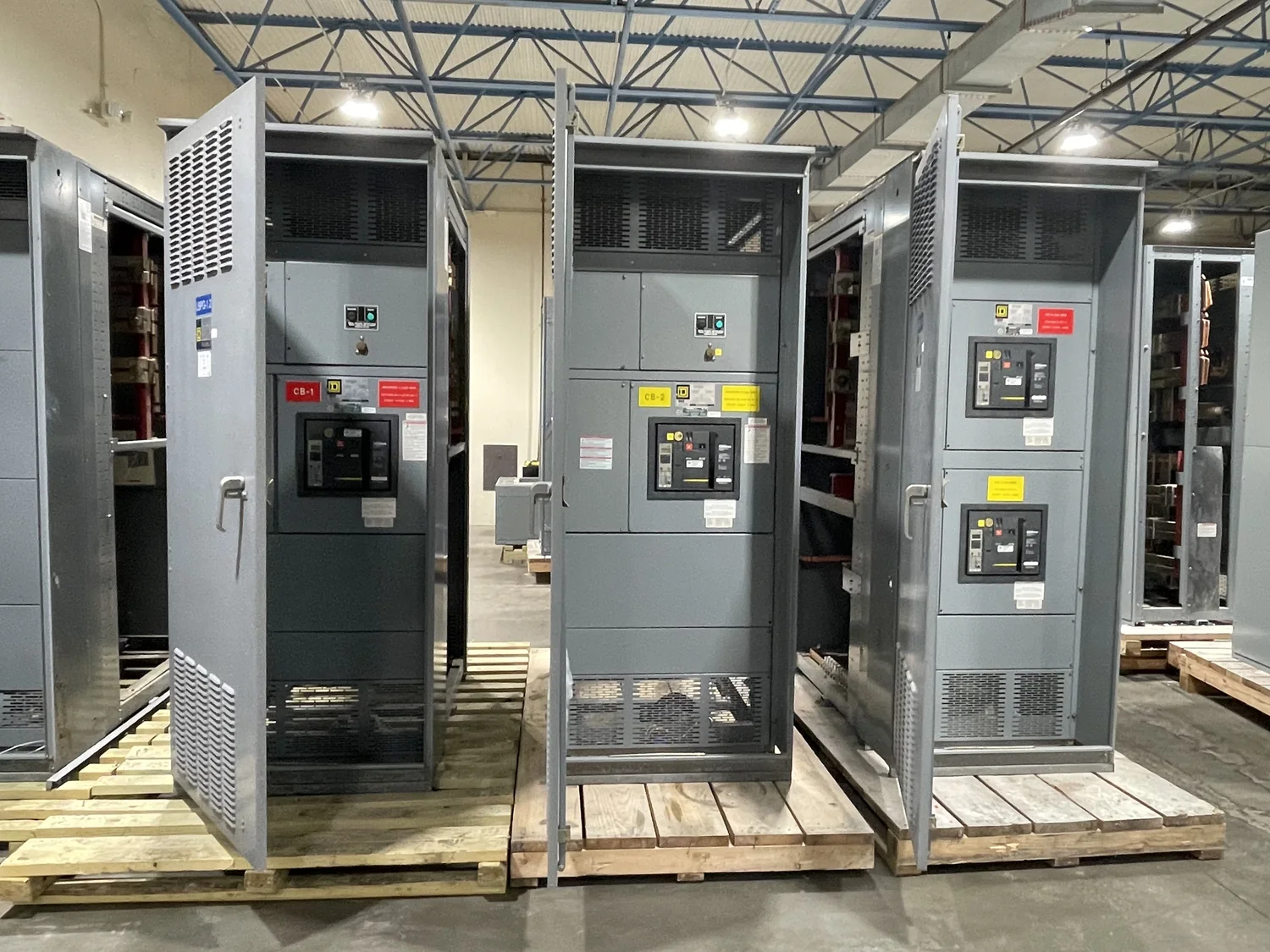
Send readable photographs of each relevant nameplate, along with overall views of the lineup and close-ups of sections, doors, labels, and visible accessories. Capture the nameplate information as it appears rather than retyping or interpreting it. If a label is unreadable, note that; do not fill in a missing rating or manufacturer detail by guesswork. The photos and records allow the buyer to assess the actual equipment presented and identify questions that need to be resolved before an offer or removal plan is set.
Provide the lineup’s approximate overall length, height, and depth, and note how many sections are included. Measurements help establish whether the described asset matches the photographs and inform planning for access, handling, and transport. Also describe what is included or excluded, such as associated sections or loose components, without assuming that an item belongs to the lineup if ownership or scope is unclear. Completeness, visible condition, and whether parts have already been removed may affect review, but photographs alone do not guarantee a final valuation.
Clarify ownership, access, and removal conditions
Before proceeding, identify who owns the switchgear and who is authorized to approve its sale and removal. For equipment held by a business, institution, property owner, or other organization, coordinate with the people responsible for asset disposition and the site. Explain any relevant approval steps, timing restrictions, operating requirements, or other conditions that may affect when the equipment can be released. Confirm what equipment is included in the proposed sale and whether any connected or nearby assets must remain in place.
Describe the route from the equipment to the loading area, including doorways, corridors, turns, floor or ground conditions, exterior access, and any height or width restrictions that could affect removal. Share known constraints such as limited staging space, restricted vehicle access, building hours, security procedures, or coordination with other planned work. These are planning questions, not assumptions about a particular DC-area facility. The buyer needs project-specific access details to determine whether the proposed crane, rigging, loading, and hauling plan is workable.
Coordinate disconnection and scheduling safely
Any de-energization, isolation, and disconnection must be handled by qualified personnel under the site’s safety requirements and outage procedures. Do not ask unqualified staff to disconnect, open, move, or handle energized electrical equipment. The seller and site team should coordinate the required work, access, and timing with the qualified personnel responsible for the installation. The buyer’s removal schedule depends on those arrangements and on having an agreed scope and access plan; it should not be treated as a substitute for the site’s safety or operational controls.
Tell the buyer what schedule windows are being considered and whether removal must fit around an outage, other site work, or a release deadline. Schedule should be agreed for the particular project rather than presumed from the region or equipment rating. If the equipment cannot be made available at the planned time, or the access conditions differ from those described, the parties may need to revisit the removal plan before work proceeds.
Confirm payment and logistics before removal
For an accepted offer, payment is arranged upfront. Confirm the payment arrangement, asset scope, removal timing, and responsibilities before removal begins. The buyer handles crane, rigging, disconnects, loading, freight, and hauling, subject to project arrangements and site access. In particular, confirm how disconnect work will be coordinated with the qualified personnel responsible for de-energization, isolation, and the site’s safety and outage procedures. The buyer pays the crane, rigging, loading, freight, and hauling costs; project responsibilities and access conditions should be confirmed in advance.
To request a review, provide the nameplate photos, clear views of the lineup, approximate dimensions, a description of what is included, ownership and authorization details, and information about site access and removal constraints. This gives the buyer a practical basis to assess the proposed 35kV-marked equipment and plan next steps without guessing at specifications. No final price can be established from the voltage marking alone; the offer and logistics remain subject to review of the equipment and project details.