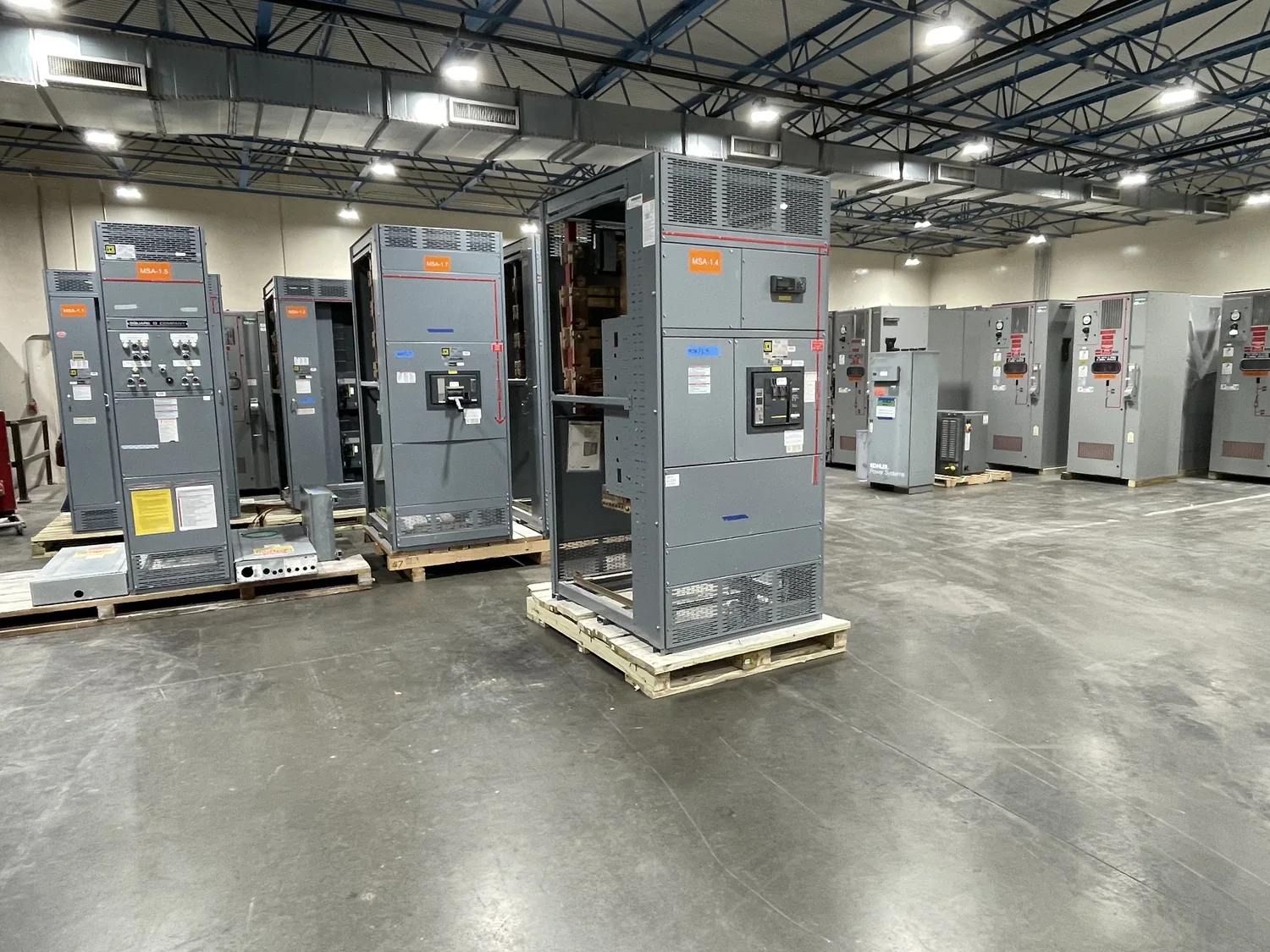
Selling 400 Amp Switchgear in the DC Region
If you are responsible for surplus electrical equipment in Washington, DC, Northern Virginia, or Maryland, a switchgear lineup marked 400 Amp may be a candidate for purchase. The rating is a useful starting point, not a complete description of the equipment or a basis for a final offer. Layout, condition, completeness, identification, ownership, and removal requirements can all affect whether a purchase is practical and how a project should be scoped.
This is a buyer page: the business purchases eligible equipment and does not sell switchgear. It can make a cash offer after reviewing the available information, and payment is arranged upfront when an offer is accepted. The seller is not required to perform testing. No price can be confirmed from the 400 Amp marking alone; the equipment and project details need review before an offer or removal plan is set.
Verify the Nameplate and Identify the Lineup
Start with clear, readable photographs of each equipment nameplate and the overall lineup. Include close-ups of labels that identify the equipment, along with wider views showing how the sections are arranged. A photograph of a 400 Amp label can help establish what is marked on the equipment, but it should not be used to infer unlisted voltage, manufacturer specifications, configuration, or other ratings. Share what can be read and let the buyer review it rather than filling gaps by guesswork.
Provide approximate lineup dimensions, including overall length, height, and depth where available, and note how many sections are included. Photos of the front, sides, rear where safely accessible, and any visible bus or section labels may help clarify what is being considered. Also identify whether breakers, doors, covers, or other components are included, missing, separated, or stored elsewhere. Do not remove covers or approach exposed electrical parts to obtain pictures; photography and access should follow the site’s safety rules and be handled by appropriately qualified people.
If labels are obscured, damaged, or difficult to photograph, explain that when you make the initial inquiry. Existing records or inventory descriptions may add useful context, but they do not replace equipment verification. The goal is to establish what is actually present before discussing value, scope, or removal—not to assume that every lineup bearing a 400 Amp marking has the same construction or resale potential.
Share Ownership, Access, and Removal Details
Before scope is set, explain who owns the equipment and who is authorized to approve its sale and removal. If the asset is part of a facility closure, renovation, or other disposition, clarify who can coordinate access, approve the work window, and confirm that the equipment is available for transfer. Ownership and authorization details can prevent avoidable delays after an offer is considered.
Describe the site’s access conditions as accurately as you can. Useful details may include the equipment’s location within the building or site, the route from the lineup to an exit, door and corridor clearances, stairs or elevators, loading-area restrictions, and any known limits on vehicle access or working hours. Share whether the lineup is in one piece or divided into sections, if that is known, and whether there are nearby obstacles that could affect rigging or movement. Do not guess at lifting capacity or promise that a particular removal method will work; those details require project-specific review.
The DC region can involve different building layouts, property-management processes, loading arrangements, and scheduling requirements from one site to another. No single access plan should be assumed for Washington, DC, Northern Virginia, or Maryland. Confirm site rules, points of contact, timing constraints, and any required coordination with facility operations before removal arrangements are finalized.
Coordinate Disconnects and Site Safety
Any de-energization, isolation, and disconnect work must be performed by qualified personnel under the site’s safety and outage procedures. Unqualified personnel should not disconnect, open, move, or handle switchgear. Coordinate the required work window with the people responsible for electrical operations and site safety; equipment removal should not begin until the site has established that the relevant work can proceed under its procedures.
The buyer handles crane, rigging, disconnects, loading, freight, and hauling, subject to the project arrangements and site access. The seller should not assume that this removes the need for site coordination: qualified personnel, authorized access, outage timing, and any facility-specific requirements still need to be arranged for the project. Confirm responsibilities, sequence, access, and timing before removal so that everyone understands what the buyer will arrange and what coordination the site must provide.
Whether equipment is indoors, outdoors, elevated, in a restricted area, or positioned along a tight route can change the practical removal plan. Share known constraints early, including whether other equipment or building components limit access. The buyer can review those details when evaluating the project, but the specific method and schedule depend on the equipment and conditions at the site.
Request an Offer and Confirm the Project Scope
To begin, provide the nameplate and lineup photographs, dimensions, a description of what is included, and the ownership and access information available to you. Mention any known condition issues, missing components, dismantling history, or schedule deadlines. Testing is not required from the seller. If existing test records are available, they may be shared for review, but do not arrange testing solely to start an inquiry unless the project team has requested it.
After reviewing the information, the buyer can determine whether it can make an offer and discuss the project-specific scope. An offer should not be treated as final until the relevant equipment and removal details have been reviewed. If an offer is accepted, payment is arranged upfront. The buyer pays the crane, rigging, loading, freight, and hauling costs, with responsibilities and arrangements confirmed before removal.
A careful first review helps both sides identify missing information before scheduling work. It also supports a clearer plan for qualified disconnect work, site access, loading, and transportation. For a 400 Amp lineup anywhere in Washington, DC, Northern Virginia, or Maryland, the best starting point is accurate identification and a candid description of the equipment and site—not assumptions based on the amp rating alone.