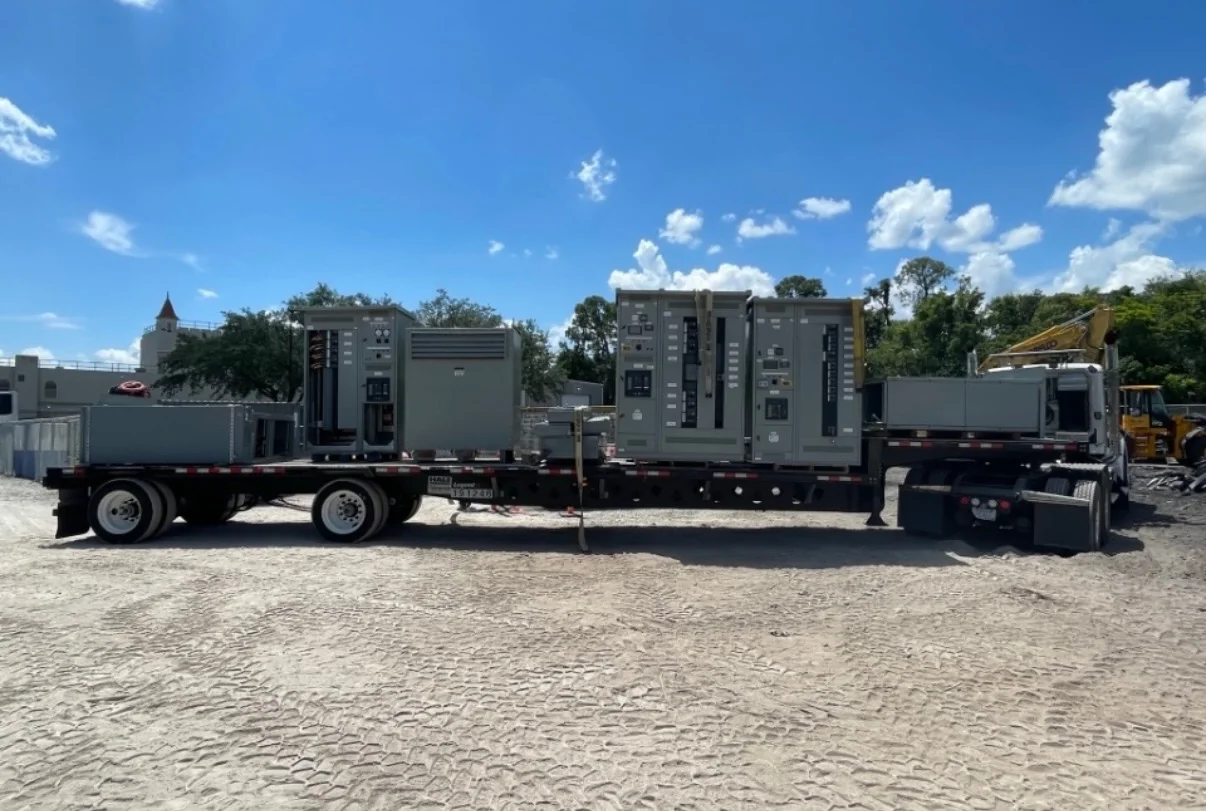
Sell Used 480V Switchgear in the Washington, DC Region
If your facility is preparing to replace, upgrade, or clear out used switchgear marked 480V, the first step is to establish exactly what equipment is on site. A voltage marking alone does not identify the full lineup, its configuration, condition, completeness, or removal requirements. We buy electrical equipment; we do not sell it. Sellers can request a cash offer, with payment arranged upfront if an offer is accepted. There is no seller-required testing, and we consider equipment across all voltage classes.
This guide is for organizations managing equipment in Washington, DC, Northern Virginia, and Maryland. A useful initial review can begin with clear photos, readable nameplates, lineup dimensions, and basic information about ownership and site access. That lets the buyer review the asset and discuss a workable scope before removal is planned. It does not establish a final price: an offer depends on the equipment details and project-specific logistics, which must be reviewed before responsibilities and timing are confirmed.
Verify the Equipment Before Discussing Scope
Please do not rely on “480V” as a complete specification or infer other ratings from that marking. Send legible photographs of each relevant nameplate, along with wide views showing the full lineup and closer images of sections, doors, visible labels, and included components. If a label is obscured or unreadable, note that rather than guessing. Images help identify what is present, but may not answer every question; additional details or an on-site review may be needed before the scope is set.
Dimensions are also important. Provide the approximate overall lineup length, height, and depth, and identify any separate, detached, or stored sections you believe belong with it. If available, include a simple section-by-section inventory and note whether breakers, accessories, or other components are included, missing, or being kept. Describe visible condition and any known damage, modifications, storage history, or incomplete sections factually. Do not remove covers or expose energized parts to obtain photographs. Photo collection should be coordinated with facility personnel and performed only when it can be done safely under site rules.
A practical submission can include the equipment location within the facility, the number of sections, available nameplate information, dimensions, completeness, and the contact responsible for the asset. Include any relevant documents you already have, such as an inventory or equipment list, but do not delay the initial conversation solely because a record is unavailable. The goal is to describe the actual equipment accurately enough for review—not to certify its condition or assume that a particular configuration is present.
Confirm Ownership, Access, and Removal Constraints
Before an asset can be included in a purchase, the seller must be able to establish that it has authority to transfer it. Identify the owner or authorized representative and disclose any known restrictions, liens, lease arrangements, or internal approvals that could affect a sale. If equipment is being removed as part of a facility project or a broader asset disposition, clarify which sections are included and which must remain. A clear boundary helps avoid confusion during planning and removal.
Access conditions can shape both scope and schedule. Explain where the lineup is located, the route from its present position to the loading area, and any known limits involving doors, corridors, elevators, stairs, loading docks, overhead clearance, floor loading, or vehicle access. Note site rules, working-hour limits, escort requirements, security procedures, shared-space restrictions, and any scheduled outage or construction windows that could affect the work. These are planning questions, not assumptions about a particular DC-area facility; actual conditions must be verified at the site.
Tell us whether the switchgear is installed, disconnected, staged, or otherwise ready for removal, and describe any site-specific constraints that may affect access to it. Do not have unqualified personnel disconnect, move, or handle electrical equipment. De-energization, isolation, and disconnect work must be performed by qualified personnel under the facility’s safety requirements and outage procedures. The parties should coordinate site access, timing, and the division of work for the specific project before removal begins.
Coordinate Removal and Transportation
Removal is planned around the actual equipment and site conditions. Subject to project arrangements and access, the buyer handles crane and rigging, disconnects, loading, freight, and hauling. The buyer pays the associated crane, rigging, loading, freight, and hauling costs. Confirm the responsibilities and scope before removal so the facility team and the removal crew have a shared understanding of what is included, what must remain, and who is responsible for each agreed task.
A suitable removal plan may depend on lineup dimensions and weight information, the number and size of sections, available lifting points or other handling considerations, and the route equipment must travel. The plan may also need to account for whether sections can be moved as a unit or need to be handled separately, as well as crane setup space, rigging access, loading position, and timing. Do not assume that equipment can be moved through a particular opening or lifted from a particular location until access and site conditions have been reviewed. Any disconnect or electrical isolation must be coordinated with qualified personnel and the facility’s procedures.
For Washington, DC, Northern Virginia, and Maryland projects, scheduling should be discussed in the context of the actual site, not a presumed regional standard. Share the requested access window, any fixed project milestones, and whether other contractors or facility operations affect the removal area. The schedule and logistics are subject to review, site access, and mutually confirmed project arrangements. No removal date or specific approach should be treated as guaranteed before those details are settled.
Request a Cash Offer With a Clear Review Package
To start, send clear nameplate and equipment photos, approximate lineup dimensions, the known ratings and section count, and a brief description of completeness and visible condition. Add the equipment location, ownership or authorization status, access details, and any removal or scheduling constraints. If you have an inventory, drawings, or other relevant records, they may help clarify the asset, but the nameplates and actual equipment still need to be reviewed rather than replaced by an assumed specification.
After reviewing the information, the buyer can discuss the equipment and project scope and determine whether to make a cash offer. A final price is not available from the 480V marking alone and should not be assumed before review. If an offer is accepted, payment is arranged upfront. Sellers are not required to test the switchgear as a condition of requesting an offer; share what is known, identify what is unknown, and avoid presenting unverified ratings or condition as fact.
Before accepting a proposed scope, confirm the equipment included, the agreed payment arrangement, the buyer’s responsibility for crane, rigging, disconnects, loading, freight, and hauling, and the access and timing plan for removal. That practical review gives both sides a clearer basis for proceeding while leaving technical verification and site-specific logistics to the appropriate project review.