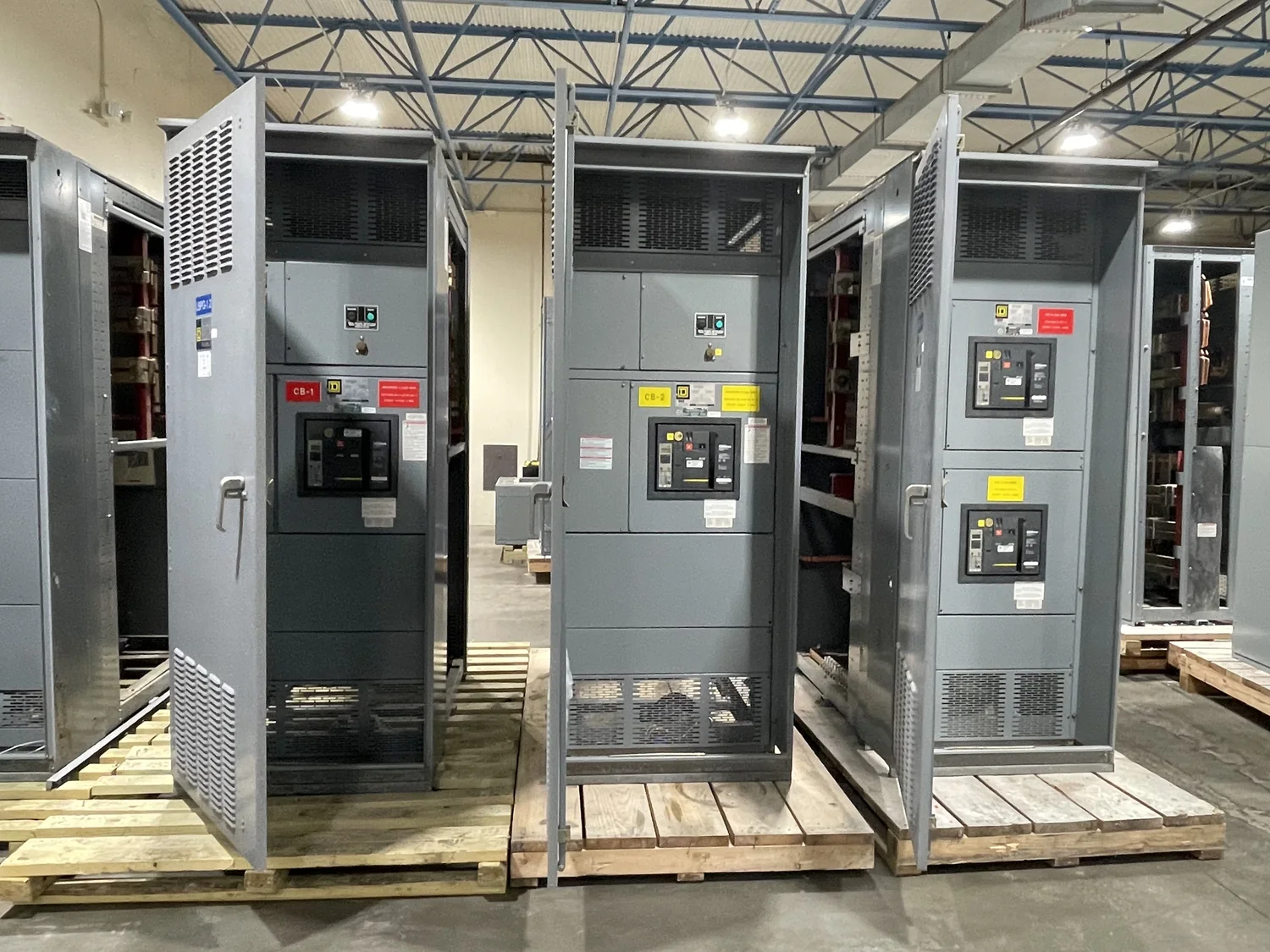
Sell Used 600V Switchgear in the Washington, DC Region
If your facility is preparing to retire, replace, or clear space for switchgear marked 600V, a purchase offer can be a practical alternative to leaving the equipment unused or arranging disposal without first assessing its potential value. We buy used switchgear in Washington, DC, Northern Virginia, and Maryland. Our role is to evaluate equipment offered for sale and, if the offer is accepted, arrange payment and removal according to the project plan. We buy equipment; we do not sell it.
A 600V marking is a starting point for review, not enough information to establish the equipment’s identity, condition, configuration, or value. Do not rely on memory or an assumed specification when describing a lineup. Clear nameplate images and photographs of the equipment help us verify what is actually present before a scope or offer is discussed. We consider all voltage classes, and sellers are not required to test equipment to submit it for review.
What to Send for an Initial Review
Begin with readable photographs of each available nameplate. Capture the full label and, where possible, a wider image showing which section or component it belongs to. The information visible on a nameplate can help identify the equipment and distinguish between sections in a lineup. If a label is worn, obstructed, or missing, send the best available photo and note that limitation rather than trying to reconstruct details.
Include overall views of the front, rear, sides, and interior where those areas can be photographed safely and access is permitted. Images of doors, compartments, breakers, bus connections, controls, accessories, and visible damage can help show the lineup’s configuration and completeness. Do not open energized equipment or enter restricted areas to obtain photographs. Any access or inspection should follow the facility’s rules and be carried out by people authorized for the task.
Provide the approximate lineup dimensions, including length, height, and depth, and note how many sections are included. If measurements are estimates, identify them as estimates. Also describe what is included in the proposed sale: for example, whether breakers, doors, covers, auxiliary components, or related sections are present, and whether any items have already been removed. Completeness matters because an apparently continuous lineup may have missing sections or components that affect both the review and the removal plan.
Ownership and authority to sell should be clear before the project proceeds. Tell us whether the equipment belongs to your organization or is being offered on behalf of an owner with authority to approve the sale. Include the facility location at the level needed to plan a review, plus a contact who can coordinate asset disposition and site logistics. An offer is subject to review of the available information; no final price can be set from the 600V marking alone.
Access, Removal, and Scheduling
Removal planning depends on the equipment’s location and the conditions at the site—not simply on its electrical rating. Share practical access details early, such as the route from the lineup to the loading area, door or corridor clearances, floor or level changes, overhead restrictions, available staging space, and any limits on vehicle or lifting-equipment access. Note whether the equipment is indoors, whether the lineup can be moved in sections, and whether the route or work area has restrictions that could affect the sequence of removal.
The buyer handles the crane, rigging, disconnects, loading, freight, and hauling, subject to the project arrangements and site access. Responsibilities and the removal scope are confirmed before removal begins. The site should identify applicable access rules, required coordination, permitted work windows, and any scheduling dependencies. In the Washington, DC region, projects may involve coordination among facility personnel, property representatives, contractors, and transportation or building-access contacts; the relevant parties and requirements vary by site, so share the details that apply to your project rather than assuming a standard arrangement.
Any de-energization, isolation, and electrical disconnect work must be performed by qualified personnel under the facility’s safety procedures and outage requirements. Do not have unqualified staff disconnect, move, or handle switchgear. Coordinate the timing of that work with the site’s authorized personnel and the removal schedule. If the equipment cannot be made available during a proposed window, or if other facility work must happen first, identify that before the scope is set.
For equipment in active, shared, or controlled spaces, consider how removal timing may interact with site operations, access permissions, and any planned outage. The buyer and seller can confirm responsibilities and sequence as part of project planning, but the facility remains responsible for its own safety procedures and authorizing work in its spaces. Early discussion of constraints can reduce avoidable scheduling changes; it does not substitute for a site-specific review.
Offers, Payment, and Seller Preparation
After reviewing the photos, nameplates, dimensions, completeness, ownership information, and access details, we can discuss an offer and whether the equipment appears suitable for purchase. The actual scope and amount depend on review; neither the 600V label nor a photograph alone guarantees an offer or establishes a final price. If the offer is accepted, payment is arranged upfront. The timing and method are confirmed as part of the transaction before removal.
No seller testing is required. Do not energize, operate, dismantle, or conduct electrical tests just to prepare the equipment for an initial offer. Instead, provide honest information about known condition, missing parts, prior removal of components, or visible damage. If a detail is unknown, say so. Accurate records and clear photos are more useful than unsupported assumptions about the equipment’s performance.
Before removal, confirm which sections and components are included in the sale, what must remain at the facility, who can authorize site access, and which party is coordinating each project dependency. Confirm the planned work window, loading route, and any restrictions that could affect crane or rigging access. The buyer’s responsibility for crane, rigging, disconnects, loading, freight, and hauling is subject to the agreed project arrangements and actual site access, so these points should be discussed before the removal date is set.
A Clearer Path to a Switchgear Review
For sellers across Washington, DC, Northern Virginia, and Maryland, a well-prepared submission helps establish whether used 600V switchgear is a fit for purchase and what information is still needed. Send readable nameplates, safe-to-obtain equipment photos, lineup dimensions, a description of what is included, confirmation of ownership authority, and a practical account of access and removal constraints. Add any known scheduling limits or site procedures that may affect qualified electrical work and loading.
Keep the description factual: identify what is visible, distinguish measurements from estimates, and flag missing or illegible information. We can review the available details, discuss a cash offer where appropriate, and confirm the purchase and removal arrangements before work proceeds. If the offer is accepted, payment is arranged upfront, and the buyer handles the agreed crane, rigging, disconnects, loading, freight, and hauling responsibilities subject to site access and project coordination.