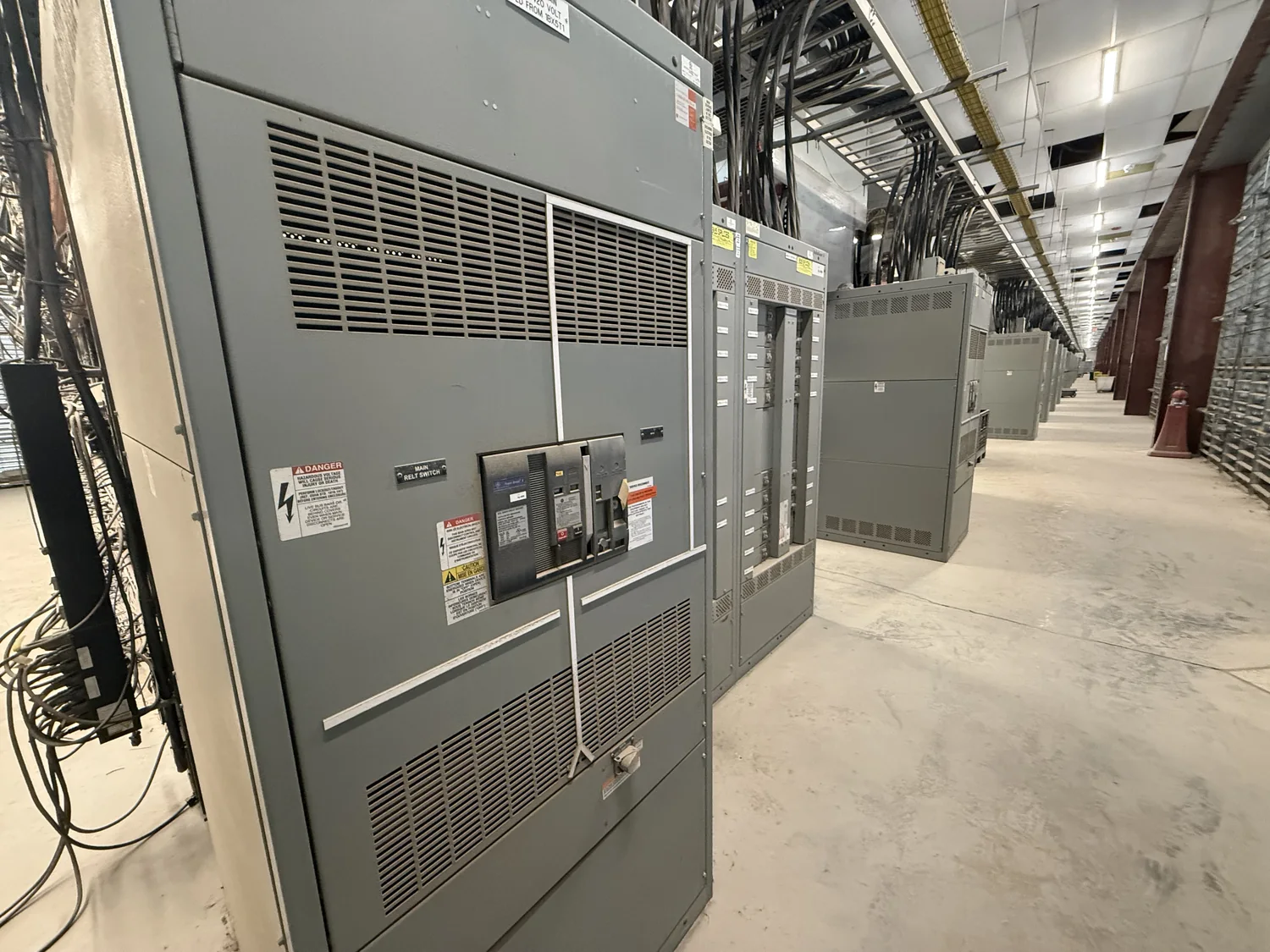
Sell Used Automatic Transfer Switches in the DC Region
If your organization is planning an electrical upgrade, closing out a project, or reviewing surplus assets, a used automatic transfer switch (ATS) may be worth presenting for purchase. We buy used ATS equipment from commercial, institutional, and industrial sites serving Washington, DC, Northern Virginia, and Maryland. We buy equipment only; we do not sell switches or replacement equipment, and we do not claim manufacturer endorsement.
An ATS transfers an electrical load between power sources as part of a facility’s power arrangement. For a potential purchase, the exact equipment and its condition matter more than a broad label such as “transfer switch.” A clear initial description helps establish whether the unit, enclosure, controls, and any associated sections can be reviewed as a practical removal and disposition project. We consider all voltage classes, and sellers do not need to test equipment before contacting us.
Start with Photos, Nameplates, and Dimensions
Send clear, well-lit photos of the complete ATS and its surroundings. Useful views include the front, sides, interior where safely visible, control area, visible wiring or bus connections, and any adjacent lineup sections that may be part of the same assembly. Do not open energized equipment or remove covers to take pictures. Site personnel should follow facility rules, and any inspection requiring access inside electrical equipment must be handled by qualified personnel under the site’s safety procedures.
Include readable photographs or transcriptions of the equipment nameplates and any other identification labels. The information available may help establish the manufacturer, model or catalog identification, ratings, configuration, and other details relevant to review; do not guess at missing or illegible data. Share the lineup’s approximate overall dimensions, including height, width, and depth, as well as the ATS’s location within the assembly. Note whether the switch appears to be standalone or connected to other equipment, and identify any sections that cannot be separated without affecting equipment intended to remain in place.
A brief description of completeness is useful. For example, indicate whether doors, covers, controls, and visible accessories are present, whether anything has been removed, and whether there is known damage or a history of storage. This is not a request for the seller to certify condition or perform testing. It gives the buyer context for deciding what additional information may be needed before defining scope. Photos and descriptions support an initial review; they do not establish a final price or guarantee that the equipment can be purchased.
Clarify Ownership, Access, and Removal Constraints
Before scope is set, explain who owns the ATS and who is authorized to approve its sale and removal. On commercial, institutional, or industrial sites, equipment may be part of a larger facility asset-disposition process. Confirm that the seller can transfer the equipment and identify any internal review, documentation, or scheduling steps that could affect timing. Do not assume that an installed switch can be removed independently of the surrounding lineup or facility systems.
Describe access from the equipment to the building exterior and to the planned pickup area. Relevant details can include the floor or room, door and corridor clearances, stairs or elevators, loading-dock arrangements, distance to the truck, overhead obstructions, restricted work areas, and any limits on vehicle or lifting-equipment access. In the DC region, site access and timing can differ substantially among occupied buildings, campuses, and industrial properties; provide the actual site conditions rather than relying on a general description of the area. If the equipment is in a secure or controlled-access facility, explain how entry, escorts, work windows, and delivery or removal coordination are arranged.
Also flag constraints that could affect disconnection, lifting, staging, or hauling. These may include narrow routes, limited laydown space, shared loading areas, active operations, site-specific work hours, or other equipment that must remain undisturbed. The buyer’s logistics responsibilities are subject to project arrangements and actual site access. A review of photos and dimensions can help identify questions early, but the removal plan and responsibilities should be confirmed for the specific project before work is scheduled.
Coordinate Disconnection and Removal Safely
An ATS may be integrated with essential power systems, so removal requires careful coordination with the facility’s electrical and operational plans. De-energization, isolation, and disconnect work must be performed by qualified personnel under the site’s safety and outage procedures. Do not ask unqualified staff to disconnect, open, move, or handle electrical equipment. The timing of any outage or work window, the required site approvals, and the sequence for making equipment available should be coordinated by the facility and qualified personnel before removal.
The buyer handles crane, rigging, disconnects, loading, freight, and hauling, subject to project arrangements and site access. Confirm those responsibilities in advance, including how the required qualified disconnect work will be arranged and how removal will be coordinated with the site. The buyer’s responsibility for these logistics does not override facility safety procedures, access rules, or operational requirements. Site representatives should identify restrictions and communicate any conditions that could affect the work before a removal date is set.
For an ATS installed in a lineup, removal may involve more than lifting out one cabinet. The project review should account for the assembly’s dimensions, weight information if available, connection and separation points, the route out of the facility, and whether adjacent equipment must stay in service. Share available drawings or installation information if they clarify the configuration, but do not alter equipment or connections to prepare for an offer unless the work has been authorized and assigned to qualified personnel.
Understand the Offer and Payment Process
Once the buyer has reviewed the available equipment details and project conditions, an offer can be considered. The information needed may include nameplate details, clear photos, lineup dimensions, completeness, ownership and sale authority, access, and removal constraints. Further questions or a site review may be appropriate where the configuration or logistics cannot be understood from the information provided. Any offer remains subject to review; a final price should not be assumed from a brief description or a single photograph.
If an offer is accepted, payment is arranged upfront. The buyer pays the crane, rigging, loading, freight, and hauling costs, with the project’s responsibilities and arrangements confirmed before removal. No seller testing is required. To begin, provide the ATS identification and photos, approximate lineup dimensions, a short note on completeness and known condition, confirmation of ownership or sale authority, and a practical description of site access and scheduling constraints. That information makes it easier to discuss whether the switch and its removal can be reviewed as a workable purchase in Washington, DC, Northern Virginia, or Maryland.