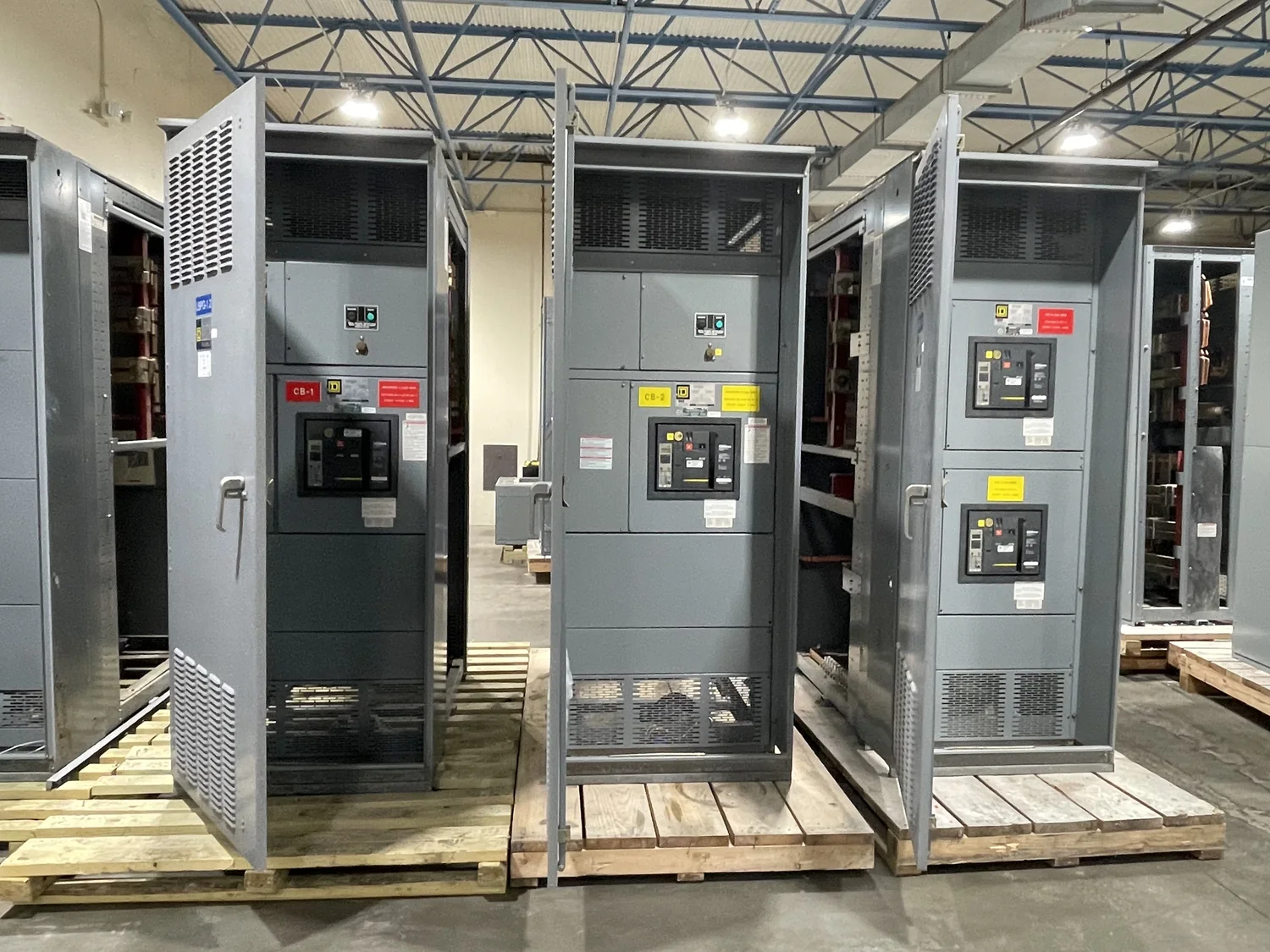
Sell Used Cutler-Hammer Switchgear in the DC Region
If your facility is retiring switchgear identified by a Cutler-Hammer nameplate, a buyer can review the equipment for a possible purchase. This page is for sellers in the Washington, DC region, including Northern Virginia and Maryland. The buyer purchases equipment only; it does not sell replacement gear. The Cutler-Hammer name is used to identify the equipment under review and does not imply manufacturer affiliation or endorsement.
A useful first step is to share clear photos, nameplate information, lineup dimensions, ownership details, and a description of site access. These details help establish what is present and what a removal may involve. The buyer considers all voltage classes, but the equipment still needs an individual review. No testing is required from the seller, and a preliminary conversation or photo review is not a final price or a guarantee of purchase.
Identify the Equipment Before Setting Scope
Photograph each lineup section from the front and, where safely accessible, the sides and rear. Include wide views that show how sections connect, close views of visible labels and nameplates, and images of doors, breakers, compartments, and accessories. Do not remove covers or enter restricted areas to get a photograph. If a label cannot be read safely, note that rather than attempting to access it.
Nameplates may show manufacturer identification, model or catalog details, ratings, and other information useful for review. Share the information as printed; avoid guessing at missing fields or specifications. Include overall lineup length, approximate height and depth, the number of sections, and any known additions or modifications. If exact measurements are not available, clearly label estimates as approximate. A simple floor plan or marked-up site photo can also help explain the equipment’s position and route out of the building.
Describe completeness as accurately as possible. Note whether breakers, doors, covers, bus components, control devices, or other associated parts appear to be present, removed, or stored separately. Mention visible damage, corrosion, missing components, or changes to the lineup. This information supports a more informed review, but the seller is not expected to test the equipment. Review and offer decisions depend on the specific equipment and project conditions.
Confirm Ownership, Access, and Removal Constraints
Before an offer is finalized, clarify who owns the switchgear and who is authorized to approve its sale. If the equipment is part of a facility closure, tenant change, or broader asset disposition, identify the person responsible for coordinating the transaction and the person who can approve site work. Any ownership or authorization questions should be settled before removal is scheduled.
Access details matter as much as the equipment description. Explain where the lineup is located, how a removal crew would reach it, and whether the path includes narrow corridors, stairs, elevators, ramps, low clearances, loading docks, gates, or restricted areas. Share available information about door and route dimensions, floor conditions, staging space, truck access, and any site rules for contractors or deliveries. In the DC, Northern Virginia, and Maryland service area, travel and building access can vary by project; schedule and logistics should therefore be confirmed for the specific facility rather than assumed.
Identify practical constraints such as operating hours, escort requirements, security procedures, loading-area reservations, noise limits, outage windows, and coordination with other contractors. If a crane, rigging, or other specialized access may be needed, flag that early and provide relevant site information. The final plan depends on equipment dimensions, its location, the removal route, and access conditions. No removal date or method should be treated as settled until the parties have coordinated the project scope.
Coordinate Qualified Electrical Work and Removal
Switchgear must not be disconnected or handled by unqualified personnel. De-energization, isolation, and disconnect work must be performed by qualified personnel under the facility’s safety requirements and outage procedures. The seller and site team should coordinate the required work, timing, permissions, and safe access before removal. The buyer’s review does not replace the facility’s electrical-safety process or authorize work on energized equipment.
The buyer handles crane, rigging, disconnects, loading, freight, and hauling, subject to the agreed project arrangements and actual site access. Confirm responsibilities and scope before removal, including how the electrical disconnect will be coordinated with qualified personnel and the site’s outage schedule. Share known lifting or rigging restrictions, overhead obstructions, floor-loading concerns, and any limits on truck or crane positioning. If conditions differ from what was described, the removal plan may need to be reviewed before work proceeds.
A practical handoff includes agreement on which equipment and associated items are included, what must remain in place, who controls access, and the approved work window. The buyer pays the crane, rigging, loading, freight, and hauling costs, with responsibilities confirmed before removal. Site-specific arrangements should be documented so facility staff and the removal team understand the sequence and the limits of the work.
Offer Review, Payment, and Next Steps
After reviewing the information, the buyer can determine whether it is interested and make an offer for consideration. The amount depends on the equipment presented and the project details; a final price should not be assumed from a brand name, a partial photo set, or a general description. Clear documentation of the lineup, completeness, ownership, access, and removal constraints gives the buyer a stronger basis for review, but it does not guarantee an offer.
If an offer is accepted, payment is arranged upfront. The seller does not need to test the switchgear to request a review. Send the available photos and nameplate details, approximate lineup dimensions, a short description of the equipment’s condition and completeness, confirmation of ownership or sale authority, and information about access and scheduling. Note any known removal restrictions or required outage windows. That information helps the buyer assess the opportunity and coordinate a project-specific plan for Washington, DC, Northern Virginia, or Maryland without assuming facility conditions that have not been confirmed.