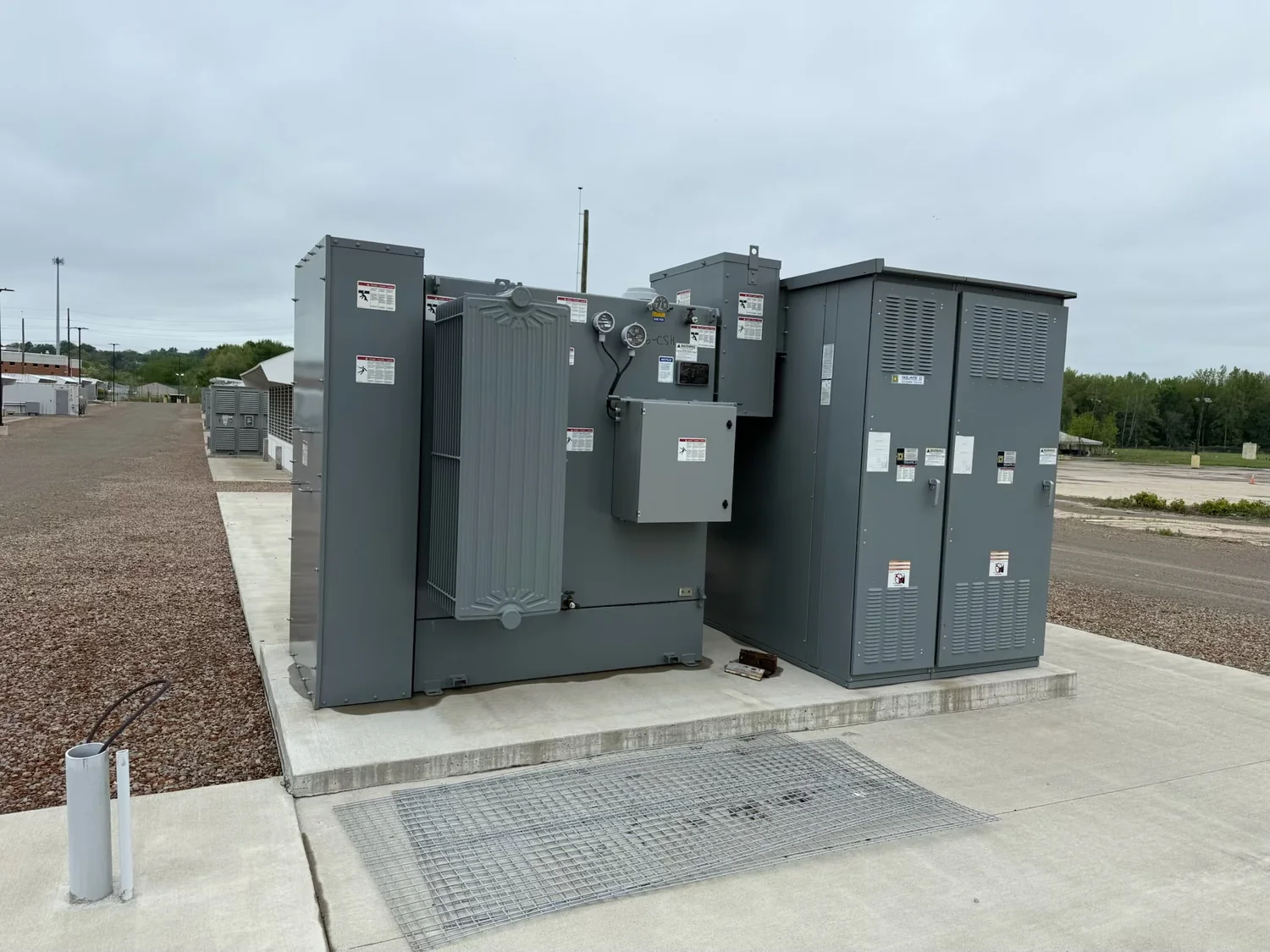
Sell Used Eaton Switchgear in the Washington, DC Region
If your organization is preparing to retire switchgear identified with an Eaton nameplate, you can request a purchase review for equipment in Washington, DC, Northern Virginia, or Maryland. This is a buyer service: we purchase eligible equipment and do not sell switchgear. The Eaton name is used only to identify the equipment being reviewed; it does not imply manufacturer affiliation, approval, or endorsement.
A useful first step is to share enough information for an initial assessment before removal planning begins. Clear photographs, readable nameplates, approximate lineup dimensions, ownership details, and site-access information help establish what equipment is present and what a practical removal scope may involve. An initial review is not a final price or a commitment to purchase; any offer depends on the equipment and project details being reviewed.
What to Send for an Equipment Review
Photograph the full lineup from several angles, including the front, sides, rear where accessible, and any visible extensions or connected sections. Include close, well-lit images of nameplates and identification labels on the equipment and major sections. If labels are faded or difficult to reach, send the clearest available image and note that the information is incomplete rather than guessing at model, rating, or configuration. Do not open energized equipment or enter restricted areas to obtain photographs.
Provide approximate overall length, height, and depth, along with any known section widths or unusual projections that could affect removal or transport. Share available documentation such as equipment schedules, drawings, or an inventory, if you have it. Relevant nameplate information may include manufacturer identification, catalog or type information, electrical ratings, and other legible markings. We consider all voltage classes, but the review still depends on the specific equipment, its configuration, condition, and completeness; no rating or value should be assumed from the brand name alone.
Describe what is included in the proposed sale. Note whether the lineup is complete, whether sections or accessories have already been removed, and whether related components are included or excluded. Be clear about missing parts, visible damage, modifications, or equipment that cannot be inspected. Accurate details help avoid mismatched expectations when the scope is confirmed. No seller testing is required for an initial review.
Ownership, Site Access, and Removal Planning
Before setting a removal scope, identify who owns the equipment and who has authority to approve its sale and release. If the equipment is part of a larger facility disposition, coordinate with the owner or authorized representative so the purchase scope, release timing, and work boundaries are clear. We cannot determine ownership from a nameplate or photograph, so the seller should be prepared to confirm its authority to transfer the assets.
Access details matter throughout the DC region, where a removal may need to be coordinated around building operations, scheduled outages, loading areas, security procedures, or limited staging space. These conditions vary by site and should not be assumed. Please describe the equipment’s location within the facility, the route from its current position to the loading area, available access hours, any known door or corridor restrictions, loading-dock or exterior access, and site rules that could affect crew or vehicle entry. Also flag stairs, elevators, overhead obstructions, tight turns, restricted parking, or limited space for staging and lifting.
Share the timing constraints that matter to your project, including target removal windows and any required coordination with facility personnel. The removal plan is subject to project arrangements and actual site access. Responsibilities, schedule, work boundaries, and logistics should be confirmed before removal; an early discussion helps identify questions but does not guarantee a particular date or scope.
Safe Disconnection and Buyer-Handled Logistics
Any de-energization, isolation, and disconnection must be performed by qualified personnel in accordance with the site’s safety requirements and outage procedures. Do not ask unqualified staff to disconnect, move, or handle electrical equipment. Coordinate the required work with the responsible site personnel and qualified electrical contractors, including who will control the equipment, when the work may occur, and how the site will establish that the equipment is ready for removal. The buyer’s removal planning does not replace the facility’s safety process.
Subject to agreed project arrangements and site access, the buyer handles the crane, rigging, disconnects, loading, freight, and hauling. The scope and responsibilities for each activity must be confirmed before removal, including coordination with site personnel and any work needed to make the equipment accessible. Share known lifting points or handling restrictions if documented, along with dimensions, approximate weight if available, overhead clearance, access routes, and any limits on equipment or vehicle placement. Do not estimate a lift or assume a particular removal method from photographs alone; those decisions require project-specific review.
The buyer pays the crane, rigging, loading, freight, and hauling costs for the agreed removal scope. Site conditions, access, timing, and the final scope still need to be reviewed and confirmed for the project. This keeps responsibilities visible before work is scheduled and avoids treating an initial inquiry as approval of an unreviewed logistics plan.
Offer, Payment, and Next Steps
After reviewing the information, the buyer can discuss whether the equipment fits the purchase scope and, where appropriate, make a cash offer. A final offer cannot be responsibly set from the brand name alone: identification, ratings, dimensions, completeness, ownership, access, condition information, and removal constraints may all affect the review. If important details are unavailable, say so; additional photos or clarification may be requested before an offer or removal scope is established.
Payment is arranged upfront, and payment is made upfront when an offer is accepted. Confirm the payment arrangement and the purchase scope before removal is scheduled. There is no requirement for the seller to test the equipment as part of the initial review. Send clear photos, nameplate images, lineup dimensions, a description of what is included, ownership confirmation, access details, and timing requirements to begin a practical assessment for a Washington, DC, Northern Virginia, or Maryland project.