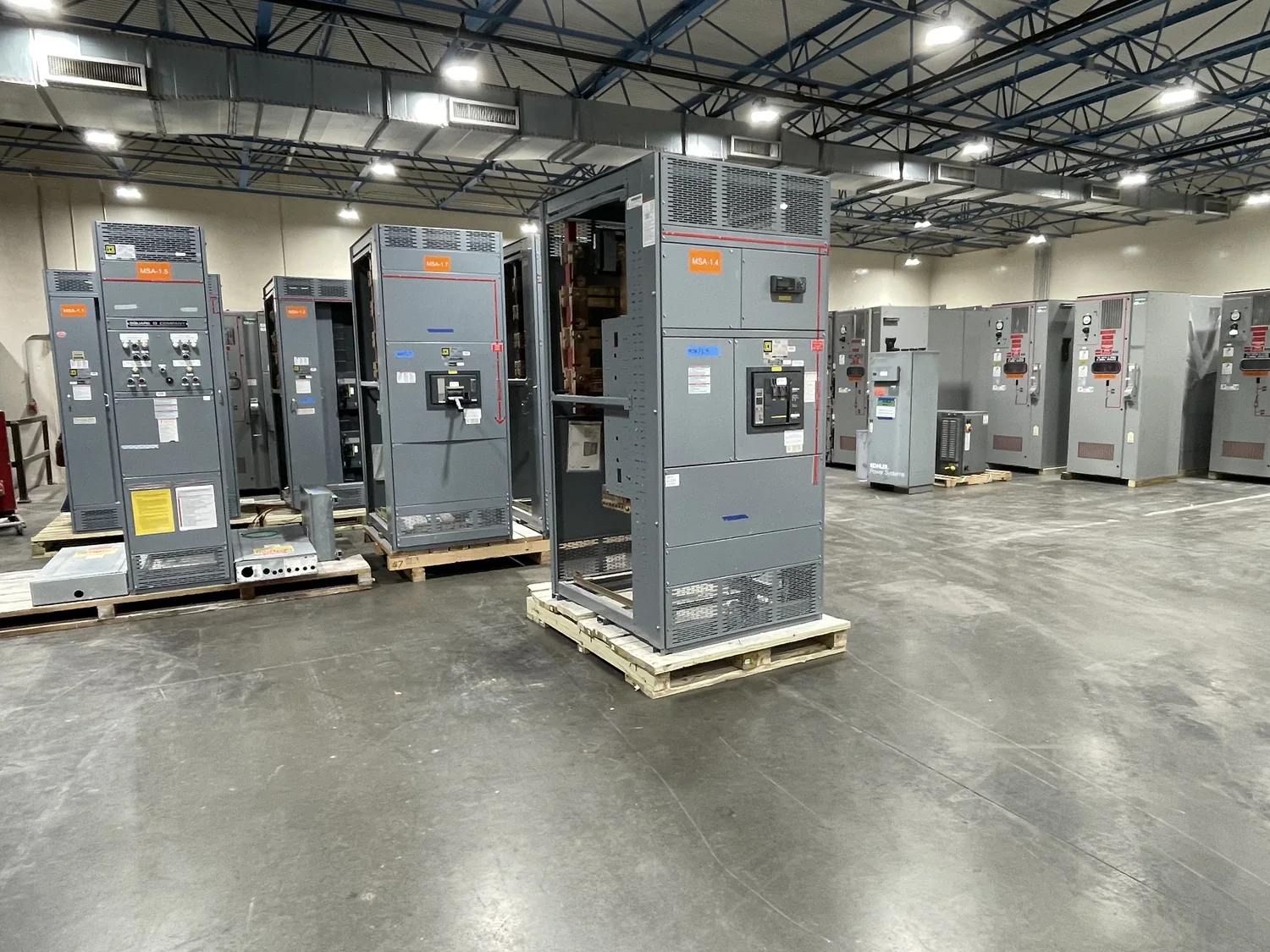
Sell Used GE Switchgear in the Washington, DC Region
If you are planning to sell used switchgear identified with a GE nameplate, the first step is a clear, equipment-specific review—not an assumption based on the name alone. A buyer can assess whether the equipment may fit an offer after reviewing its visible condition, configuration, completeness, ownership, and removal requirements. This guide is for facilities and asset owners in Washington, DC, Northern Virginia, and Maryland. The buyer is independent and is not affiliated with or endorsed by GE.
Switchgear can be part of a larger electrical system, so a practical sale plan needs to account for both the equipment and the conditions around it. Lineup size, access routes, site scheduling, and the work required to make the equipment available for removal can all affect the scope. There is no need for the seller to test the equipment before requesting a review. All voltage classes are considered; the nameplate and supporting information help establish what is being reviewed.
Prepare the Information for an Initial Review
Start with clear, well-lit photographs of the complete lineup and close-ups of each accessible nameplate. Include readable images of labels and markings that help identify the equipment, and photograph visible sections, doors, compartments, and accessories without opening energized equipment or entering restricted areas. If some labels are obscured or unreadable, note that rather than guessing at the model, ratings, or configuration.
Provide the lineup’s overall dimensions, including approximate height, width, and depth, and indicate whether the measurements cover one section or the full lineup. If available, share the equipment’s voltage and other nameplate ratings as shown, along with the number of sections and any known included components. A simple layout or section-by-section photo set can help clarify how the lineup is arranged. Do not infer specifications from the GE nameplate or a similar-looking installation; the review should be based on the equipment actually offered.
Describe completeness and condition as accurately as possible. Mention known missing parts, removed components, visible damage, modifications, stored accessories, or documentation that may accompany the equipment. State whether the switchgear is installed, disconnected, or already removed, but do not perform electrical work to obtain that information. A seller’s description can identify known facts and uncertainties; it does not replace the buyer’s review or establish a final offer.
Ownership, Site Access, and Removal Scope
Before scope is set, explain who owns the equipment and who is authorized to arrange its sale. If the switchgear is part of a facility closure, renovation, or broader asset disposition, clarify whether the proposed sale covers only the lineup or also associated items. Any ownership records or internal approvals relevant to the transaction should be addressed before removal is scheduled. The buyer may need to confirm that the seller has authority to transfer the equipment and coordinate with the person responsible for site access.
Access details are particularly important across a regional service area that can involve different facility schedules, security procedures, loading areas, and transportation constraints. Share the site’s general location, available work windows, access or escort requirements, loading-area details, and any known limits on equipment movement. Note stairs, narrow corridors, door or ceiling clearances, restricted vehicle access, and whether the lineup must be moved through occupied or controlled areas. These details help determine whether the proposed removal method and schedule are workable; they should not be assumed from the city or facility type.
The buyer handles crane, rigging, disconnects, loading, freight, and hauling, subject to project arrangements and site access. Confirm the division of responsibilities before removal, including the equipment boundary, access conditions, schedule, and any site-specific coordination needed. De-energization, isolation, and disconnect work must be performed by qualified personnel under the facility’s safety and outage procedures. Coordinate timing with the site’s responsible personnel; do not ask unqualified staff to disconnect, move, or handle electrical equipment.
Offers, Payment, and Scheduling
After reviewing the information, the buyer may make a cash offer if the equipment and project scope are suitable. A final price should not be assumed from a brand name, a partial photo set, or a rough description. The offer depends on review of the actual switchgear, its ratings and configuration as documented, completeness, condition, ownership, and the costs and practical requirements of removal. If important details change or the on-site scope differs from what was described, the parties should resolve the difference before proceeding.
When an offer is accepted, payment is arranged upfront. The seller is not required to test the switchgear as a condition of requesting a review. Payment timing and removal scheduling should be confirmed together so the seller understands what has been agreed before the equipment is made available. Crane and rigging needs, qualified disconnect work, loading, freight, and hauling are handled by the buyer, with responsibilities and project arrangements confirmed in advance.
A useful first inquiry therefore combines equipment details with a realistic view of site conditions: clear photos, readable nameplates, lineup dimensions, known ratings, completeness, ownership, location, access, and removal constraints. This gives the buyer a basis to assess the opportunity and discuss next steps without promising a price, a removal date, or a particular outcome before review. For sellers in Washington, DC, Northern Virginia, and Maryland, early coordination among the asset owner, facility contact, and qualified electrical personnel can make the review and any eventual removal easier to plan.