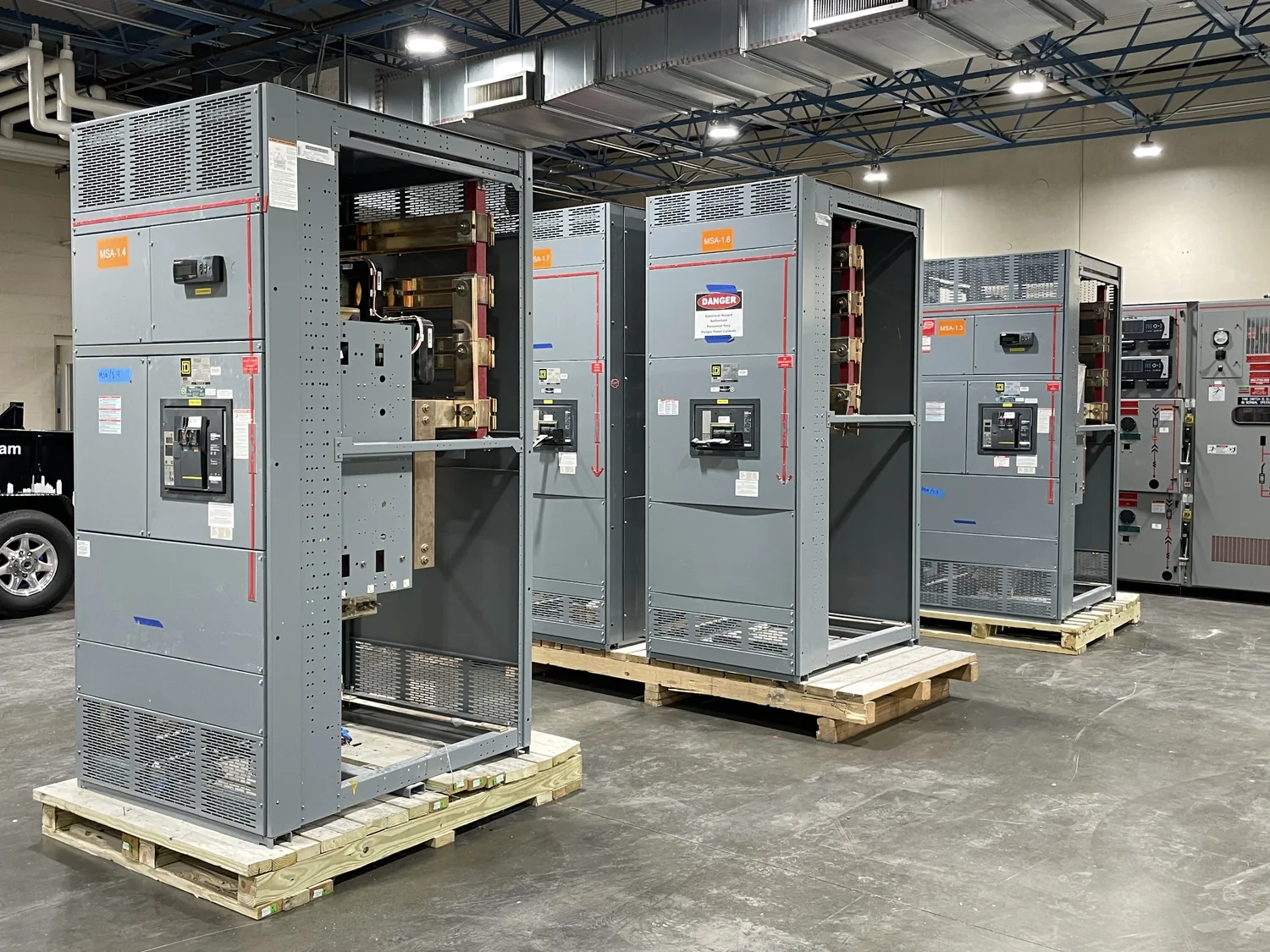
Sell Used Medium-Voltage Switchgear in the DC Region
If your organization is retiring, replacing, or clearing space for used medium-voltage switchgear, a sale may be worth exploring before equipment is scrapped. We buy used switchgear from commercial, institutional, and industrial sites serving Washington, DC, Northern Virginia, and Maryland. We are a buyer, not a seller: the process starts with a review of the equipment and project details, followed by an offer if the assets fit our purchasing criteria.
There is no need to arrange seller-side testing before making an inquiry. We consider equipment across all voltage classes, but that does not mean every lineup or component will receive an offer. Condition, completeness, identification, ownership, removal requirements, and practical access all affect whether a purchase can be arranged. A price is not final until the equipment and removal scope have been reviewed.
Start with Photos, Nameplates, and Lineup Details
A useful first submission helps establish what is present without asking anyone to open energized compartments or approach equipment unsafely. Send clear overall photos of each lineup and available close-ups of external nameplates, identification labels, and visible sections. Include the lineup’s approximate overall length, height, and depth, along with the number of sections or cabinets if known. Photos should show the equipment in place and the surrounding route where it may need to be removed, when that can be done safely.
Nameplate information can help identify ratings and configuration. Share legible details such as manufacturer, model or catalog number, rated voltage, current, interrupting or withstand information where shown, and serial or other identifying numbers. Do not guess at illegible ratings; a clear photo is more useful than an uncertain transcription. The review may also benefit from details about breakers, relays, metering, control power, bus, doors, and other included components, but do not remove covers or disturb equipment to collect information.
Describe what is included and what is not. Note missing, damaged, modified, or separately stored sections and accessories, as well as whether drawings, manuals, or other records are available. A lineup described as complete may still need review against its visible condition and the information provided. Do not represent an item as tested or operational unless you have documentation that supports that statement; seller testing is not required for an initial review.
Confirm Ownership, Site Access, and Removal Conditions
Before a purchase can be arranged, clarify who owns the equipment and who is authorized to approve its sale and release. For institutional, leased, shared, or multi-party facilities, establish the applicable internal approval and asset-disposition steps. Identify the site contact who can coordinate information, access, scheduling, and handoff. These details help avoid planning around equipment that cannot yet be released or a date that the facility has not approved.
Access can shape the removal plan as much as the switchgear itself. Share the site location at an appropriate level for planning, the building or room where the lineup is installed, the nearest practical loading area, and any known constraints on routes, doors, elevators, floor loading, overhead clearance, delivery windows, or vehicle access. Note whether the equipment is on an upper floor, below grade, in a restricted area, or behind other equipment, if known. These are planning questions, not assumptions about a particular facility in the DC region.
Also flag site rules that could affect timing, including outage windows, access controls, escort requirements, permitted work hours, loading restrictions, and coordination with facilities or operations staff. Washington, DC, Northern Virginia, and Maryland sites can have different property, traffic, security, and scheduling conditions; the removal plan must be based on the actual site rather than a general regional assumption. Final responsibilities and timing should be confirmed for the specific project before removal is scheduled.
Plan Safe Disconnection and Physical Removal
Switchgear disconnection is not a seller do-it-yourself task. De-energization, isolation, verification, and disconnect work must be performed by qualified personnel under the facility’s safety and outage procedures. Coordinate the required outage, approvals, work boundaries, and timing with the people responsible for the electrical system. Do not have unqualified staff disconnect, open, move, or handle electrical equipment to prepare it for sale.
The buyer handles crane, rigging, disconnects, loading, freight, and hauling, subject to project arrangements and site access. Before removal, confirm the division of responsibilities, access conditions, sequence of work, equipment and lifting requirements, and any site-specific coordination needed. The buyer’s handling of disconnect work does not override facility procedures: qualified personnel and the site’s authorized representatives must coordinate the work and access for the project. The exact method and schedule depend on the lineup’s configuration, its location, and the route from its installed position to the loading point.
Dimensions and weight information, when available, can help assess handling and transport. Share section dimensions, overall lineup dimensions, equipment weight or shipping information if documented, and any known anchoring or clearance constraints. Do not estimate lifting weights as fact. If information is unavailable, say so; the removal plan can be developed from the available documentation and site review. Crane or rigging requirements should not be assumed until the equipment and access route are assessed.
Offer Review, Upfront Payment, and Next Steps
After reviewing the photos, nameplates, dimensions, included components, ownership information, access, and removal constraints, we can determine whether to make an offer. Any offer is subject to review of the equipment and the project scope; an inquiry or photo set is not a guaranteed purchase or final price. If an offer is accepted, payment is arranged upfront. Confirm the payment arrangement and the project responsibilities before removal proceeds.
To begin, send the clearest available equipment photos, readable nameplate images, approximate lineup dimensions, a description of what is included, and a brief account of ownership, access, and removal conditions. Mention known scheduling limits and whether a qualified site team will coordinate the required electrical isolation and disconnect work. If a detail is unknown, identify it as unknown rather than delaying the inquiry or making an unsupported assumption.
This practical information supports a more informed review and a removal plan suited to the actual site. It also helps align asset-disposition approvals, outage coordination, loading access, and transport before a date is set. We buy used medium-voltage switchgear in the Washington, DC region, including Northern Virginia and Maryland, and handle the crane, rigging, disconnects, loading, freight, and hauling costs under project arrangements confirmed before removal.