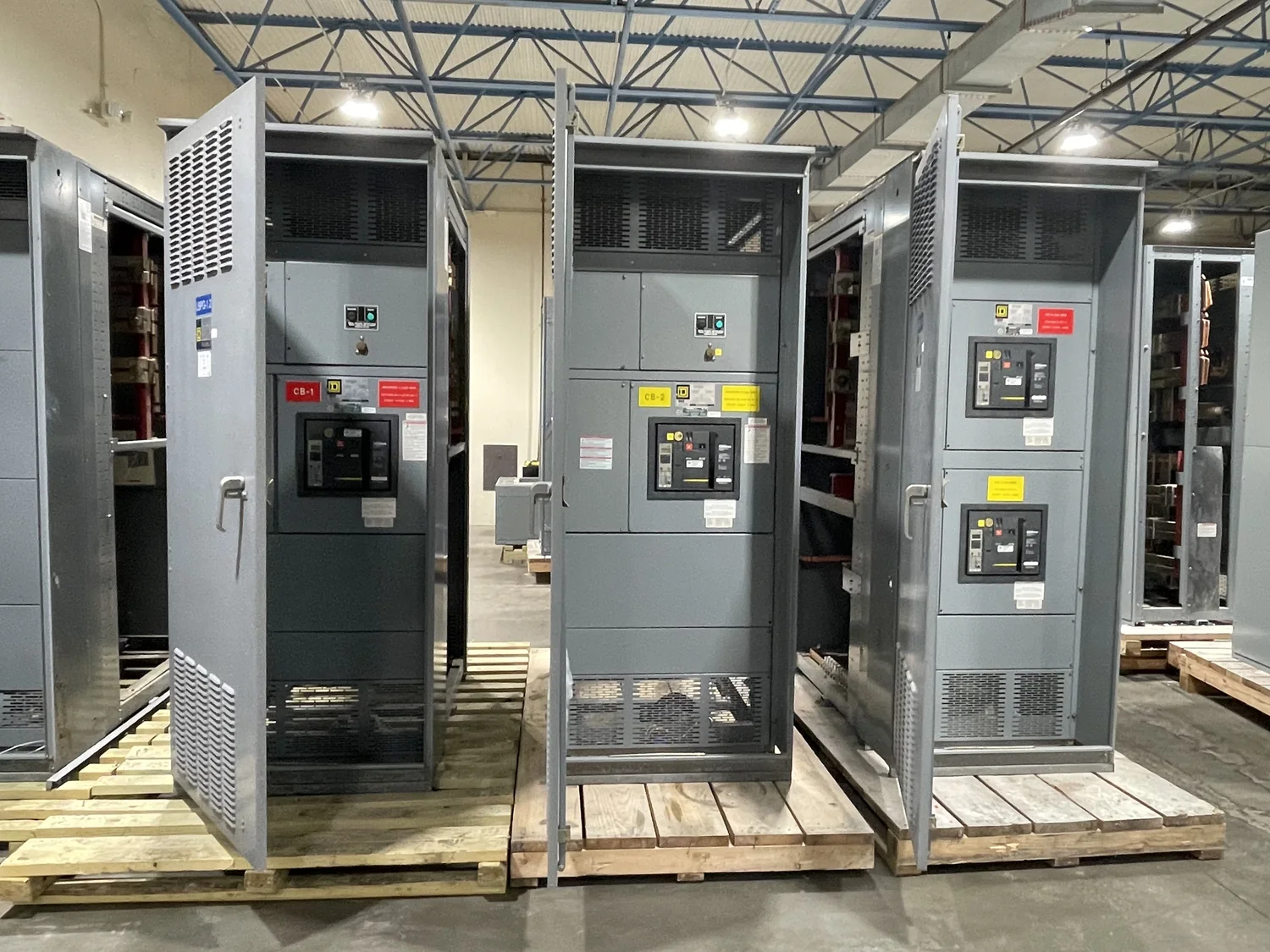
Sell Used Siemens Switchgear in the DC Region
If your organization is evaluating surplus switchgear identified by a Siemens nameplate, begin with a clear picture of what is installed and what is included. This buyer reviews equipment for possible purchase in Washington, DC, Northern Virginia, and Maryland. The Siemens name identifies the equipment; it does not imply that the buyer is affiliated with, authorized by, or endorsed by Siemens.
The buyer purchases equipment only—it does not sell switchgear. It can make a cash offer after reviewing the asset and project details. No testing is required from the seller, and equipment from any voltage class may be considered. These points do not guarantee that a particular lineup will be purchased or establish a price in advance; the scope and offer depend on review of the specific equipment and removal arrangements.
Start with the nameplate, photos, and lineup dimensions
Share clear, legible photos of each available nameplate, along with overall views of the lineup and close-ups of its sections, doors, controls, and visible condition. Nameplate information helps identify the equipment under review, while photos can show how sections are arranged and whether there are visible gaps, damage, modifications, or attached components. Do not guess at unreadable ratings or fill in missing details; note what is uncertain so the buyer can review it accurately.
Provide lineup dimensions, including overall length and, where practical, height and depth. Explain how many sections are included and identify associated equipment or accessories that are part of the proposed sale. Completeness matters: a lineup offered with its sections and related components may be assessed differently from partial equipment, separated sections, or items with missing parts. Photos and dimensions support an initial review, but they do not replace an on-site scope check when project conditions require one.
Confirm ownership, site access, and removal constraints
Before setting the scope, describe who owns the equipment and who is authorized to approve its disposition. If the asset is part of a lease, financing arrangement, shared facility, or other controlled property, clarify what approval is needed before an offer is accepted or removal is scheduled. The buyer needs enough information to understand that the seller has authority to proceed; do not assume that a facility contact alone can authorize a sale.
Access details help determine whether the equipment can be reached and removed as planned. Share the site location within the DC, Northern Virginia, or Maryland service area, the loading route, door or corridor limitations, floor or dock access, staging space, and any known restrictions on vehicles or work hours. Identify site rules, coordination requirements, and scheduling windows that could affect removal. These details are project-specific, so confirm responsibilities and timing before work is arranged rather than relying on a general estimate.
Describe removal constraints that may affect labor or equipment planning, including tight clearances, stairs, limited loading access, overhead obstructions, or requirements to preserve nearby equipment and building finishes. If the lineup is installed in a restricted or active area, explain what approvals and access arrangements are needed. Do not have unqualified personnel disconnect, move, or handle electrical equipment to prepare it for review or removal.
Coordinate safe disconnection and the removal plan
Any de-energization, isolation, and disconnect work must be performed by qualified personnel under the site’s safety procedures and outage requirements. The seller should coordinate the responsible personnel, required approvals, and available work window with the site team. The buyer does not require the seller to conduct testing as a condition of submitting equipment for review, but the removal plan still depends on safe access and a properly coordinated scope.
The buyer handles crane, rigging, disconnects, loading, freight, and hauling, subject to project arrangements and site access. Confirm these responsibilities before removal, including the work boundary, schedule, access route, staging needs, and any site-specific coordination that must be completed. The buyer’s handling of these logistics does not mean site conditions or timing can be assumed; arrangements must be workable for the particular facility and agreed before the removal date.
Do not treat an initial photo review as confirmation that equipment is ready to remove. Changes in access, the listed scope, completeness, or site requirements may affect the plan. Keep the seller’s facility contact, qualified electrical personnel, and the buyer aligned on timing and responsibilities so that disconnect and removal activities fit the site’s procedures.
Review the offer and arrange payment upfront
After the buyer reviews the nameplate details, photos, dimensions, ownership information, completeness, access, and removal constraints, it can determine whether to make an offer. There is no final price from the catalog description alone. The offer is specific to the equipment and project information reviewed, and any material change in the asset scope or removal conditions should be raised before acceptance.
If the seller accepts an offer, payment is arranged upfront. The buyer can make cash offers and pays the costs for crane, rigging, loading, freight, and hauling, with project responsibilities confirmed before removal. Clarify the payment arrangement and the agreed removal scope before scheduling work; payment and logistics are not a substitute for the seller’s authority to transfer the equipment or the site’s safety and access requirements.
To begin a review, send clear equipment and nameplate photos, lineup dimensions, a description of what is included, confirmation of ownership or sale authority, and practical access and scheduling details. Include known removal constraints and identify which qualified personnel will manage site de-energization, isolation, and disconnect work. This gives the buyer a grounded basis to assess the opportunity without asking the seller to test or handle energized equipment.