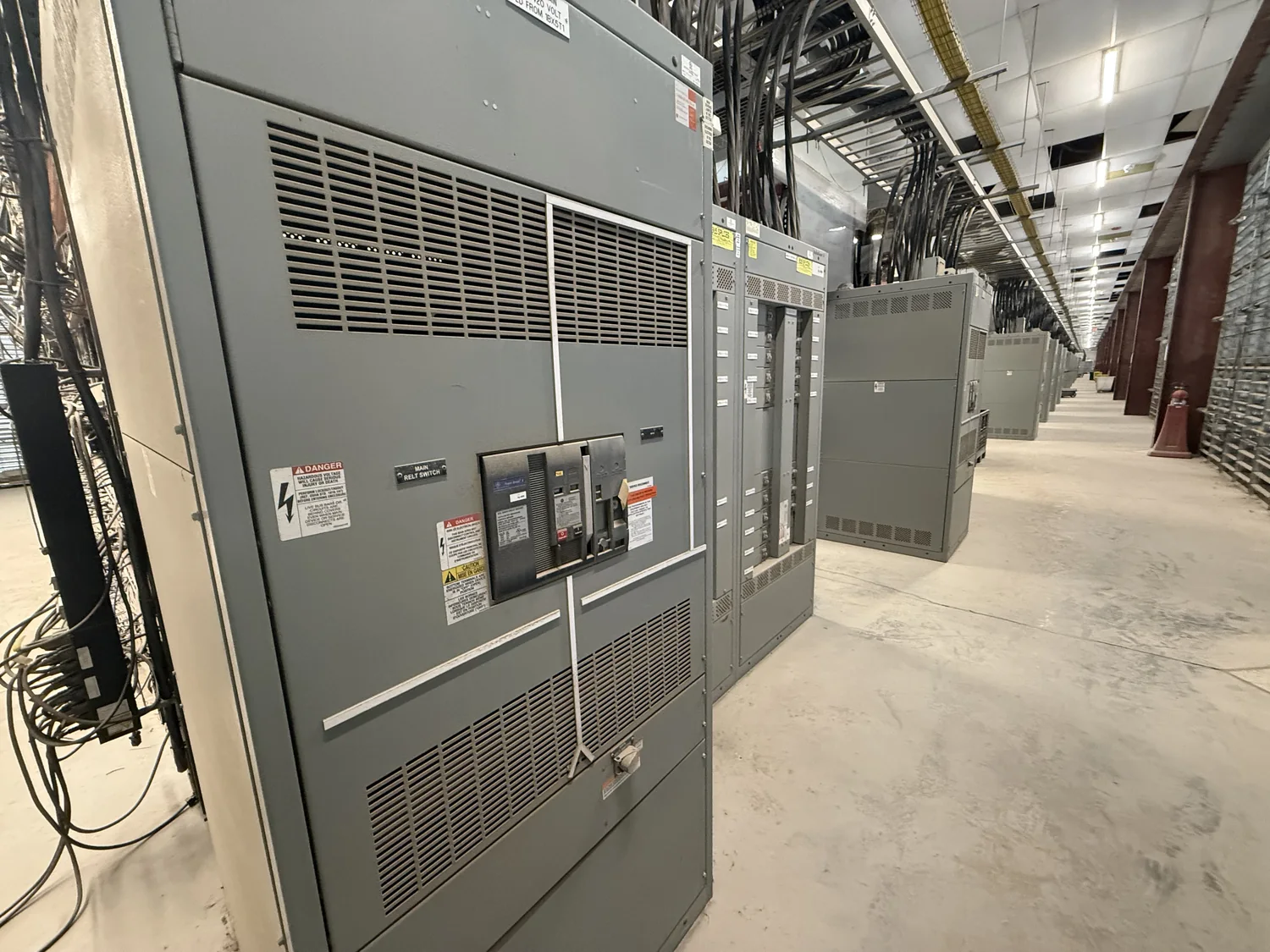
Sell Used Square D Switchgear in the Washington, DC Region
If your business is considering selling used switchgear identified by a Square D nameplate, a clear equipment review is the first step. This page is for owners and authorized asset representatives in Washington, DC, Northern Virginia, and Maryland who want to discuss a sale—not purchase equipment. The buyer is independent and is not affiliated with or endorsed by Square D or its manufacturer.
A potential offer depends on the specific lineup, its apparent condition and completeness, ownership, and the practical requirements for removal. There is no need for the seller to test the equipment, and all voltage classes can be considered. That does not mean every lineup will receive an offer: the information and photographs are reviewed before the scope, logistics, and any price are determined. No final price can responsibly be stated without that review.
Prepare Information for an Initial Review
Start with clear photographs of the switchgear as installed. If safe and permitted under site rules, provide overall views of the front, rear, sides, and lineup arrangement, along with close-ups of each visible nameplate. Images should make labels readable and show the equipment’s general configuration without requiring anyone to open covers, enter restricted areas, or approach energized equipment. If a nameplate is inaccessible, note that rather than attempting to reach it.
Nameplate details can help identify what is being reviewed. Share the manufacturer name shown, model or catalog information, serial number, ratings, and other legible markings, but do not guess where information is missing. Include the number of sections and any known lineup dimensions, such as total length, height, and depth. Dimensions help assess staging and removal requirements; they are not a substitute for a site walk or project-specific review when one is needed.
Describe what is included with the lineup. Relevant details may include whether sections, doors, barriers, breakers, control components, bus connections, or other associated parts are present, missing, separated, or believed to be incomplete. Mention known damage, modifications, storage history, or prior removal if relevant. These details help establish the proposed scope; they do not require seller testing or a promise about operational condition.
Confirm Ownership, Site Access, and Timing
The person arranging the review should be able to explain who owns the equipment and who has authority to approve its sale and removal. If the assets belong to another company, landlord, lender, or project owner, clarify what authorization is required before the process advances. Ownership and access details are practical prerequisites: a buyer cannot plan a removal around equipment that the seller is not authorized to release or a site that cannot grant access.
For projects across the DC region, access and scheduling should be discussed early rather than assumed. Share the facility’s general location, receiving or removal hours, site rules, available staging area, vehicle access, loading-area limitations, and any coordination requirements. Note restrictions such as narrow routes, low clearances, occupied spaces, security procedures, limited parking or staging, and other conditions that could affect equipment movement. These are planning questions, not claims about any particular facility or municipality.
Also provide the preferred removal window and any outage or construction schedule that affects it. Dates remain subject to review, site readiness, access, and coordination among the parties. The seller and buyer should confirm responsibilities and timing before removal is scheduled; do not treat an initial discussion or preliminary offer as confirmation that the equipment can be removed on a particular date.
Plan Safe Disconnection and Removal
Switchgear removal is a project, not simply a matter of loading equipment for transport. De-energization, isolation, and disconnect work must be performed by qualified personnel under the site’s safety requirements and outage procedures. The seller should not ask unqualified staff to disconnect, dismantle, or handle electrical equipment. Coordinate the required work, permissions, outage window, and access arrangements with the people responsible for the facility and its electrical systems.
The buyer handles crane, rigging, disconnects, loading, freight, and hauling, subject to project arrangements and site access. The buyer also pays those costs. Before work begins, the parties should confirm the agreed scope, sequence, access conditions, and who is responsible for each project-specific coordination step. Equipment dimensions, lineup configuration, available lifting and staging areas, route constraints, and the condition and completeness of the assets may all affect how removal is planned.
The buyer’s responsibility for these logistics does not remove the need for site coordination. The project must allow the equipment to be safely de-energized and accessed, and the planned removal method must fit the actual site. If access is restricted or a route, clearance, or staging detail is uncertain, identify it during review so the project can be assessed before a removal commitment is made.
Offers, Upfront Payment, and Next Steps
Once the available information has been reviewed, the buyer can determine whether to make a cash offer and discuss the proposed scope and logistics. If an offer is accepted, payment is arranged upfront before removal. The seller is not required to test the equipment as a condition of requesting a review. A price or payment arrangement should be confirmed directly for the specific assets and project rather than assumed from a photograph, equipment label, or general description.
To begin, gather readable nameplate photographs, broader equipment photos, lineup dimensions, a description of included and missing components, ownership authorization, site-access details, and scheduling constraints. If some details are unavailable, say so plainly; the initial review can identify what additional information is needed. For sellers in Washington, DC, Northern Virginia, and Maryland, this preparation helps the buyer evaluate the switchgear and determine whether the equipment and removal conditions support a potential transaction—without promising an offer, price, or removal date in advance.