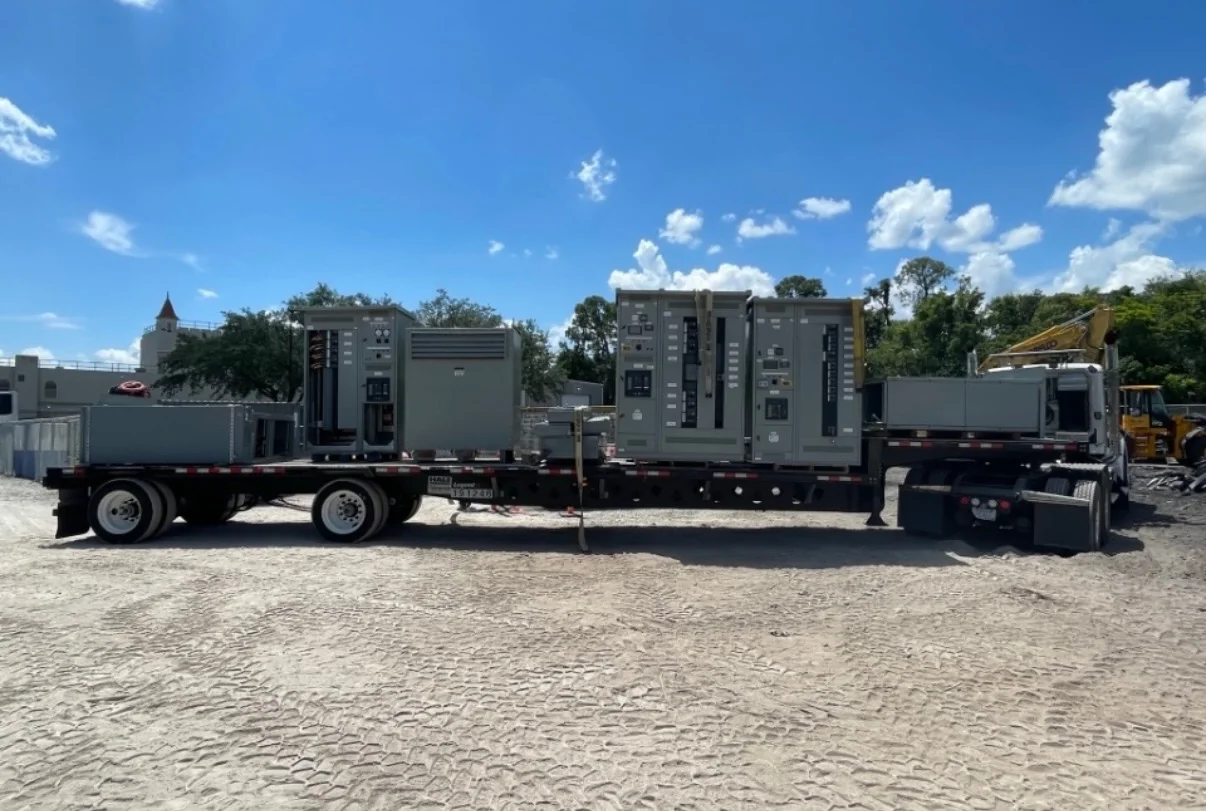
Sell Used Unit Substations in the Washington, DC Region
If your commercial, institutional, or industrial site has a used unit substation to disposition, a clear description of the equipment and site conditions is the best place to start. We buy used unit substations from sellers in Washington, DC, Northern Virginia, and Maryland. We buy equipment; we do not sell it. We can make a cash offer after reviewing the information, and payment is arranged upfront when an offer is accepted. The seller is not required to test the equipment.
Unit substations combine multiple electrical components into a coordinated assembly, so a buyer needs to understand both the equipment and the practical scope of removal. The exact configuration, completeness, condition as represented, ownership, access route, and site schedule can all affect whether a purchase is workable. No final price should be assumed from a brief description alone; the offer follows review of the available details and project arrangements.
Start with Nameplates, Photos, and Lineup Dimensions
Send clear, well-lit photos of the complete lineup, its individual sections, visible equipment, and the surrounding area. Include close-ups of each accessible nameplate and identification label. A readable nameplate can help establish manufacturer, model or catalog information, ratings, serial details, and other identifying data. Do not remove covers or approach exposed electrical parts to take pictures. If a label is inaccessible or unreadable, say so rather than attempting to reach it.
Provide the lineup’s overall dimensions, including approximate height, width, and depth, and note the number of sections. If available, include a layout drawing, equipment schedule, or prior inventory record. Identify what appears to be included—such as the transformer, switchgear, bus, protective devices, enclosures, or other sections—without guessing at internal details. Mention any visibly missing, damaged, modified, or separated components. These details help establish what is being offered and whether the described assembly is complete enough for the proposed transaction; they do not replace an inspection or guarantee a particular valuation.
For a useful first review, send the site city or general area, photos, nameplate information, dimensions, a description of completeness, and your preferred timing. Do not send sensitive facility plans or security information unless your organization has approved sharing them. If exact measurements are unavailable, clearly label estimates as estimates. The buyer may request additional photographs or clarification before setting scope and making an offer.
Confirm Ownership, Authority, and Site Access
Before an offer is finalized, clarify who owns the unit substation and who has authority to approve its sale and removal. If the equipment belongs to a landlord, tenant, institution, contractor, or another organization, confirm that the appropriate party can authorize disposition. Identify any known restrictions on removing the asset, including internal approval steps, lease or property requirements, or coordination with other parties. The seller should disclose relevant ownership or control questions early so they can be addressed before removal is scheduled.
Describe the practical route from the equipment’s current position to the loading area. Useful details include door and corridor clearances, turns, floor or platform constraints, overhead obstructions, exterior access, staging space, and any known limits on vehicle or lifting-equipment access. Share photos of the route where permitted and note whether the unit is indoors, on an upper level, in a basement, or otherwise difficult to reach. Do not assume that a large assembly can pass through a route simply because individual components may be removable; the appropriate removal plan depends on the actual equipment and site.
Facilities across the DC region can have different access, security, operating-hour, and scheduling requirements. Provide the site’s applicable check-in rules, work windows, loading arrangements, and lead-time expectations when coordinating a project. This is practical planning information, not a claim about any particular facility or local requirement. Access and timing must be confirmed for the specific site before removal is arranged.
Plan Safe Disconnects and Removal Responsibilities
Any de-energization, isolation, and electrical disconnect work must be performed by qualified personnel under the site’s safety, outage, and work-control procedures. Do not ask unqualified staff to disconnect, open, move, or handle electrical equipment. The site and its qualified personnel must coordinate the required outage and establish when the equipment is safe for the agreed removal work. The buyer can coordinate project logistics, but seller-side site controls, authorization, and safe access still need to be addressed with the responsible facility team.
The buyer handles crane, rigging, disconnects, loading, freight, and hauling, subject to project arrangements and site access. The buyer pays these costs; responsibilities and the removal scope are confirmed before removal. The appropriate approach may depend on the unit’s dimensions and configuration, whether it can be removed as an assembly or in sections, available lifting and staging areas, and the route to the loading point. These matters should be reviewed rather than assumed from photos alone.
Agree on timing, access, staging, and the division of work before a removal date is set. The plan should make clear when qualified personnel will complete required electrical work, when the buyer’s removal crew can enter, what site rules apply, and how loading and departure will be coordinated. If access conditions change or the observed equipment differs from what was described, the parties should resolve the revised scope before proceeding.
How an Offer and Purchase Are Arranged
After reviewing the photos, nameplates, lineup dimensions, completeness, ownership information, access details, and removal constraints, the buyer can determine whether to make an offer. A cash offer is not a guaranteed price, and a final figure cannot responsibly be given without reviewing the specific equipment and project scope. The seller does not need to test the unit substation to request consideration. Share existing records if available, but do not perform tests or expose personnel to electrical hazards for the purpose of preparing a quote.
If the offer is accepted, payment is arranged upfront. Before removal, confirm the agreed equipment included in the purchase, the payment arrangement, project timing, access conditions, and the buyer’s responsibility for crane, rigging, disconnects, loading, freight, and hauling costs. Clear written coordination helps prevent misunderstandings about which sections or accessories are included and what conditions must be met before the crew can begin.
To begin, prepare clear equipment and route photos, readable nameplate images where safely accessible, approximate lineup dimensions, a list of included or missing sections, proof or confirmation of authority to sell, and a concise description of site access and scheduling constraints. With those basics, a buyer can review a used unit substation from a Washington, DC, Northern Virginia, or Maryland site and discuss a practical next step without requiring seller testing or assuming that every project has the same removal plan.