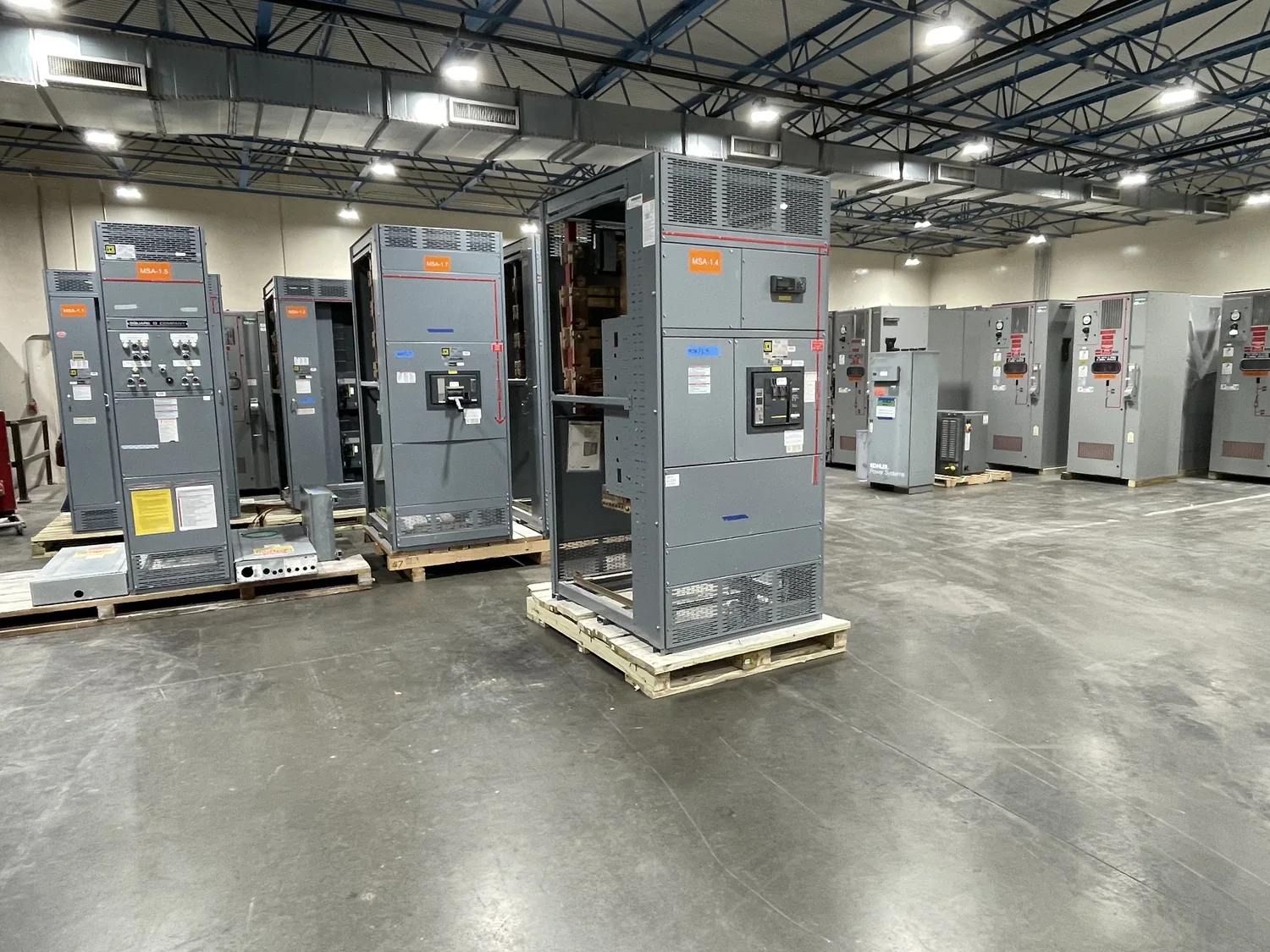
Sell Used Westinghouse Switchgear in the DC Region
If your facility has used switchgear identified with the Westinghouse nameplate, you can submit it for purchase review across Washington, DC, Northern Virginia, and Maryland. This is a buyer service: the business buys eligible equipment and does not sell switchgear. The Westinghouse name is used only to identify the equipment being reviewed; it does not indicate manufacturer affiliation or endorsement.
A useful first step is to gather clear photographs, nameplate information, lineup dimensions, ownership details, and an outline of site access. Those details help establish what equipment is present and what removal could involve. They do not create a guaranteed offer: the scope and any cash offer are determined after the equipment and project conditions are reviewed. No testing is required from the seller. All voltage classes may be considered, with suitability assessed from the information provided and the equipment’s condition and circumstances.
What to Send for an Initial Review
Photograph the complete lineup from several angles, including its front, sides, visible rear areas where safely accessible, and the surrounding working space. Take close, legible pictures of each available nameplate and any labels that identify sections or components. Do not remove covers or enter restricted areas to obtain photos. If safe, authorized photography is not possible, say so and describe which information is unavailable.
Provide approximate overall lineup length, height, and depth, along with the number of sections if known. Note whether the lineup appears complete and identify any known missing, separated, or removed components. A simple section-by-section description can help distinguish the equipment under review from adjacent gear, controls, or other items that are not included. Do not assume that a nameplate alone establishes the scope or value; photos, dimensions, completeness, and project details all contribute to the review.
Also state where the equipment is located within the facility, how it can be reached, and whether the proposed removal route has stairs, narrow doors, low clearances, turns, loading-dock limits, or other constraints. Share known access windows, site rules, outage timing, and any restrictions on vehicles, lifting equipment, or staging. Include your contact information and preferred timing for a follow-up so the parties can clarify questions before an offer or removal scope is set.
Ownership, Site Access, and Removal Planning
The seller should identify who owns the switchgear and confirm that the person coordinating the sale has authority to offer it for purchase. If ownership is held by a business, property owner, contractor, or other party, clarify who can approve the transaction and who can grant access for a site visit or removal. The buyer may request additional information to confirm the equipment being offered and the seller’s authority to transfer it. Avoid including unrelated equipment in the proposed scope unless it is clearly identified and approved.
Removal planning is project-specific. The buyer handles crane, rigging, disconnects, loading, freight, and hauling, subject to the agreed project arrangements and actual site access. Before work is scheduled, confirm in writing which equipment is included, the access route and working area, the expected sequence, and each party’s responsibilities. Any crane or rigging plan must account for the equipment’s dimensions, weight information when available, lifting points if documented, clearances, and the conditions at the site. If those details are unknown, flag them rather than making assumptions.
De-energization, isolation, and disconnect work must be handled by qualified personnel under the facility’s safety requirements and outage procedures. The seller should coordinate the required authorization, timing, and access with the appropriate site personnel. Do not ask unqualified staff to disconnect, move, or handle electrical equipment. The buyer’s responsibility for coordinating or performing removal-related disconnect work does not replace the facility’s safety controls or the need for qualified people to carry out electrical work.
Offers, Payment, and Costs
After reviewing the submitted information, the buyer can discuss whether the switchgear fits the purchase scope and whether a site review or further details are needed. Any offer is subject to that review; there is no guaranteed purchase price, and a final amount should not be inferred from a nameplate, a photograph, or a broad equipment description. If an offer is accepted, payment is arranged upfront before removal proceeds. Confirm the payment arrangement and the agreed equipment scope before scheduling work.
The buyer pays the crane, rigging, loading, freight, and hauling costs, with responsibilities and project arrangements confirmed before removal. Because access and scheduling vary from facility to facility, discuss the proposed work window, equipment access, staging, and any site-specific requirements in advance. Clear coordination can help prevent a mismatch between the agreed scope and what is encountered during removal, but it cannot eliminate unknown conditions; disclose known restrictions or changes as early as possible.
This buying service covers the Washington, DC region, including Northern Virginia and Maryland. To start a review, send clear equipment photos, all available nameplate details, lineup dimensions, a description of completeness, confirmation of ownership authority, and practical access and removal information. Share what you know, mark what remains uncertain, and coordinate any site access or outage work through qualified personnel. The buyer can then review the proposed equipment and discuss next steps without requiring the seller to conduct testing.