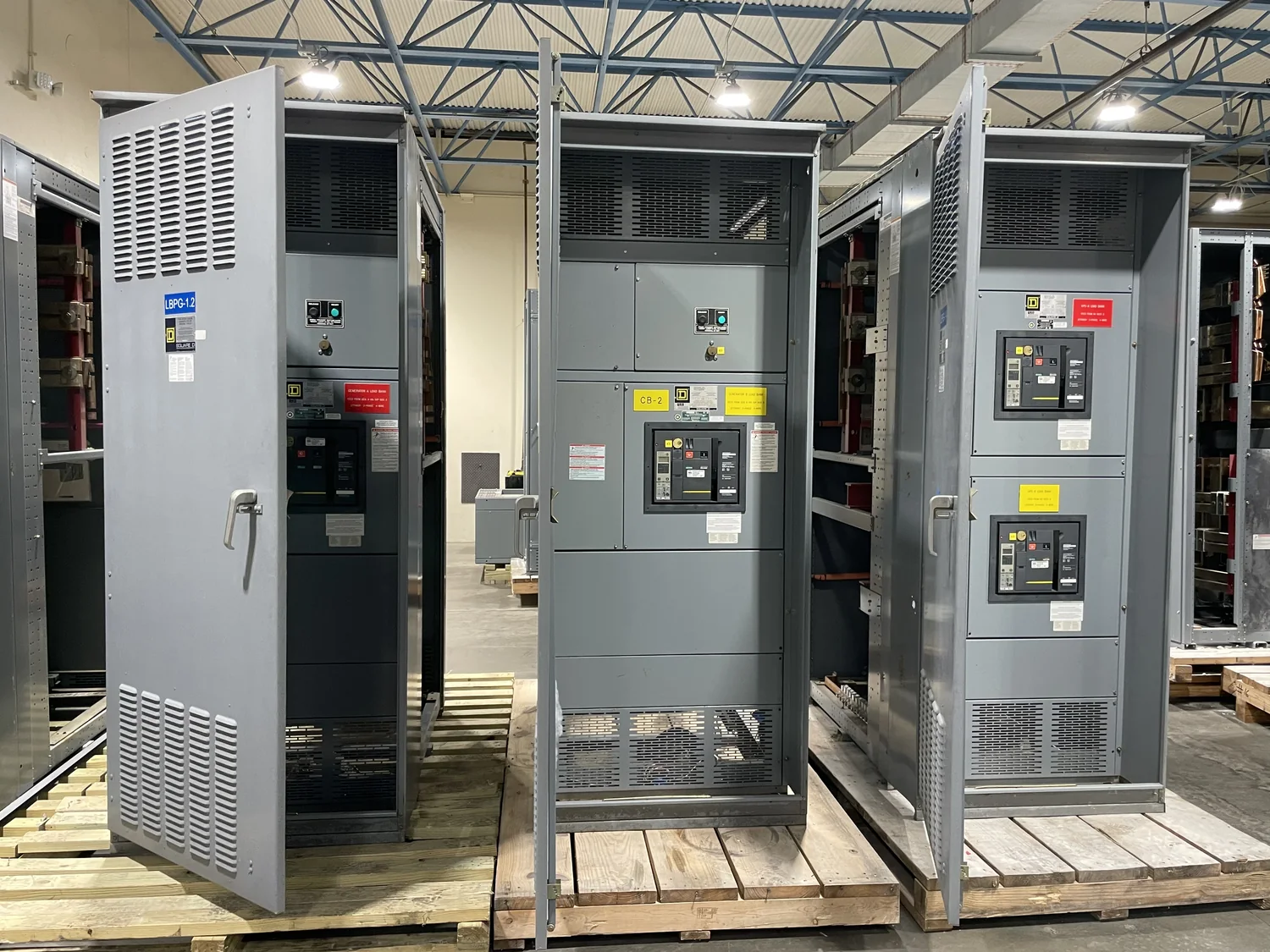
A practical review of surplus Siemens switchgear
A changeout, facility closure, or equipment refresh can leave Siemens switchgear that is no longer needed but may still have value. This page is for organizations in Washington, DC, Northern Virginia, and Maryland considering a sale of surplus equipment. The business described here buys equipment; it does not sell switchgear, and it is not presented as affiliated with or endorsed by Siemens.
A review begins with the specific equipment and the circumstances around its removal. “Siemens switchgear” alone does not establish the lineup’s configuration, condition, completeness, or market value. Share what is known, and flag anything uncertain. The buyer can review the available information and determine whether to make an offer; a final price requires that review and cannot be established from the brand name alone. No sale or removal should be assumed until scope, access, timing, and responsibilities have been discussed.
Information that helps define the equipment
Clear, well-lit photos are useful for an initial review. When access is safe and permitted, photograph the lineup from the front and sides, along with visible sections, doors, components, and any obvious damage or missing parts. Include close-up images of readable nameplates and labels. Do not remove covers or approach exposed or energized parts to take photographs; follow site rules and use qualified personnel where needed.
Provide the lineup’s overall dimensions, including approximate width, height, and depth, and explain how many sections are included. Nameplate information may help identify the equipment and its ratings, but do not infer specifications from appearance or supply guesses as confirmed facts. If a label is unreadable or unavailable, say so. Also note whether the equipment is a complete lineup or whether sections, breakers, doors, accessories, or other parts have already been removed. Completeness and configuration can affect the review, so an accurate description is more useful than an assumption.
If available, share records that help establish what is being offered, such as an equipment list or documentation already held by the owner. The seller should confirm ownership or authority to dispose of the equipment. Photographs, dimensions, labels, completeness, and ownership details help the buyer understand the potential scope; they do not guarantee an offer or determine a final price by themselves.
Site access, disconnection, and removal planning
Removal planning is project-specific, especially in occupied facilities or locations with controlled access, limited loading areas, scheduled outages, or other work underway. Describe the equipment’s location within the site, the route from its current position to the loading area, and any known constraints such as low clearances, narrow doors, stairs, restricted vehicle access, or limited staging space. Share site access requirements and any timing windows that could affect a walkthrough or removal. These details are relevant across the Washington, DC region, but conditions must be confirmed for the individual site rather than assumed from its location.
The buyer handles crane, rigging, disconnects, loading, freight, and hauling, subject to project arrangements and site access. Confirm the specific responsibilities and removal scope before work is scheduled, including the equipment included, access arrangements, timing, and any practical limits on the removal route. The buyer’s responsibility for disconnect work does not replace the site’s safety procedures or authorize anyone unqualified to perform electrical work.
De-energization, isolation, and disconnect work must be handled by qualified personnel under the site’s safety and outage procedures. The seller should coordinate required approvals, access, and timing with the facility’s responsible personnel. Do not attempt to disconnect, open, move, or handle electrical equipment unless qualified and authorized to do so. Removal planning should account for the project’s conditions and the people responsible for maintaining site safety.
Offer review and payment
Once the buyer has reviewed the available equipment details and logistics, it may make a cash offer. Any offer is subject to review of the specific equipment and the agreed project scope; sharing photos or a nameplate does not create a guaranteed price. If the offer is accepted, payment is arranged upfront. Confirm the payment process and the agreed removal responsibilities before the project proceeds so the seller and buyer have a shared understanding of the transaction.
The buyer pays crane, rigging, loading, freight, and hauling costs, with responsibilities and arrangements confirmed before removal. Site access, scheduling, and the condition of the equipment may affect how the project is organized. If information changes—for example, additional sections are found, components are missing, or access differs from what was described—raise it before the removal plan is finalized. A clear scope helps avoid misunderstandings about what is being purchased and what work is included.
A useful first submission
For an initial review, send clear equipment photos, readable nameplate images where safely available, approximate lineup dimensions, and a brief description of completeness and known condition. Include the site location within the Washington, DC, Northern Virginia, or Maryland service area; confirm ownership or authority to sell; and describe access, loading conditions, removal constraints, and any outage or scheduling requirements. Note whether qualified personnel will manage de-energization, isolation, and disconnect work under site procedures.
The buyer considers all voltage classes, but the seller should provide the actual available nameplate information rather than assume a rating or configuration. No testing is required by the seller. Accurate details help the buyer assess the opportunity without asking the facility to perform unnecessary testing or unsafe inspection. With the equipment and logistics described clearly, the buyer can review the proposed surplus Siemens switchgear, determine whether it can make an offer, and discuss payment and removal arrangements before any work is scheduled.