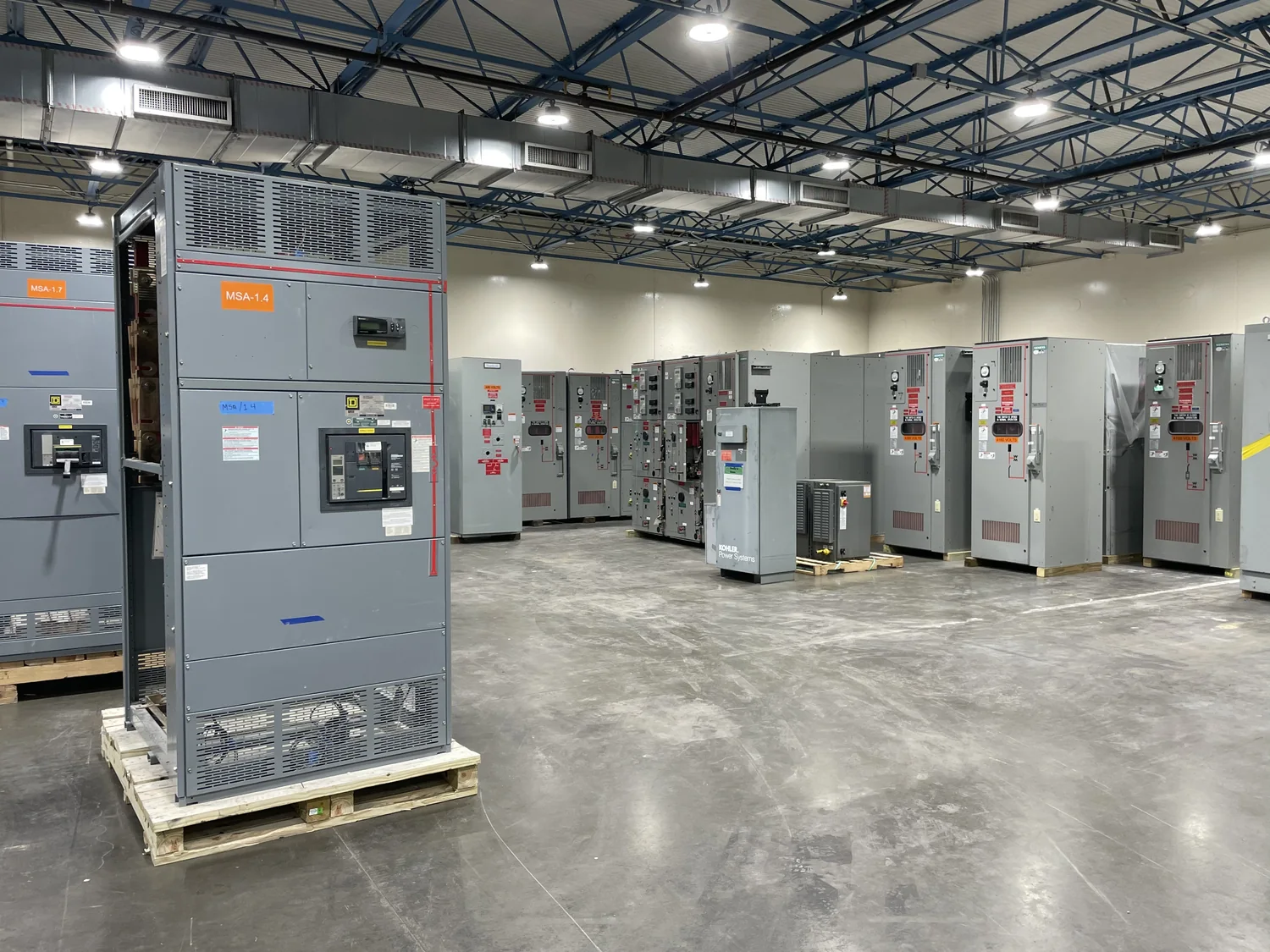
Square D switchgear surplus review for the Washington, DC region
A changeout, facility closure, or equipment refresh can leave switchgear that is no longer needed but still has disposition value. If your organization has surplus Square D switchgear in Washington, DC, Northern Virginia, or Maryland, the first step is a clear review of the equipment and the conditions for removing it. This is a buyer page: the business purchases surplus equipment and does not sell switchgear or replacement parts. Mentioning a brand identifies the equipment being reviewed; it does not imply manufacturer affiliation or endorsement.
No assumptions should be made about a unit’s model, configuration, voltage, condition, or suitability from a brand name alone. The buyer considers all voltage classes, and the seller does not need to test the equipment to request a review. A preliminary assessment can begin with photographs, nameplate information, approximate lineup dimensions, ownership confirmation, and details about access. These details help establish what is present and what a project may involve, but they do not constitute a final offer or guarantee of purchase.
What to share for an initial review
Send clear photographs showing the overall lineup and, where accessible, its sections, doors, visible labels, and nameplates. Include close, legible images of each relevant nameplate rather than relying on a typed description alone. If there are multiple lineups or separate components, identify which photographs correspond to which equipment. Do not open energized equipment or approach exposed electrical hazards to take pictures; arrange access through the facility’s qualified personnel and established safety procedures.
Provide approximate overall dimensions, including lineup length, height, and depth when known, along with the number of sections and any separate components included in the proposed sale. Note visible ratings and identifying information exactly as shown, without inferring specifications that are not legible. A simple inventory can help describe what is included, such as associated sections or components, but the buyer should verify scope from the available information and project review. Completeness matters: identify known missing sections, removed components, damaged areas, or items that will remain with the facility.
Also explain whether the equipment is installed or already removed, who owns it, and who is authorized to approve its sale. If ownership is shared, subject to a lease, or controlled by another party, clarify that before scheduling. Include the site location at a practical level, the available loading route, likely pickup windows, and any known constraints such as limited staging space, restricted vehicle access, floor or doorway dimensions, overhead obstructions, or building scheduling requirements. These are planning questions, not assumptions about any particular DC-area facility.
Condition, configuration, and project scope
Switchgear can vary in size, arrangement, completeness, and removal requirements, so the exact equipment and site conditions shape the review. Nameplate details and photographs can help identify what is being considered, while lineup dimensions help assess handling and transport needs. The review may also need to account for whether the lineup is intact, how it is positioned, what components are included, and whether there is room to stage equipment for removal. Do not rely on a broad description such as “surplus switchgear” to establish the scope of a transaction.
No seller testing is required. If existing documentation, inventories, or maintenance records are readily available, they may help describe the asset, but the seller need not perform testing to request an offer. Photos and supplied information are useful for an initial evaluation; the buyer may need clarification or a site-specific discussion before setting scope. A final price cannot be determined from the brand name or a general description alone. Any cash offer is subject to review of the equipment and the removal project, and there is no guaranteed offer until the relevant details have been considered.
Safe removal and coordinated logistics
The buyer handles crane, rigging, disconnects, loading, freight, and hauling, subject to project arrangements and safe site access. Responsibilities, timing, scope, and access conditions should be confirmed before removal. The buyer pays the crane, rigging, loading, freight, and hauling costs, with project responsibilities agreed in advance. Whether specialized lifting or particular transport arrangements are needed depends on the actual lineup, route, site conditions, and removal plan—not simply on the equipment’s brand.
De-energization, isolation, and disconnect work must be performed by qualified personnel under the site’s safety requirements and outage procedures. Do not ask unqualified staff to disconnect, move, or handle electrical equipment. Coordinate the required outage, access approvals, work windows, and any facility-specific procedures before the removal date. The buyer’s handling of logistics does not replace the site’s responsibility to control electrical hazards or authorize access to its premises.
For properties across Washington, DC, Northern Virginia, and Maryland, schedule planning should reflect the actual site and project constraints. Confirm practical access for people and equipment, loading and staging areas, building rules, pickup timing, and any limits on vehicle size or operating hours. If access depends on a facility representative, property manager, or other authorized party, identify that contact and coordinate availability early. The pickup plan should be agreed by the parties rather than assumed from the location alone.
Offer, payment, and next steps
To begin, provide the equipment photographs, readable nameplates, approximate lineup dimensions, an inventory of included equipment, ownership and authorization details, and a description of access and removal constraints. Include whether the switchgear is still installed and any known scheduling requirements. If a detail is uncertain, label it as unknown instead of guessing. This gives the buyer a more useful basis for reviewing the asset and identifying questions that may affect scope, timing, or logistics.
The buyer can make a cash offer after reviewing the available information and project requirements. If an offer is accepted, payment is arranged upfront. Confirm the agreed equipment scope, payment arrangement, site access, removal timing, and logistics responsibilities before work is scheduled. An initial inquiry is not a final price, a commitment to purchase, or a promise that a specific removal date will be available; those points depend on review and coordination.
A well-documented request helps both sides discuss surplus Square D switchgear efficiently without requiring the seller to test it or make unsupported claims about its specifications. Share what can be verified, make ownership and access clear, and coordinate all electrical work through qualified personnel. With the project scope and responsibilities confirmed in advance, the parties can determine whether an offer and removal plan are practical for the specific equipment and site.