Switchboard Removal Planning for DC-Area Sellers
Planning a switchboard sale is both an equipment review and a removal project. For sellers in Washington, DC, Northern Virginia, and Maryland, the first step is to provide enough information for the buyer to understand what is being offered and what access and removal may involve. The buyer purchases switchboards only; it does not sell equipment. It can make a cash offer, and payment is arranged upfront if the offer is accepted. No testing is required from the seller, and all voltage classes are considered.
An initial review is not a final price or a removal commitment. The equipment’s identity, condition as represented, completeness, ownership, and site constraints all affect whether an offer and workable project scope can be established. Clear records and photographs help identify questions early, before scheduling, outage coordination, or removal arrangements are set.
Information to Gather Before the Review
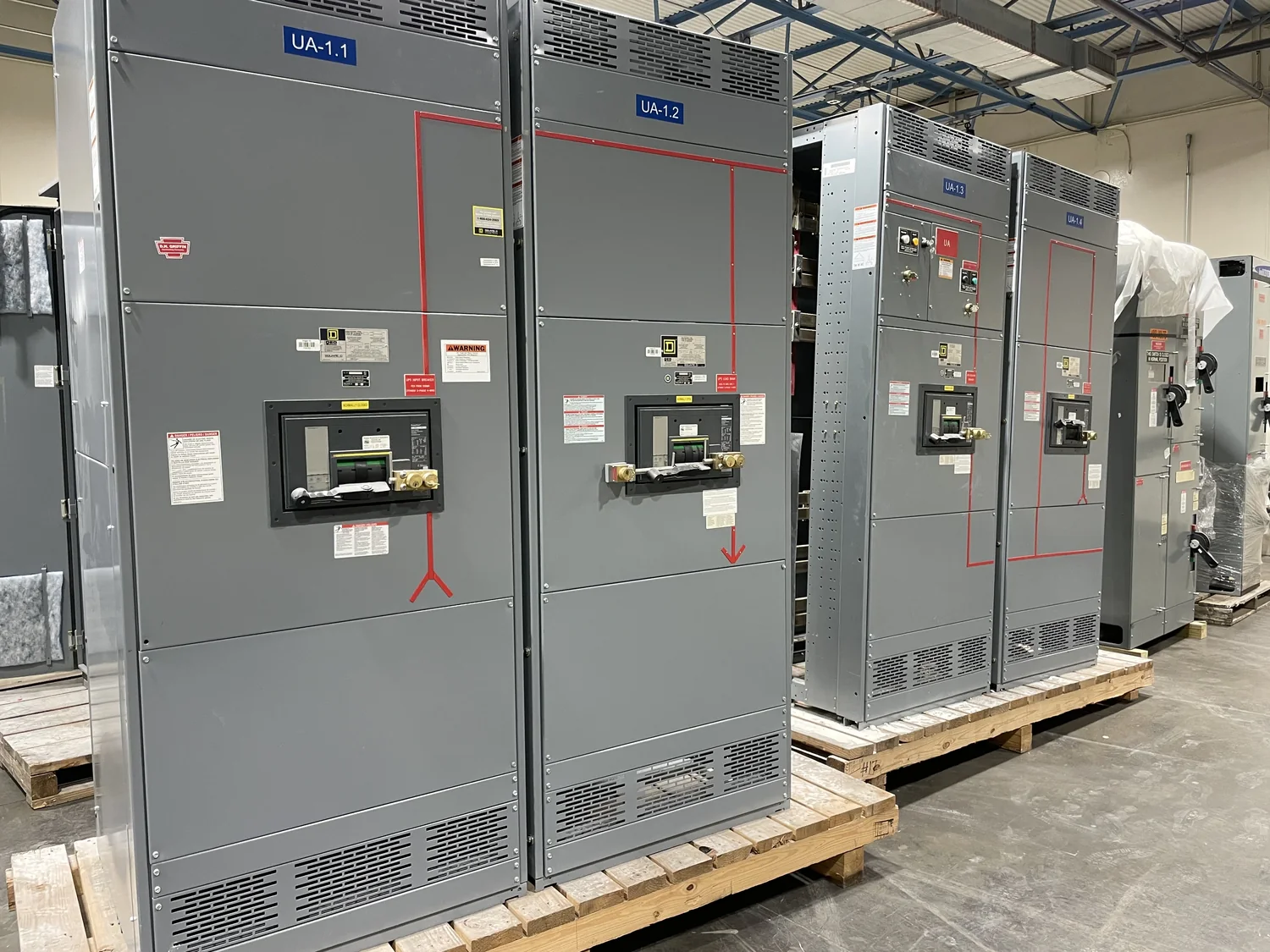
Start with clear photographs of the full switchboard lineup, including front and rear views where safely accessible, visible sections, doors, compartments, and any separate or associated equipment included in the offer. Do not open energized equipment or enter restricted areas to take pictures. If access to a view requires opening a panel or approaching electrical hazards, leave that work to qualified personnel and follow the site’s safety procedures. Photos should communicate the equipment’s overall configuration without requiring anyone to take an unsafe position.
Provide readable nameplate photographs when they can be obtained safely, along with any available equipment lists or records that identify the lineup. Nameplates may help establish manufacturer, model or type, ratings, and other identifying details, but the buyer should review the actual information rather than relying on assumptions. The buyer considers all voltage classes; a seller does not need to test the equipment to submit it for review. If a nameplate is missing, damaged, or unreadable, note that rather than attempting to infer its contents.
Measure the lineup’s overall length, height, and depth, and note the dimensions of major sections if the lineup is not uniform. Include approximate weight or shipping information only if it is documented or otherwise known; do not guess. Describe what is included, such as sections, removable components, or associated items, and identify anything excluded. Completeness matters because missing sections, components, or records can change the review and removal scope. Also state whether the switchboard is installed, stored, partly dismantled, or already disconnected, based on information available to you.
Ownership, Site Access, and Removal Constraints
Confirm that the seller owns the equipment or has authority to arrange its sale, and identify any known ownership, lease, or disposition restrictions. Share the equipment’s location within the facility in practical terms, along with access rules, contact and coordination requirements, and any limits on work hours or scheduling. Do not assume that a buyer or removal crew can enter a building, loading area, or secured space without advance approval. For sites in the DC region, building access, loading arrangements, traffic or delivery windows, and coordination among facility stakeholders may need to be addressed for the specific project; the seller should provide confirmed site information rather than relying on general assumptions.
Describe the route from the switchboard to the planned loading point. Relevant details can include door and corridor clearances, stairs or elevators, floor or platform limitations, overhead obstructions, turns, exterior paths, and whether equipment may need to be divided into sections for movement. Note nearby equipment, fixed construction, or other obstacles that could affect access. If a crane, rigging, or other specialized lifting arrangement may be needed, identify known constraints such as staging space, access windows, or site rules. These details help the parties assess feasibility, but they do not replace a project-specific site review when one is needed.
The buyer handles crane, rigging, disconnects, loading, freight, and hauling, subject to project arrangements and site access. Responsibilities, scope, timing, and access conditions should be confirmed before removal. The seller should identify any site procedures or coordination requirements that may affect those arrangements. A site-specific plan may depend on the equipment’s dimensions and route, available staging, building requirements, outage timing, and the work permitted at that facility. No removal date or method should be assumed until the parties have reviewed and coordinated the project.
Qualified Disconnection and Outage Coordination
Switchboard disconnection is not seller-side work for unqualified personnel. De-energization, isolation, verification, and disconnect work must be handled by qualified personnel under the site’s safety requirements and outage procedures. The seller should not remove covers, operate equipment, disconnect conductors, or otherwise handle electrical components to prepare a sale unless that work is authorized and performed by qualified people. The timing and extent of electrical work must be coordinated with the site and the project parties before removal.
Share the site’s known outage windows, approval steps, and requirements for coordinating with facility operations. If the equipment serves active loads or is integrated with other electrical systems, explain that at a high level and involve the responsible qualified personnel in planning. The buyer’s responsibility for disconnects remains subject to agreed project arrangements and access; it does not remove the need to follow the site’s safety procedures or coordinate work with those responsible for the facility. Clear scheduling information helps prevent a purchase review from being mistaken for approval to interrupt service or begin work.
Offer Review, Payment, and Next Steps
When submitting a switchboard for consideration, send the available photos, nameplates, lineup dimensions, equipment and completeness details, ownership confirmation, and site-access and removal information together. Identify anything uncertain or unavailable. The buyer can review the information and may request clarification before deciding whether to make an offer or how removal could be arranged. An offer should not be treated as a guaranteed price: final terms depend on review of the specific equipment and project conditions, and no final price can be stated without that review.
If an offer is accepted, payment is arranged upfront. The buyer pays the crane, rigging, loading, freight, and hauling costs, with the responsibilities and arrangements confirmed before removal. No testing is required from the seller, and the buyer considers switchboards across all voltage classes. These points do not guarantee that every item will receive an offer or that any particular removal approach will be feasible; access, scope, scheduling, and equipment details still need to be confirmed for the project.
A complete, accurate submission gives both sides a better basis for discussing value and logistics before a removal date is considered. Start with safe photographs and available records, confirm who owns the equipment, describe the lineup and route out of the facility, and flag access or outage constraints early. With those details in hand, the buyer can review the switchboard and coordinate next steps with the seller for a project in Washington, DC, Northern Virginia, or Maryland—without assuming a local office, a predetermined schedule, or a price before review.