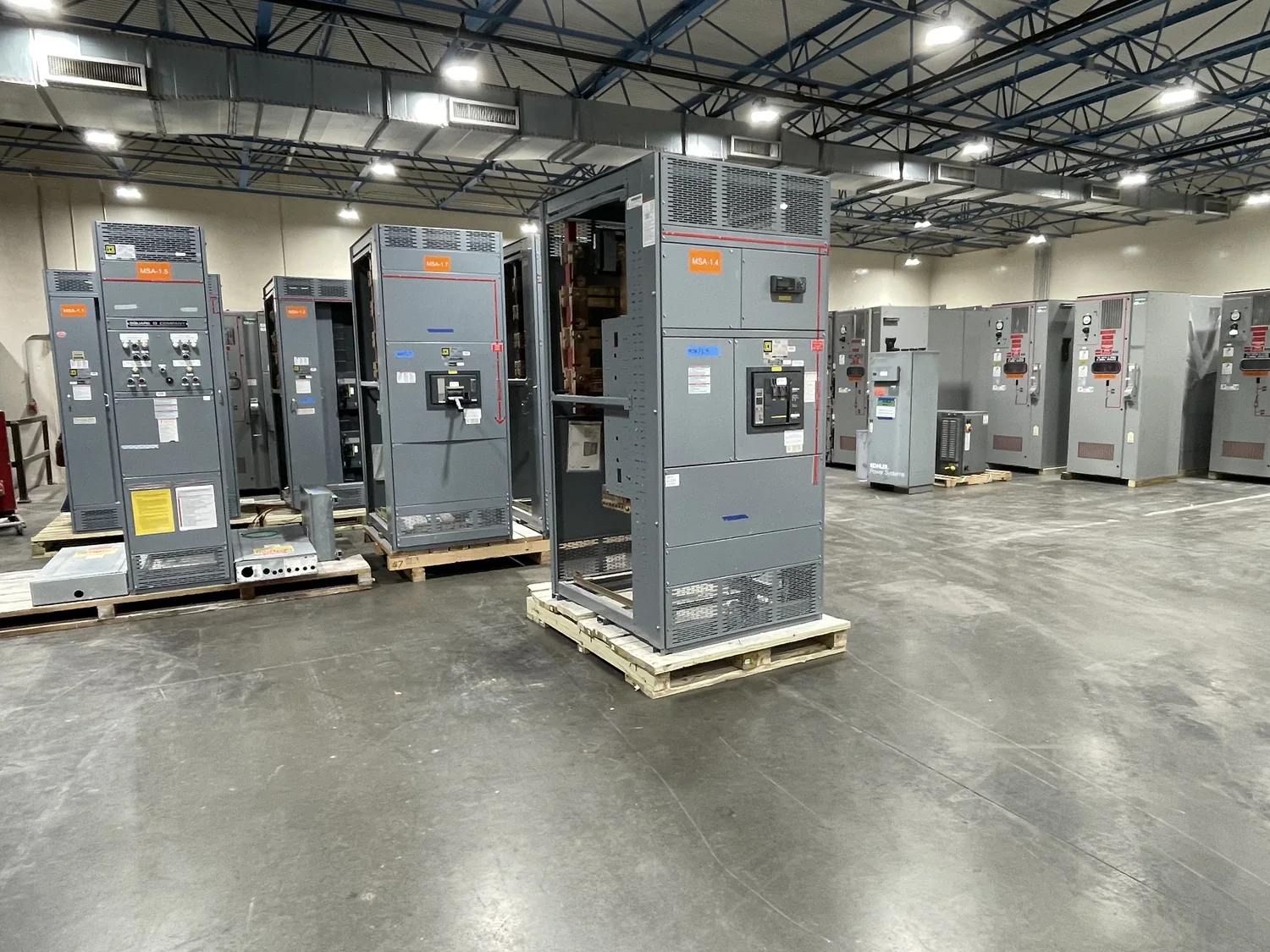
University Campus Switchgear Decommissioning Buyer
When a university campus is decommissioning a building, consolidating electrical infrastructure, or clearing equipment from a renovation area, switchgear disposition needs to fit the project’s safety, access, and schedule requirements. For campuses in Washington, DC, Northern Virginia, and Maryland, planning can also involve coordinating work across occupied buildings, controlled entrances, service roads, loading areas, and other site-specific constraints. Those conditions vary by project, so the equipment and removal plan should be reviewed before a scope is set.
We buy electrical equipment, including switchgear, and can make a cash offer after reviewing the information available. We are a buyer, not a seller. No testing is required from the seller, and we consider equipment across all voltage classes. An offer is not a final price until the equipment, completeness, ownership, access, and removal requirements have been reviewed and the details are confirmed for the project.
Start with Equipment Records and Clear Photos
A useful first submission identifies what is being decommissioned and shows enough detail to distinguish the switchgear lineup and its condition. Send clear, well-lit photos of the complete lineup, its front and rear where accessible, visible side sections, and any separate or detached components. Include close-up images of every readable nameplate and labels that identify ratings or lineup sections. Avoid removing covers or entering restricted electrical areas just to take pictures; use existing records and photographs made from safe, authorized locations.
Share the lineup’s overall dimensions, including approximate length, height, and depth, along with the number of sections or cubicles if known. Provide available documentation such as equipment schedules, one-line diagrams, inventories, or decommissioning lists when they can be shared. Useful nameplate and record details may include the manufacturer, model or catalog information, rated voltage, current, interrupting or withstand ratings, and other marked electrical characteristics. These details help identify the equipment; they do not by themselves establish a price or confirm that every component is included.
Describe completeness as accurately as possible. Note whether the lineup appears intact, whether breakers, relays, meters, doors, barriers, bus components, or control parts are present, and whether anything has already been removed or set aside. Do not guess at hidden contents or condition. If records conflict with what can be seen, explain the discrepancy so it can be reviewed rather than treated as a confirmed specification.
Confirm Ownership, Campus Access, and Removal Conditions
Before arranging disposition, identify who owns the equipment and who has authority to approve its sale and removal. University property can involve a facilities department, project manager, owner, contractor, or another authorized representative; the responsible parties should confirm ownership and decision-making authority for the particular assets. Share the campus or project location at a practical level, the site contact, permitted work windows, entrance and escort requirements, and any restrictions on vehicle size, staging, parking, or deliveries. No local office or campus presence should be assumed from service in the DC region.
Access information matters because a switchgear lineup may be in a basement, electrical room, secured building, loading dock area, or another space with limited route clearance. Provide door and corridor dimensions, turning points, stairs or ramps, elevator details if relevant, floor-loading limits if known, and the distance from the equipment to the pickup point. Identify overhead obstructions, narrow approaches, restricted roads, underground utilities, or other constraints that could affect staging or lifting. If any detail is unknown, say so; a site review may be needed before the removal plan can be confirmed.
Also note the planned decommissioning date, outage windows, construction milestones, building occupancy, and any campus events or access restrictions that affect timing. These are project coordination details, not assumptions about a particular institution. A workable schedule depends on the equipment location, required approvals, safe electrical status, site availability, and the removal resources needed.
Qualified Electrical Work and Removal Responsibilities
Switchgear must not be disconnected, opened, or handled by unqualified personnel. De-energization, isolation, verification of safe conditions, and disconnect work must be performed by qualified personnel under the campus’s safety rules, electrical procedures, and outage approvals. Coordinate the timing and boundaries of that work with the people responsible for the affected systems. The buyer’s review of equipment or removal planning does not replace the site’s electrical-safety process, authorize an outage, or determine whether equipment is safe to work on.
For removal, the buyer handles crane, rigging, disconnects, loading, freight, and hauling, subject to project arrangements, site access, and the final agreed scope. Responsibilities and timing must be confirmed before removal, including who provides any required site coordination, access approvals, escorts, or other project-specific arrangements. The buyer’s handling of these logistics does not mean the buyer can proceed without the site’s required approvals or qualified electrical work.
Removal planning should account for the lineup’s dimensions and weight information where available, lifting points or other manufacturer-marked handling guidance, the path from the room to the pickup area, and whether sections need to be moved separately. Do not infer safe lifting methods from appearance alone. The project team and removal personnel should coordinate an appropriate plan around actual equipment details, route conditions, and site procedures.
Review, Offer, and Upfront Payment
To begin, send the equipment photos, readable nameplates, lineup dimensions, available records, completeness notes, ownership confirmation, and access and scheduling details. If the equipment is still installed, explain its planned electrical status and the expected window for qualified disconnect work, without asking unqualified staff to perform or supervise that work. Additional information or a site review may be needed if images and records do not resolve questions about the assets or removal conditions.
After review, we can make a cash offer for the equipment. There is no requirement for the seller to test it before submitting information. If an offer is accepted, payment is arranged upfront, with payment timing and the agreed project responsibilities confirmed before removal. The buyer pays the crane, rigging, loading, freight, and hauling costs, subject to the arrangements established for the project and practical site access. No price should be treated as final until the equipment and scope have been reviewed and confirmed.
A clear, early exchange of information helps the campus team evaluate disposition alongside construction, facilities, and outage planning. It also gives both parties a chance to identify missing records, access limitations, and removal constraints before a date is committed. For university switchgear decommissioning in Washington, DC, Northern Virginia, and Maryland, the best starting point is a factual equipment description, clear photographs, confirmed ownership, and an honest account of the site conditions.