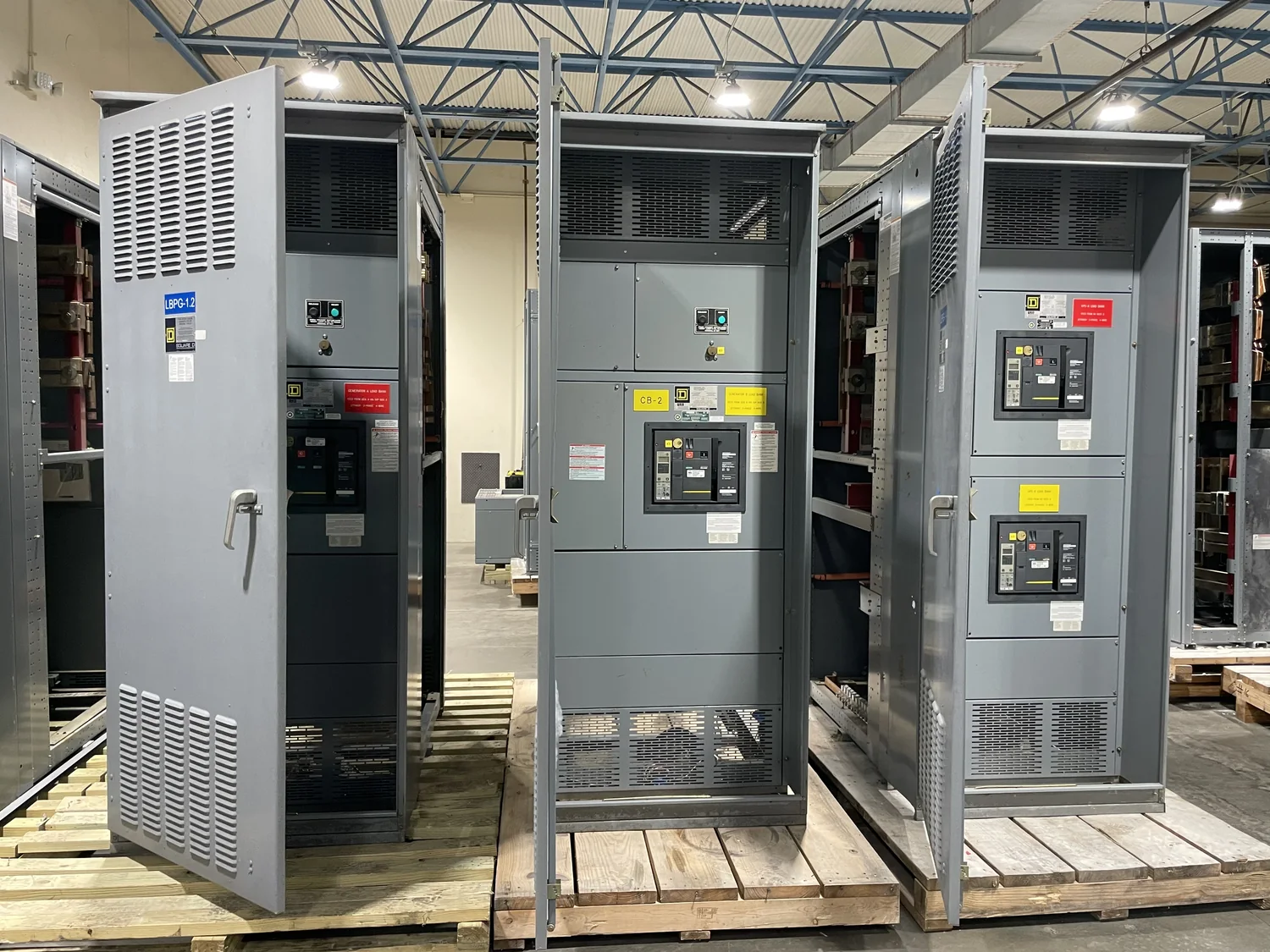
Plan Switchgear Disposition Before the Warehouse Closes
A warehouse closure or equipment changeout can leave a substantial switchgear lineup that needs a clear disposition plan. The practical first step is to identify what is installed, who owns it, what must remain in service, and when the equipment can be made available. These details help a buyer review the opportunity before removal timing becomes constrained by a lease handover, building work, or other project milestones.
This guide is for warehouse owners, operators, facility teams, and project representatives across Washington, DC, Northern Virginia, and Maryland who are considering selling surplus switchgear. The buyer purchases equipment only; it does not sell replacement gear. It considers all voltage classes, and the seller is not required to perform testing. A cash offer may be made after the equipment and project information are reviewed. If the offer is accepted, payment is arranged upfront, with payment and removal responsibilities confirmed before the work proceeds.
Gather Equipment and Ownership Information
Start with clear, well-lit photographs of the complete lineup and its surroundings. Include wide views that show how the sections are arranged, plus closer images of readable nameplates and visible labels. Photographs can help establish the general equipment configuration, identify information for review, and show nearby walls, doors, columns, and other conditions that could affect access. Do not remove covers or approach exposed electrical parts to obtain images; arrange any inspection or photography so it follows site safety procedures.
Provide available nameplate details and lineup dimensions, including overall length, height, and depth where known. If the lineup includes multiple sections, note the number and approximate dimensions of each section, along with any known shipping splits or removable components. Ratings and configuration details shown on nameplates may matter to a buyer’s review, but no particular manufacturer, voltage, or specification should be assumed from the warehouse setting alone. All voltage classes are considered; the exact equipment information is still needed to assess the opportunity.
Describe what is included and what is not. Identify related components, accessories, documentation, or parts that are available with the lineup, and flag missing sections or items that will stay with the facility. Explain whether equipment is installed, stored, partially dismantled, or already disconnected. Confirm that the person arranging the sale has authority to sell the equipment and can provide any ownership or disposition information needed for review. Clear ownership details help prevent avoidable delays when a closure schedule is tight.
Coordinate Closure Timing and Site Access
Share the anticipated closure, changeout, or building handover dates, along with any deadlines for clearing the equipment area. Timing should account for more than the day a lineup can be removed: site coordination, qualified electrical work, preparation of the removal route, loading access, and transportation all need to fit the project plan. Early discussion gives the parties a chance to identify information gaps and clarify responsibilities before the equipment becomes urgent to move.
Explain how a removal team would reach the lineup and where loading could occur. Useful details include door and corridor widths, ceiling or overhead obstructions, floor or dock access, turns along the route, outdoor staging space, and any known restrictions on vehicle or equipment access. Share relevant site rules, access windows, operating-hour limits, escort requirements, and coordination contacts. In the DC region, the route and schedule can depend on the particular building and site arrangements; do not assume that a warehouse has a clear loading dock, unrestricted truck access, or a suitable crane setup.
Flag removal constraints early, including neighboring operations, other contractors, building work, limited staging, restricted access periods, or requirements to protect floors and surrounding property. Site-specific conditions determine what equipment and labor may be appropriate. A review of photographs and dimensions helps frame the discussion, but the removal plan and schedule must be confirmed for the actual site.
Keep Electrical Work Under Site Safety Procedures
Any de-energization, isolation, or disconnection must be performed by qualified personnel under the site’s safety and outage procedures. The seller should not ask unqualified staff to disconnect, dismantle, move, or handle electrical equipment. Coordinate the required electrical work with the facility’s responsible personnel, including the planned outage window, access controls, and the point at which equipment can be made available for removal.
Tell the buyer whether the switchgear is energized, de-energized, isolated, or already disconnected, based on information from qualified site personnel. Do not treat a photograph, an open breaker, or a verbal assumption as confirmation that equipment is safe to work on. The project team should establish the applicable safety controls and verify conditions through the site’s procedures. The buyer’s removal planning depends on the agreed status of the equipment and the timing of qualified work.
No seller testing is required for consideration. Share existing records or known condition information if available, and be clear about what is unknown. The buyer reviews the information provided and may request clarification before making an offer or confirming removal scope. Avoid promising a particular value or outcome before that review.
Confirm Offer, Payment, and Removal Responsibilities
Before setting a removal scope, provide the equipment photos, nameplates, lineup dimensions, ownership information, site access details, and timing constraints. The buyer can then review what is being offered and discuss the project-specific logistics. A final price is not established from the title of the equipment or a general description alone; the offer depends on review of the actual assets and relevant project details. If accepted, payment is arranged upfront, with the payment arrangement confirmed before removal.
The buyer handles the removal logistics: crane, rigging, disconnects, loading, freight, and hauling, subject to project arrangements and site access. Responsibilities, sequencing, and any site coordination requirements should be confirmed before removal begins. The seller should disclose any constraints that could affect access or work planning, and the buyer should confirm what its arrangements cover for the specific project. This avoids relying on assumptions about who supplies labor, equipment, transportation, or site coordination.
A well-prepared disposition package does not need to be elaborate. Clear photos, legible nameplates, lineup measurements, an accurate account of completeness and ownership, and straightforward access and scheduling information give the buyer a useful basis for review. For a warehouse closure or changeout in Washington, DC, Northern Virginia, or Maryland, starting that conversation early can help align the sale discussion with the site’s qualified electrical work and practical removal window—without treating the offer, schedule, or removal plan as guaranteed before the project is reviewed.