Plan switchgear disposition early in a wastewater facility closure
A wastewater facility closure, process change, or equipment changeout can leave switchgear that must be removed while other site work is still underway. Planning disposition early gives the facility team time to identify what may be available, confirm ownership, and coordinate removal with the shutdown schedule. This guide is for sellers in Washington, DC, Northern Virginia, and Maryland. The buyer purchases equipment; it does not sell switchgear or provide electrical decommissioning services.
Start by identifying the equipment that may be included and the conditions that will govern its removal. A lineup may be in a room with restricted access, near equipment that remains in service, or subject to a facility-specific outage sequence. Those details affect what information is needed and when removal can occur. A preliminary review can help establish whether the equipment merits an offer, but scope and price require review of the specific assets and project arrangements. No final price should be assumed from a general description alone.
Gather photos, nameplates, dimensions, and asset details
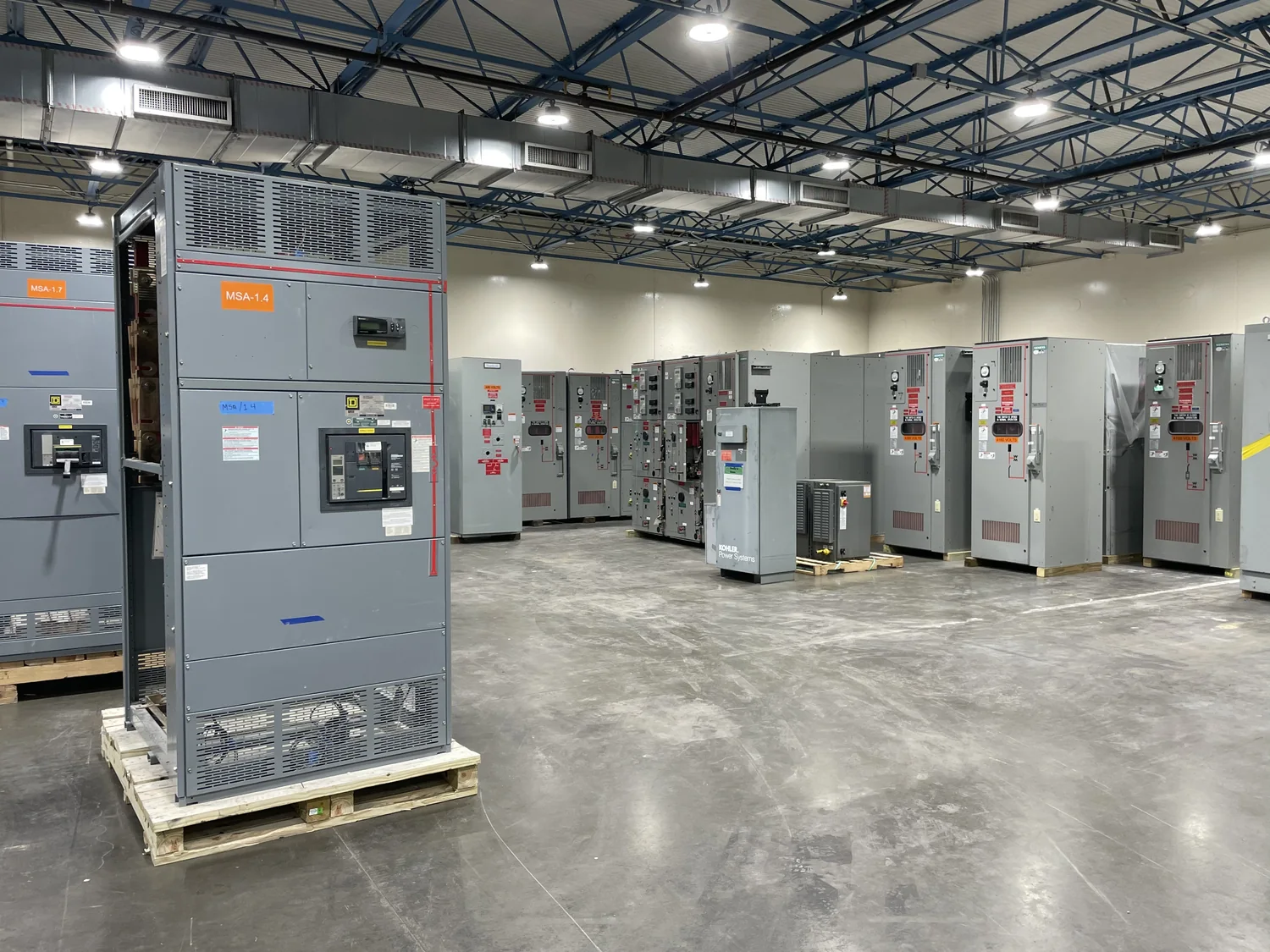
Clear, current photos help the buyer understand the equipment’s visible condition and configuration before setting scope. Useful views include the full lineup from the front, each section and its doors, accessible sides and rear where safe, and close-ups of nameplates and labels. Photograph only from locations authorized by the site; do not open energized compartments or remove covers to get a picture. If equipment cannot be safely or readily photographed, explain the limitation and coordinate an appropriate information-gathering plan with the facility team.
Record nameplate information legibly where it is accessible, along with available ratings, model or catalog identifiers, and other markings. The buyer considers all voltage classes, so do not exclude equipment just because its voltage is unfamiliar or not yet confirmed. Share lineup dimensions, approximate section count, and any known additions or modifications. Dimensions and photos can help assess access and removal planning, but they do not replace a site-specific review.
Also describe what is included and what is not. Note whether breakers, doors, barriers, control components, or other parts are present, missing, or separated from the lineup, without assuming that any particular component is required for an offer. State whether related equipment is included in the proposed disposition and identify assets that must remain. Provide the facility or owner’s name, confirm who has authority to sell, and explain any ownership, lease, lender, contractor, or surplus-property approvals that could affect transfer.
Coordinate access and removal around site operations
Wastewater facilities may have controlled entry, active treatment processes, limited staging space, overhead or doorway restrictions, and vehicle or delivery rules. Conditions differ from site to site, so share the practical facts rather than relying on assumptions about a facility or its location. Explain where the lineup sits, the route from the equipment area to an exterior loading point, available clearances, floor or access limitations known to the site team, and any escort, check-in, work-hour, or scheduling requirements. If the route involves stairs, tight turns, a confined work area, or other constraints, flag them before removal responsibilities are finalized.
The buyer handles crane, rigging, disconnects, loading, freight, and hauling, subject to project arrangements and site access. Confirm responsibilities, scope, timing, and any access conditions before removal. The buyer pays the crane, rigging, loading, freight, and hauling costs, with those responsibilities confirmed for the project before removal. Site conditions and agreed arrangements may affect how removal is organized; describing constraints early helps the parties plan a workable sequence without implying that every site can be handled the same way.
Do not ask unqualified staff to disconnect, move, or handle electrical equipment. De-energization, isolation, and disconnect work must be performed by qualified personnel under the facility’s safety procedures and outage requirements. Coordinate the work with the site’s authorized personnel, including the permitted work window, access, isolation status, and any required hold points. No seller testing is required for the buyer to consider equipment. That does not remove the need for the facility to manage safe shutdown and worksite controls.
Set the commercial scope before the equipment leaves
Before an offer is prepared, make sure the proposed asset list matches the equipment the facility intends to transfer. Clarify whether the scope covers a complete lineup or selected sections, and identify anything that will be removed separately, retained, or handled by another contractor. Share known condition information and disclose missing parts or physical damage where known. A photo-based review is a useful starting point, but the buyer may need further details or a site-specific discussion before scope and pricing can be established. Offers are not guaranteed, and a final price is not available without review.
Confirm that the seller has authority to transfer the equipment and that any internal approvals or third-party interests have been addressed. Establish who will coordinate site access and removal timing, how the equipment area will be made available, and how the agreed scope will be identified at the time of pickup. These practical checks reduce the chance of confusion about what is being purchased or what must remain on site. They are especially important when a closure involves multiple work packages or when an electrical contractor is coordinating shutdown and removal activities.
The buyer can make a cash offer. If the offer is accepted, payment is arranged upfront. Confirm the payment arrangement and the agreed scope before scheduling removal; do not treat an initial inquiry or photo review as a binding price or a completed transaction. The buyer purchases equipment only and does not sell replacement gear.
A practical inquiry checklist for the DC region
For a first inquiry, send the facility or owner name and general location in Washington, DC, Northern Virginia, or Maryland; a clear equipment overview; readable nameplate photos; lineup dimensions and section count; available ratings and identifiers; and a concise description of completeness and known condition. Include confirmation of ownership or authority to sell, the proposed asset scope, access and loading-route details, and any removal constraints. You can also note the anticipated closure or changeout window and the site contact who will coordinate access. This information supports an informed initial review without presuming particular facility conditions or a specific schedule.
The buyer serves the DC region without implying a local office or a fixed removal timetable. Project timing depends on scope, access, qualified personnel, site procedures, and agreed logistics. If those factors are still being determined, say so; an early conversation can identify which details need to be resolved before an offer or removal plan is finalized. Clear information and coordinated responsibilities help the seller plan switchgear disposition while keeping ownership, payment, access, and safe work sequencing explicit.