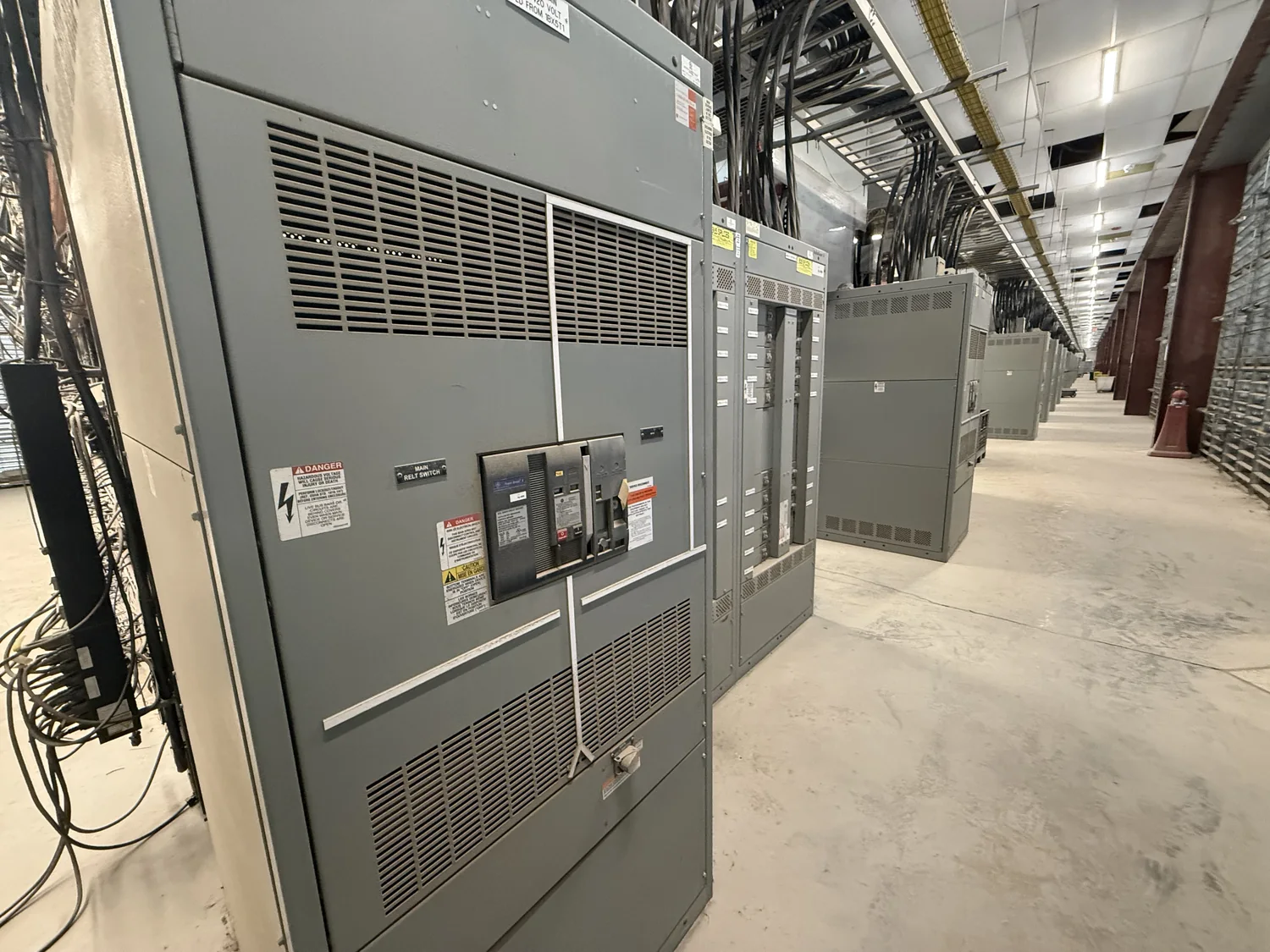
Selling Switchgear During Wastewater Facility Decommissioning
When a wastewater facility is being decommissioned, replaced, or reorganized, switchgear may be one part of a larger equipment-disposition plan. A buyer can review surplus switchgear and make a cash offer based on the equipment and the proposed removal scope. The business buys equipment only; it does not sell switchgear or provide a replacement-equipment quote. The service area includes Washington, DC, Northern Virginia, and Maryland, with project arrangements considered according to the facility’s location, schedule, and site conditions.
A useful first step is to identify what is available and how it relates to the facility’s shutdown or removal sequence. A lineup could be offered as a complete assembly, or the available scope might include only certain sections or components. Do not assume a partial lineup can be separated or removed independently: its arrangement, connections, physical condition, completeness, and the facility’s plans may affect whether and how it can be evaluated. The buyer reviews the information before making an offer; a final price is not available without that review.
Prepare Equipment Information for a Review
Clear, well-lit photographs can help show the full lineup, its sections, visible equipment labels, and any apparent damage, missing covers, or incomplete areas. Include readable nameplate photographs wherever safely accessible. Nameplate information can help identify the equipment and its ratings; the buyer considers all voltage classes. Do not remove guards, open energized equipment, or enter restricted areas to obtain photographs. Have a qualified person take or provide images in accordance with the facility’s safety procedures.
Provide the lineup’s overall dimensions and, if available, dimensions for individual sections or major assemblies. Note how many sections are included, whether associated equipment is part of the offer, and whether any components have already been removed. Explain what is known about completeness and condition without guessing at technical details. Useful context may include whether the equipment is still installed, stored, or already disconnected, and whether it is being offered as one lineup or in separately identified portions. Testing is not required from the seller.
Ownership and authority to sell also matter. State who owns the equipment and who is authorized to approve its disposition. If ownership, access rights, or responsibility for removal is shared or subject to facility arrangements, explain that before an offer is evaluated. These details help establish which equipment is included and who can coordinate access, timing, and removal approval.
Plan Site Access, Removal, and Scheduling
Wastewater-facility decommissioning can involve coordinated access, outage windows, other contractors, and site-specific safety procedures. Before setting a removal scope, share the facility location, relevant access requirements, preferred timing, and any known constraints on moving equipment from its present position to a loading area. In the Washington, DC region, a project may also require practical coordination around the route to the site and the space available for removal and transport. Specific access conditions vary by facility, so they should be confirmed for the individual project rather than assumed.
Describe the route from the switchgear to the exit and loading point as clearly as possible. Relevant details may include door and corridor clearances, turns, floor or platform conditions, overhead obstructions, stairs, ramps, elevator limitations, staging space, and restrictions on vehicle or lifting-equipment access. Share available measurements or photographs where practical. Identify known removal constraints, including adjacent operating equipment, structural limitations, restricted work areas, site rules, and any required coordination with the facility’s personnel. This information does not replace an on-site assessment where one is needed; it helps the parties determine what must be confirmed before work is scheduled.
The buyer handles crane, rigging, disconnects, loading, freight, and hauling, subject to the project arrangements and site access. Responsibilities and scope must be confirmed before removal, including how the equipment will be accessed and moved and what timing the site can support. De-energization, isolation, and disconnect work must be performed by qualified personnel under the facility’s safety and outage procedures. Sellers and other unqualified personnel should not attempt to disconnect, dismantle, or handle electrical equipment. Coordinate the applicable work, access, and timing with the site before removal proceeds.
Offers, Payment, and Next Steps
To request a review, send clear equipment photos, readable nameplates, lineup dimensions, a description of what is included, and details about ownership, site access, timing, and removal constraints. Include any known information about completeness and condition, along with the facility’s anticipated decommissioning schedule. If information is unavailable, say so rather than estimating. The buyer can consider the available details and discuss what additional review is needed to establish the scope.
The buyer can make a cash offer after reviewing the equipment and project information. There is no requirement for the seller to test the switchgear. If an offer is accepted, payment is arranged upfront. The buyer pays the costs for crane, rigging, loading, freight, and hauling, with responsibilities confirmed as part of the project arrangements before removal. The actual scope remains subject to equipment review, ownership and access confirmation, and workable site conditions; an inquiry or preliminary discussion is not a guaranteed offer or removal date.
A concise, organized submission can make the initial conversation more useful: identify the facility’s general location in the Washington, DC, Northern Virginia, or Maryland service area; attach overall and detail photographs; list nameplate information and dimensions; state who owns the equipment; and describe the access route and expected schedule. Mention any outage procedures or site requirements that affect de-energization, isolation, disconnects, staging, or hauling. With those practical details in hand, the buyer can evaluate whether the proposed disposition and removal arrangement is suitable for further discussion.