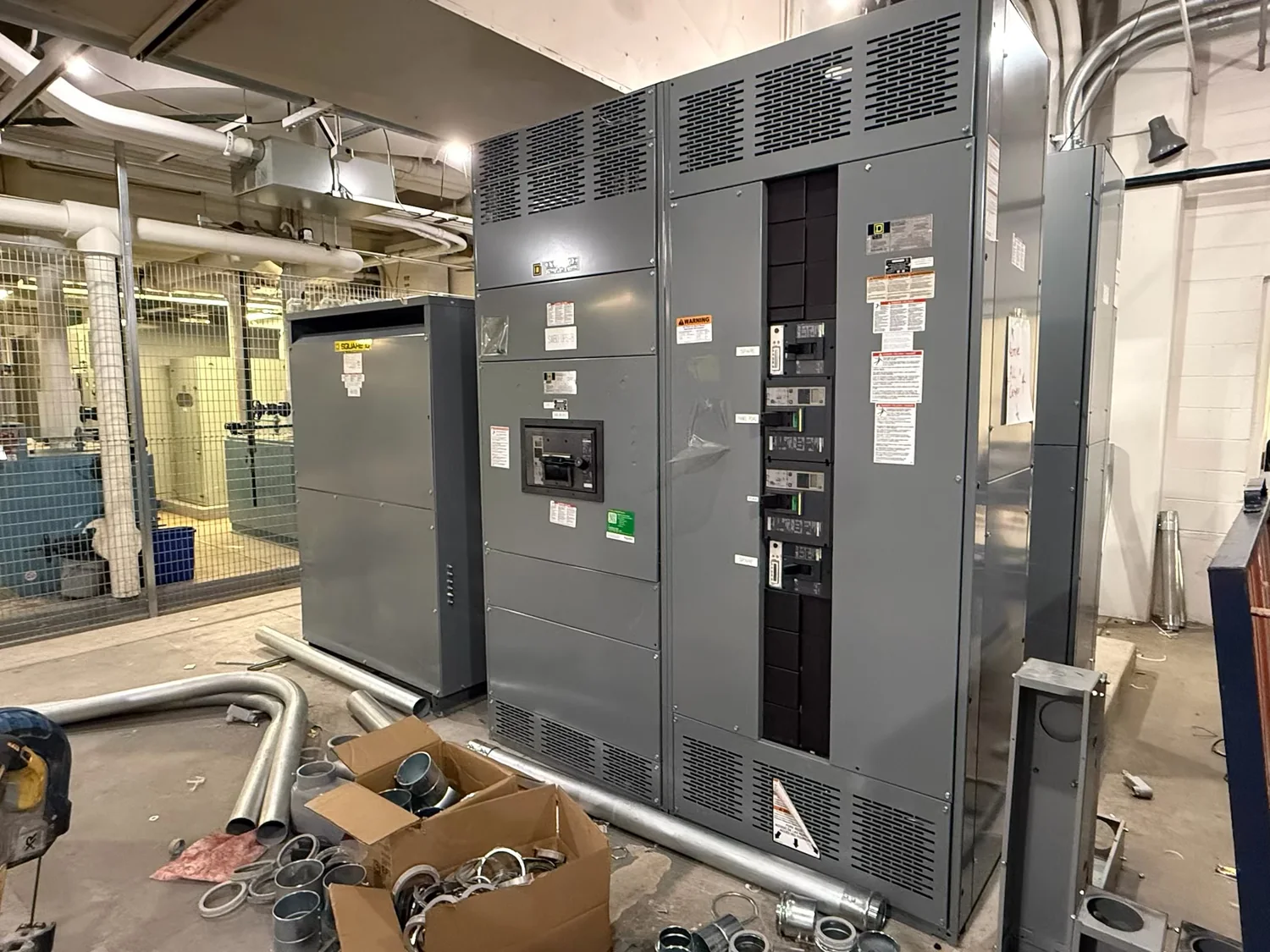
Plan switchgear disposition early in a plant closure or changeout
A water treatment plant closure, process change, or electrical changeout can leave switchgear that still has value but needs a carefully coordinated disposition plan. For owners, utilities, contractors, and other authorized sellers in Washington, DC, Northern Virginia, and Maryland, the first step is to establish what equipment is available, who owns it, and when the site can release it. A buyer can review surplus switchgear and make a cash offer; this is a buying service, not a source for replacement equipment.
Start the conversation before demolition, room repurposing, or other work makes the equipment harder to inspect or remove. Early planning gives the parties time to identify the lineup, confirm ownership and project authority, understand access restrictions, and coordinate removal with the plant’s closure or outage schedule. It also helps avoid treating a complex electrical-room removal as an ordinary pickup. The buyer reviews the information provided, discusses practical scope and logistics, and makes an offer only after that review. No final price should be assumed before the equipment and removal conditions are understood.
Document the lineup before scope is set
Clear, current photographs are useful for an initial review. If safe and permitted under site rules, provide overall views of each lineup and closer images of visible nameplates, labels, sections, and apparent damage or missing components. Do not remove covers or approach energized equipment to obtain photographs. A site representative should follow facility access rules and use qualified personnel wherever electrical hazards or restricted areas are involved.
Share nameplate details that can be read without unsafe access, along with the lineup’s overall length, height, depth, approximate section count, and any known configuration information. Include available ratings and identification information as recorded on the equipment; the buyer considers all voltage classes, and no particular voltage or manufacturer specification should be presumed from the facility type. If documentation is incomplete, say what is unknown rather than guessing. Photos of related controls or accessories may help show what is included, but inclusion and completeness must be confirmed during review.
Describe what will remain with the switchgear and what has already been removed. Relevant details may include whether doors, barriers, breakers, compartments, or other associated components appear present, and whether equipment is assembled, partially dismantled, or mixed with other electrical assets. These details can affect how the buyer evaluates the lot and plans handling. Seller testing is not required; do not conduct testing simply to prepare an inquiry. Any technical assessment or additional information request should be discussed as part of the review.
Confirm ownership, authority, and release conditions
Before an offer can be tied to a workable removal plan, identify the legal owner of the equipment and the person authorized to approve its sale and release. A plant closure may involve an owner, operating organization, contractor, public entity, lender, or project manager; the seller should clarify who can authorize disposition and who can coordinate the site. Provide any known restrictions on transfer, documentation, procurement approval, or the date by which the equipment must be removed. The buyer does not assume that the person requesting an offer has authority to sell.
Also explain whether the switchgear is still installed, already disconnected, or staged for pickup, and who controls the room and surrounding work area. Note whether other contractors will be working nearby, whether the equipment is part of a larger demolition or electrical scope, and whether removal must fit a specific outage window. These are project details to coordinate, not reasons to bypass the facility’s procedures. The site remains responsible for establishing the permitted work sequence and access conditions; the buyer and seller should confirm their respective responsibilities before removal begins.
Coordinate safe access and removal logistics
Switchgear removal is not a task for unqualified personnel. De-energization, isolation, and any disconnect work must be performed by qualified personnel under the site’s safety requirements, lockout procedures, and outage plan. The buyer does not require the seller to test the equipment, and the seller should not disconnect, open, move, or prepare electrical equipment in an unsafe or unauthorized manner. Coordinate the electrical release, work permits or approvals required by the site, and the exact access window with the responsible facility personnel and project team.
The buyer handles crane, rigging, disconnects, loading, freight, and hauling, subject to the project arrangements and actual site access. Confirm responsibilities in writing before removal so there is a shared understanding of what the buyer will perform, what site coordination is required, and what conditions could affect the plan. The buyer pays the crane, rigging, loading, freight, and hauling costs, with the details and responsibilities confirmed before removal. The seller should provide accurate information about gates, delivery routes, turning space, overhead or doorway clearances, floor and staging constraints, lift access, restricted areas, and any limits on vehicle or crane placement. These are facts to verify for the particular site, not assumptions about every facility in the DC region.
Removal timing should be coordinated around treatment operations, closure milestones, contractor sequencing, and site access rules as applicable. No one should assume that a proposed pickup date is workable until the relevant parties confirm access, equipment release, qualified disconnect work, and logistics. If access or equipment condition changes after review, notify the buyer promptly so the parties can reassess the scope and schedule.
Request a reviewed cash offer
To begin, send clear equipment photos, readable nameplate images when safely available, lineup dimensions, known ratings, a description of what is included, ownership and authorization details, current installation or staging status, and site access and removal constraints. Include the desired decision or removal timeline and identify the person coordinating the project. If some information cannot yet be confirmed, list the open questions. A complete, accurate overview helps the buyer decide what further review is needed, but it does not guarantee an offer or a particular value.
After reviewing the equipment and project details, the buyer can make a cash offer. If the offer is accepted, payment is arranged upfront; confirm the payment and removal sequence with the buyer before work is scheduled. The buyer buys equipment only and does not sell switchgear. There is no seller testing requirement, and all voltage classes are considered. Final scope, offer, timing, and removal arrangements remain subject to review and confirmation for the specific equipment and site.